
 Greece
Kerameikos, also known by its Latinized form Ceramicus, is an area of Athens, Greece, located to the northwest of the Acropolis, which includes an extensive area both within and outside the ancient city walls, on both sides of the Dipylon Gate and by the banks of the Eridanos River [1]. Archaeological excavations in the Kerameikos began in 1870 under the auspices of the Greek Archaeological Society [1]. Latest finds in the Kerameikos include the excavation of a 2.1 m tall Kouros [1]. During the construction of Kerameikos metro station for the expanded Athens Metro, a plague pit and approximately 1,000 tombs from the 4th and 5th centuries BC were discovered [1].
Text: Wikipedia – 'Kerameikos' (revision of 2026-09-24), CC BY-SA 4.0 · sentences selected and shortened by an AI system · source →Kerameikos
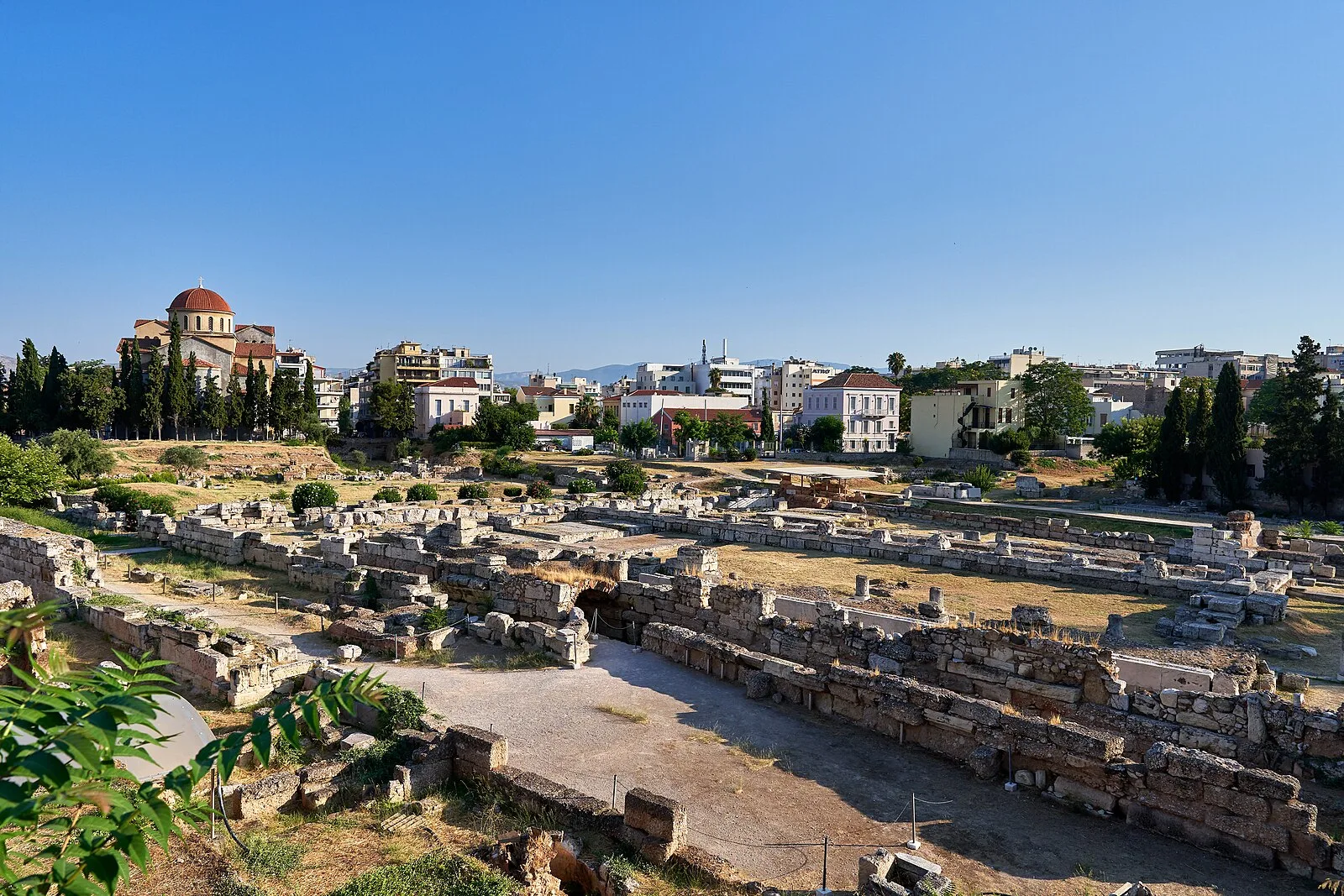
Also known as: 케라메이코스, Ceramic, Ceramico, Ceramico (Atene), Cerâmico (cemitério), Céramique, Céramique (Athènes), Kerameikos (arkiyolohiyang dapit sa Gresya), Keramejkos, Kerami, Keramiko, Keramikos
| Type | Cemetery |
|---|---|
| Period | 3000 - 1500 BC |
| Country | Greece |
| Coordinates | 37.9785° N, 23.7189° E |