
 Greece
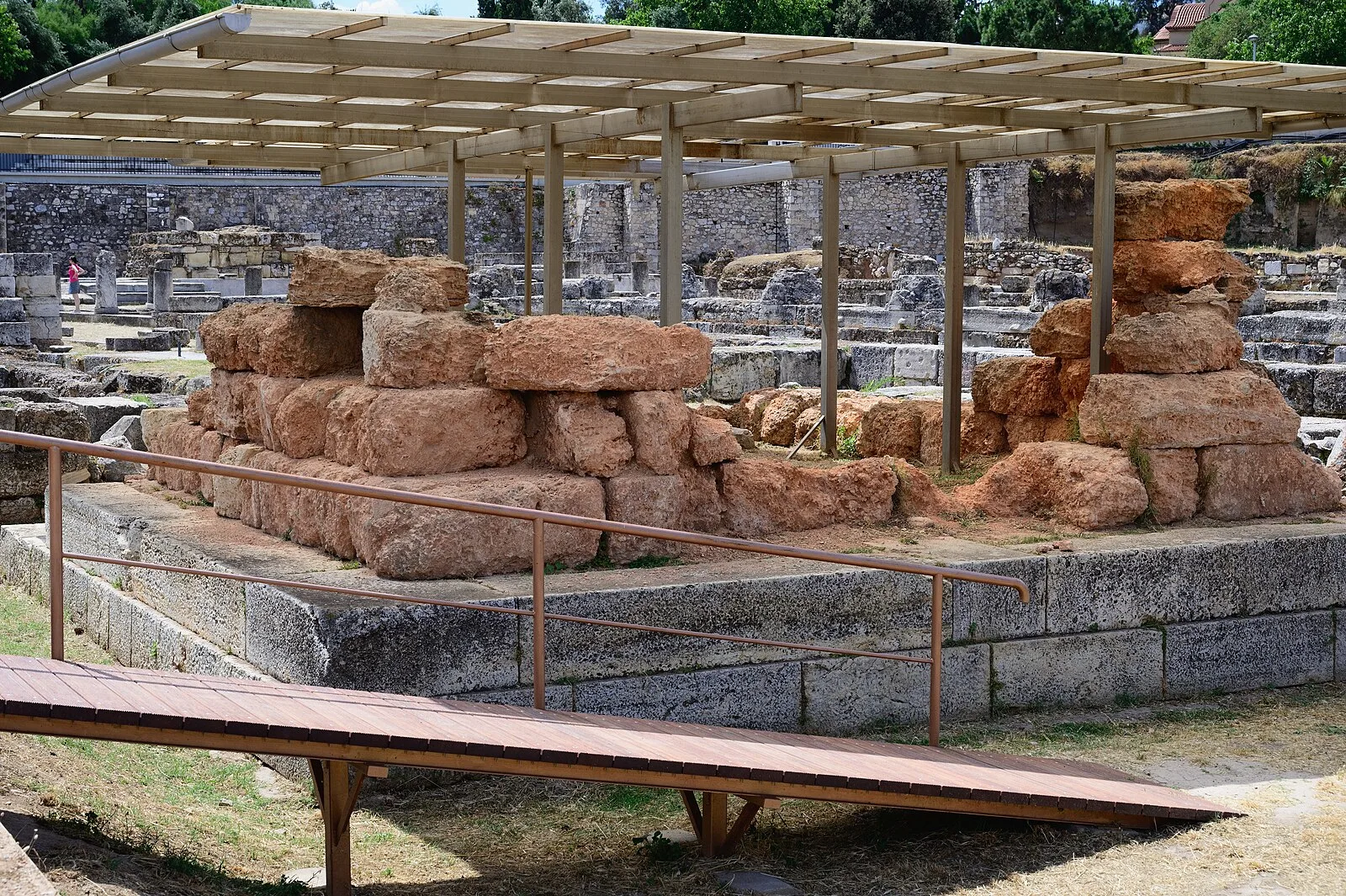
The Dipylon (Greek: Δίπυλον, "Two-Gated") was the main gate in the city wall of Classical Athens [1]. Located in the modern suburb of Kerameikos, it led to the namesake ancient cemetery [1]. The gate was of major ceremonial significance as the starting point of the procession of the Great Panathenaea, and accordingly it was a large, monumental structure [1]. Erected in 478 BC as part of Themistocles' fortification of Athens and rebuilt in the 300s BC, it remained standing and in use until the 3rd century AD [1]. The Dipylon was the "largest gate of the ancient world", with a surface of c. 1,800 square metres [1]. The original, Themistoclean-era gate largely established the final shape of the structure and covered the same area as the Hellenistic structure, and was built of clay bricks on top of a pedestal of Poros limestone blocks [1]. The Hellenistic gate complex was an altogether more massive and elaborate affair, being built of large finely hewn ashlar blocks [1]. The northern cityward gate is still visible, but the southern one has been destroyed through the construction of a modern canal [1].
Text: Wikipedia – 'Dipylon' (revision of 2025-05-27), CC BY-SA 4.0 · sentences selected and shortened by an AI system · source →Dipylon
Also known as: Athen Dipylon, Dipilo, Dipilon, Dipylon Gate, Dipylon (Tor), Thriasian Gates, Thriasische Tore, Δίπυλον, Θριάσιαι Πύλαι, Дипилон, Դիբիլոն, ディピュロン
| Type | Gate/archway/bridge |
|---|---|
| Period | 500 BC - 1 AD |
| Country | Greece |
| Coordinates | 37.9786° N, 23.7191° E |