
 Greece
Stoa Basileios, meaning Royal Stoa, was a Doric stoa in the northwestern corner of the Athenian Agora, which was built in the 6th century BC, substantially altered in the 5th century BC, and then carefully preserved until the mid-second century AD [1]. It is among the smallest known Greek stoas, but had great symbolic significance as the seat of the Athenian King Archon, repository of Athens' laws, and site of "the stone" on which incoming magistrates swore their oath of office [1]. The Stoa was built in the Doric order, with solid walls on the north, west, and east sides and a colonnade of eight columns along the eastern side, facing towards the open space of the Agora [1]. It measures 17.72 metres long from north to south and 7.18 metres wide from east to west [1]. Ceramic finds in the foundation indicate a date after 575-550 BC [1]. In the 440s BC, the stoa was renovated [1]. In the 5th century BC, the Areopagos council sometimes met in the Stoa as well and a rope would be set up to keep people from interrupting its proceedings [1].
Text: Wikipedia – 'Stoa Basileios' (revision of 2026-05-15), CC BY-SA 4.0 · sentences selected and shortened by an AI system · source →Stoa Basileios
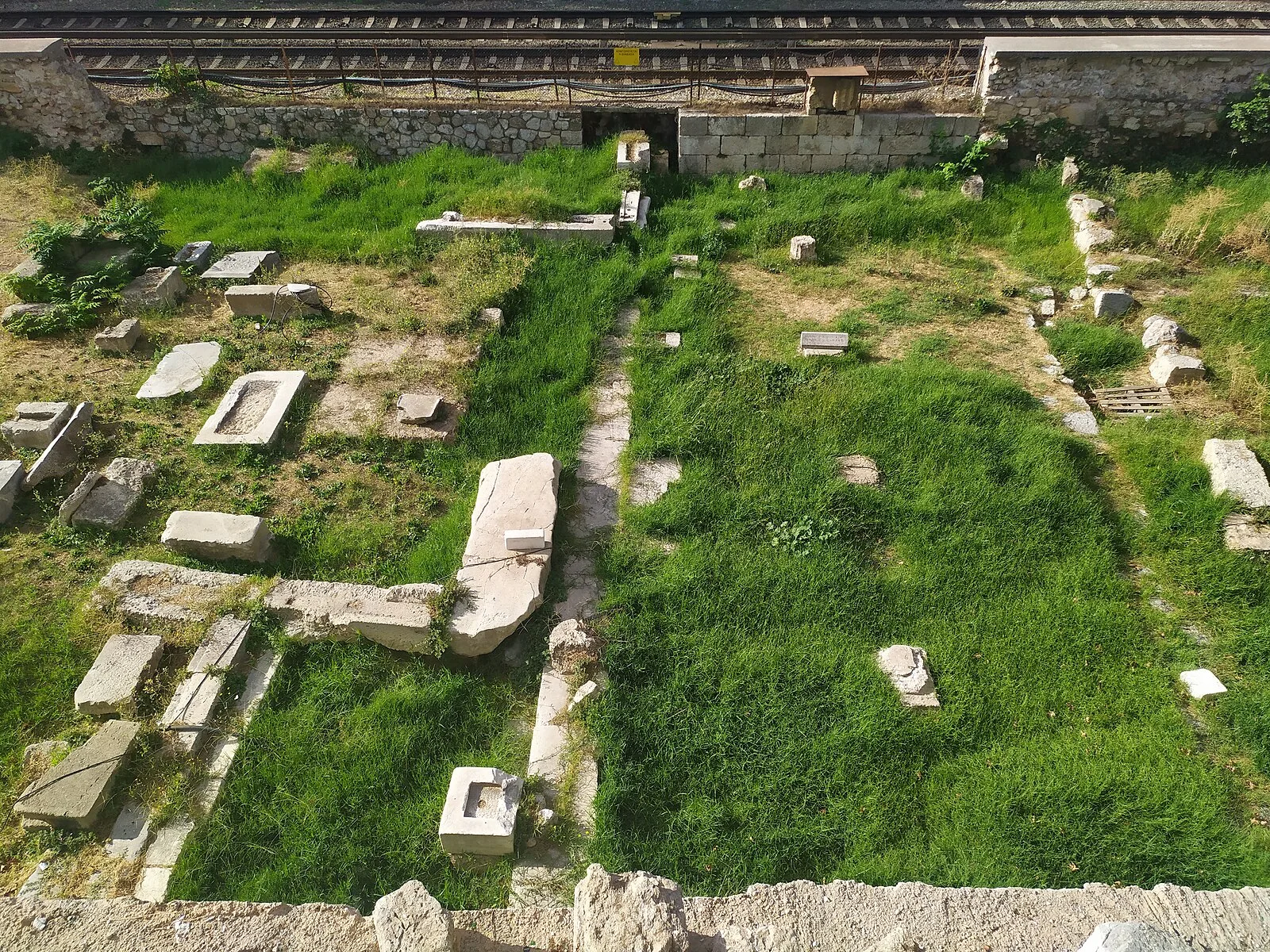
Also known as: Estoa Basileos, Kuninkaallinen stoa, Royal Stoa, Stoà Basileos, Stoà del re, Stoa du roi, Βασίλειος Στοά
| Type | Monument |
|---|---|
| Period | 1500 - 500 BC |
| Country | Greece |
| Coordinates | 37.9763° N, 23.7224° E |