
 Greece
The Altar of the Twelve Gods (also called the Sanctuary of the Twelve Gods), was an important altar and sanctuary at Athens, located in the northwest corner of the Classical Agora [1]. The altar was set up by Pisistratus the Younger, (the grandson of the tyrant Pisistratus) during his archonship [1]. The altar was dismantled c. 267 AD [1]. From at least the 5th century BC, the altar became the zero point from which distances to Athens were calculated [1]. The altar also functioned as a place of supplication and refuge [1]. The exact location of the altar within the Classical Agora, unspecified in ancient sources, was discovered through excavations, in 1891 and 1934, at a site just opposite the Stoa of Zeus, and adjacent to the Panathenaic Way [1]. The Altar's rectangular enclosure or peribolos, was roughly square, 9.5m per side [1]. A parapet wall surrounded a paved enclosure containing a rectangular altar proper, presumably at its center [1].
Text: Wikipedia – 'Altar of the Twelve Gods' (revision of 2026-06-02), CC BY-SA 4.0 · sentences selected and shortened by an AI system · source →Altar of the Twelve Gods
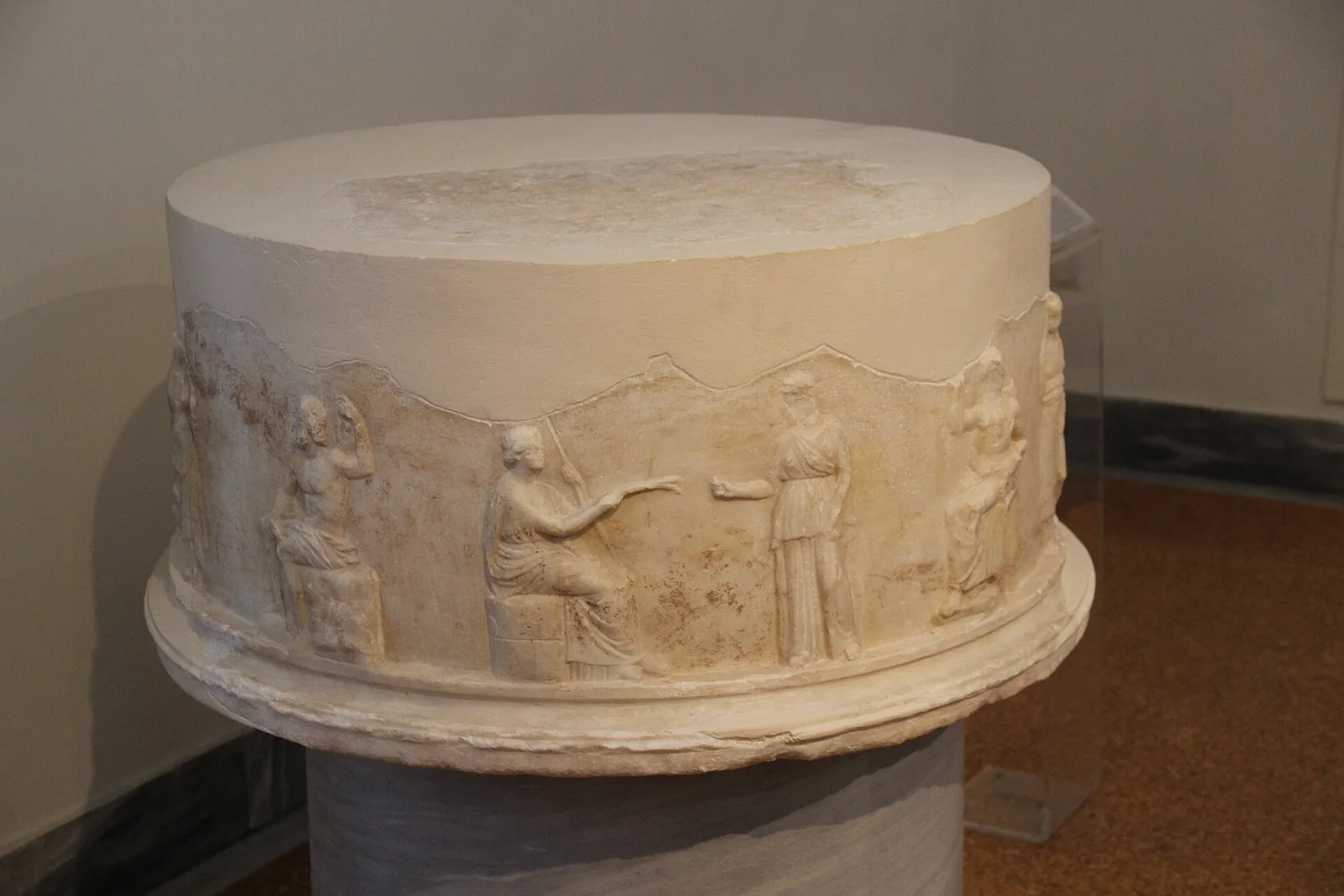
Also known as: Altar de los Doce Dioses, altar dels dotze déus, Altar des Mitleids, Altar dos Doce Deuses, Altare dei Dodici Dei, Aoter an Daouzek Doue, Autel Des Douze Dieux, Autel des Douze Dieux d'Athènes, De tolv gudarnas altare, Hamabi jainkoen aldarea, Kahdentoista jumalan alttari, Zwölfgötter- Altar
| Type | Sanctuary |
|---|---|
| Period | 1500 - 500 BC |
| Country | Greece |
| Coordinates | 37.9760° N, 23.7228° E |