
 Greece
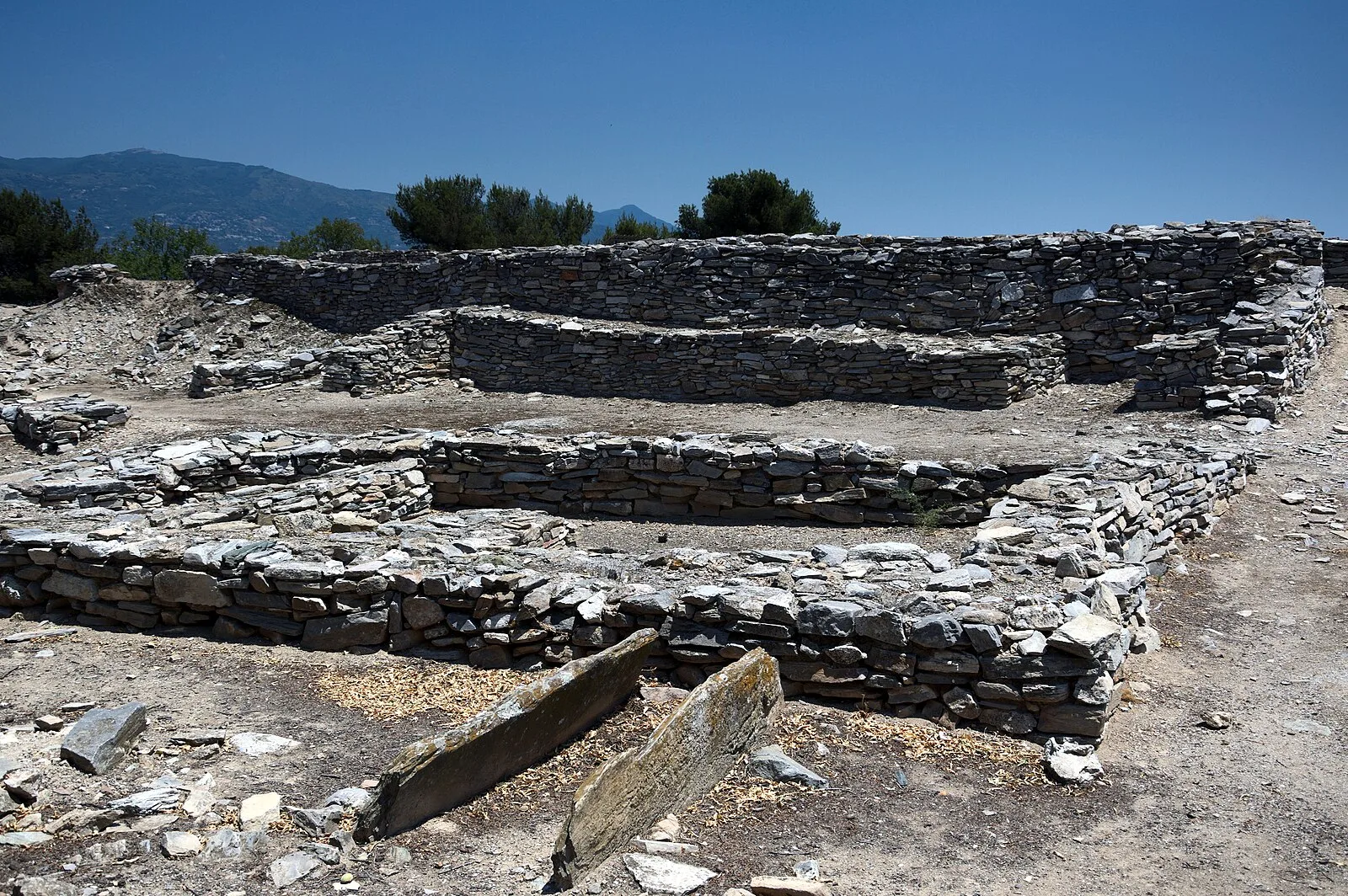
The Dimini area contains both a Mycenean settlement and a Neolithic settlement [1]. The Neolithic settlement in Dimini was discovered near the end of the 19th century and was first excavated by the archaeologists Christos Tsountas and Valerios Stais [1]. Dimini culture is well known for its abstract painted vessels [1]. Dimini ware is characteristic of the Later Neolithic period in eastern Thessaly, although it was traded and imitated outside the region and has been identified as far away as Cakran in Albania [1]. In 1977, George Chourmouziadis continued excavations at the Neolithic settlement [1]. Excavations of the Mycenean settlement in Dimini began in 1980 by V. Adrimi-Sismani [1].
Text: Wikipedia – 'Dimini' (revision of 2026-09-20), CC BY-SA 4.0 · sentences selected and shortened by an AI system · source →Dimini
Also known as: Demini, Dimenium, Diminio kultūra, Δεμίνι Μαγνησίας, Διμήνι Μαγνησίας, Демини, Димини, Дыміні, ديمينى, ديميني, دیمینی, ディミニ
| Type | City/town/settlement |
|---|---|
| Period | < 4500 BC |
| Country | Greece |
| Coordinates | 39.3502° N, 22.8834° E |