
 Greece
Lilaea or Lilaia, also Lilaeum or Lilaion, was one of the most important ancient Phocian towns, and a polis, built on the north slopes of Mount Parnassus, and at the sources of the Cephissus [1]. The name Lilaea appears for the first time in Homer's Iliad as one of the nine Phocian towns which had participated at the Trojan War [1]. The broader region of Lilaea had been inhabited since the 3rd millennium BCE [1]. Lilaea was destroyed during the Third Sacred War by Philip II of Macedon in 346 BCE, but it was rebuilt during the following years in the course of the project for the reconstruction of the Phocian citadels [1]. When Pausanias visited Lilaea, in the second century, he reported seeing a theatre, an agora, and baths, with temples of Apollo and Artemis [1]. Lilaea is located near the modern namesake village of Lilaia [1]. Its walls and gates are to the east of the modern settlement [1]. The fortification of the city is evident on the hill "Pyrgos" or "Palaeokastro" [1].
Text: Wikipedia – 'Lilaea (ancient city)' (revision of 2026-08-21), CC BY-SA 4.0 · sentences selected and shortened by an AI system · source →Ancient Lilaia
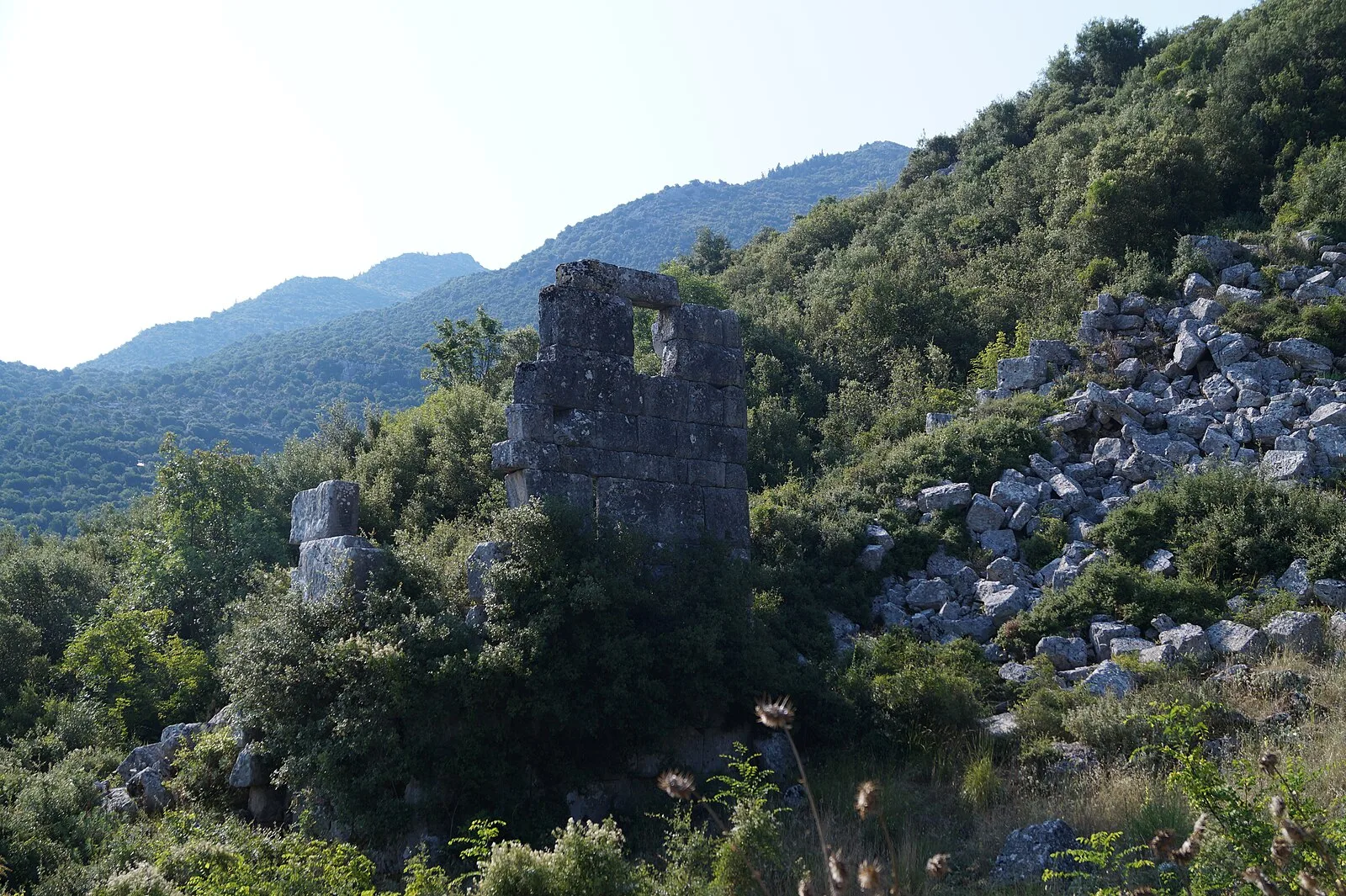
Also known as: Lilaea, Lilaea (ancient city), Lilaea (polis), Lilaeum, Lilaia, Lilaia (Polis), Lilaion, Lilea, Mint of Lilaea, Αρχαία Λιλαία, Λιλαία, Λίλαιον
| Type | City/town/settlement |
|---|---|
| Period | 500 BC - 1 AD |
| Country | Greece |
| Coordinates | 38.6260° N, 22.5059° E |