
 France
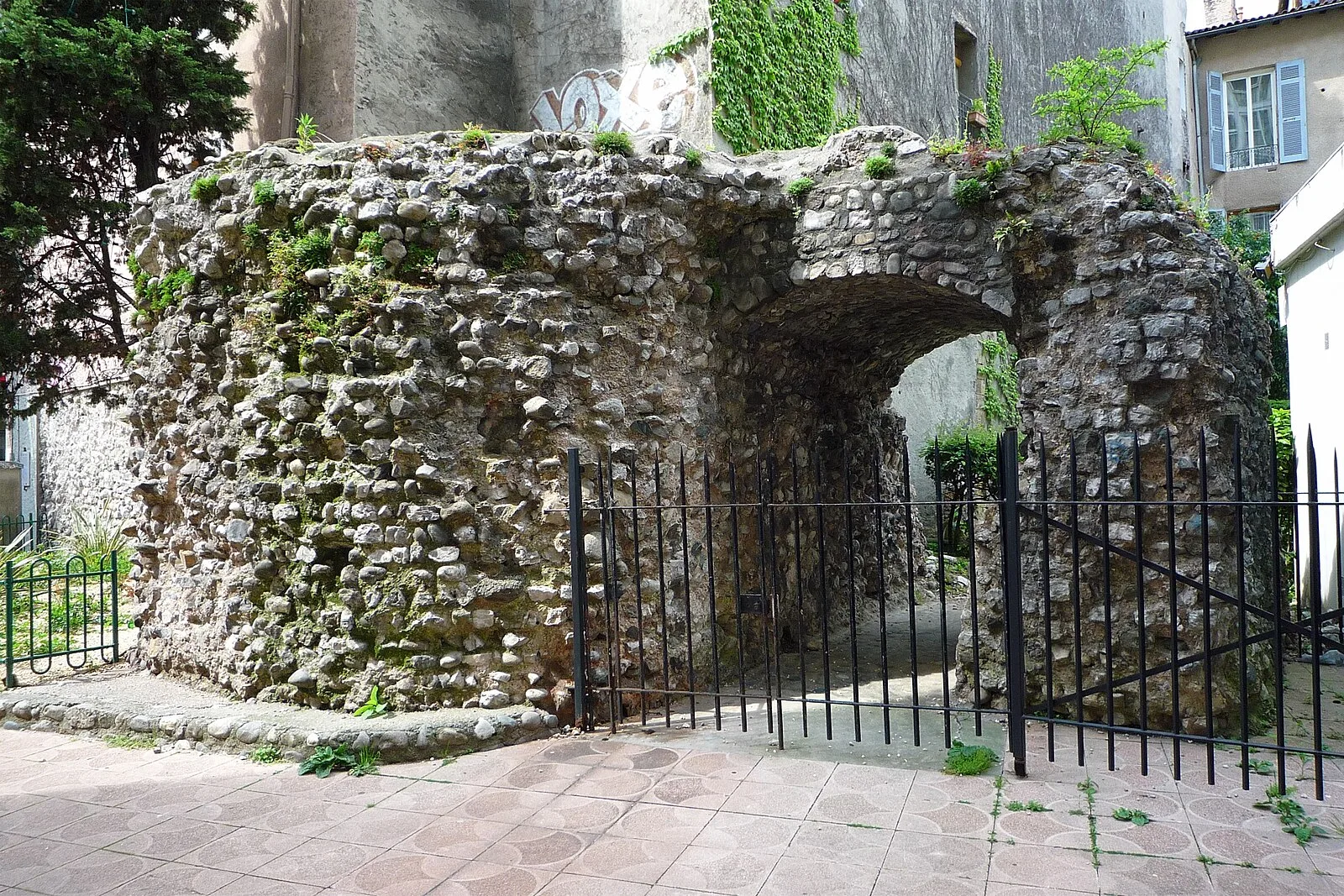
Cularo was the name of the Gallic city which evolved into modern Grenoble [1]. The earliest remaining reference to what is now Grenoble dates back to a July 43 BC letter written by Munatius Plancus to Cicero [1]. The small town founded by the Allobroges Gallic people was at that time called Cularo [1]. In 292, the western emperor Maximian elevated the town to the rank of Civitas, "city", and ordered the construction of defensive walls which both protected the urban area and marked its higher status [1]. Wishing to thank and honor the emperor Gratian for creating its bishopric, the inhabitants of Cularo renamed their town Gratianopolis in 381 [1]. That name would subsequently evolve into Grenoble through Graignovol [1]. Several small sections of the Gallo-Roman city wall are also visible in the old town [1].
Text: Wikipedia – 'Cularo' (revision of 2025-07-28), CC BY-SA 4.0 · sentences selected and shortened by an AI system · source →Cularo
Also known as: 屈拉罗人, 库拉罗
| Type | City/town/settlement |
|---|---|
| Period | 500 BC - 1 AD |
| Country | France |
| Coordinates | 45.1924° N, 5.7306° E |