
 France
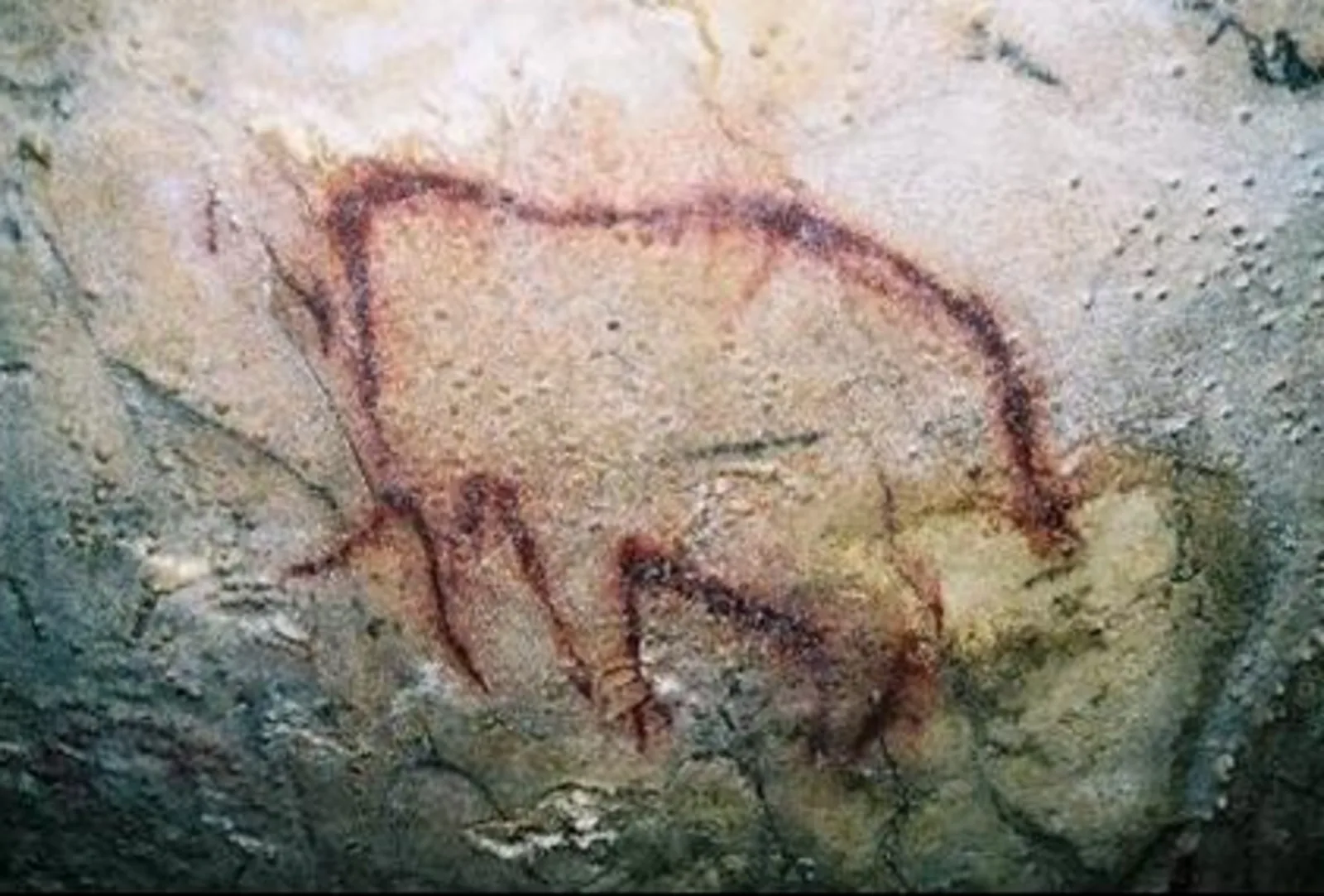
The caves of Arcy-sur-Cure are a series of caves located on the commune of Arcy-sur-Cure, Burgundy, France [1]. Some of them contained archaeological artefacts, from the Mousterian to Gallo-Roman times [1]. Some hold remarkable parietal art, the second oldest presently known after those of the Chauvet Cave [1]. The caves are 1.3 km south of Arcy-sur-Cure, on the left bank of the river Cure [1]. Prehistoric parietal paintings were discovered by Pierre Guilloré in April 1990 in the Great cave [1]. Made on walls in cave rooms located 300 to 500 m away from the entrance, the paintings are 28,000 years old for the oldest, according to radiocarbon dating measures on charcoal remains discovered in these cave rooms in the corresponding strata [1]. Dug by the Cure river in a limestone massif from the Mesozoic, the caves were used as shelter by humans since at least 200,000 years ago [1]. The oldest traces of human presence were stone tools found at the bottom of the cave of the Hyena, from Neanderthals during the Mousterian (Middle Paleolithic, the middle part of the European Old Stone Age) [1].
Text: Wikipedia – 'Caves of Arcy-sur-Cure' (revision of 2026-08-27), CC BY-SA 4.0 · sentences selected and shortened by an AI system · source →Caves of Arcy-sur-Cure
Also known as: Arcy-sur-Cure caves, Arcy-sur-Cure Mağaraları, Cuevas de Arcy-sur-Cure, grottes d'Arcy-sur-Cure, grottes préhistoriques d'Arcy-sur-Cure, Höhlen von Arcy-sur-Cure, מערות ארסי-סיר-קיר, كهوف أرسي سور كيور, كهوف ارسى سور كيور
| Type | Cave Structures |
|---|---|
| Period | < 4500 BC |
| Country | France |
| Coordinates | 47.5919° N, 3.7664° E |