
 France
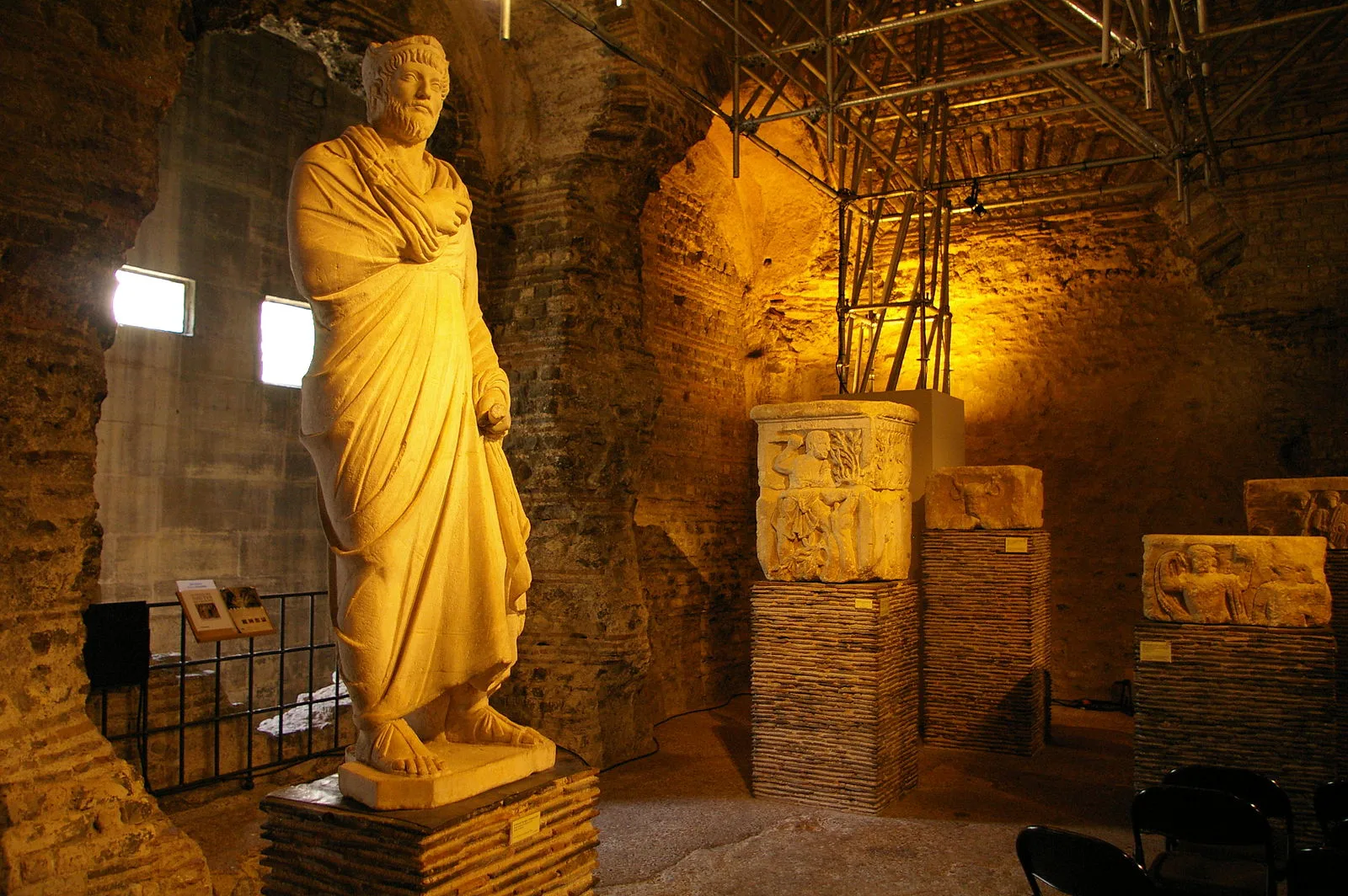
The first traces of the Roman occupation of Lutetia appeared at the end of the 1st century BC, during the reign of the Emperor Augustus [1]. By the beginning of the 1st century AD, the construction of the Roman city was underway [1]. The Roman city was laid out along the main Cardo Maximus street [1]. The Thermes de Cluny, the grand public baths, now part of the Musée de Cluny, are the largest and best-preserved vestige of Roman Lutetia and date from the late 1st or early 2nd century AD [1]. The Necropolis of Saint-Jacques was close to the modern intersection of Avenue Saint-Michel and Avenue Denfert-Rochereau [1]. It occupied a space of about four hectares, and was in use from the beginning of the first until about the fourth century AD [1].
Text: Wikipedia – 'Lutetia' (revision of 2026-08-19), CC BY-SA 4.0 · sentences selected and shortened by an AI system · source →Lutetia
Also known as: 루테티아, 루테티아 파리시오룸, Lucotecia, Lutece, Lutèche, Lutecia, Lutécia (Paris), Lutecie, Lutecija, Lutecja, Luteco, Lutetiae
| Type | City/town/settlement |
|---|---|
| Period | 500 BC - 1 AD |
| Country | France |
| Coordinates | 48.8549° N, 2.3475° E |