
 France
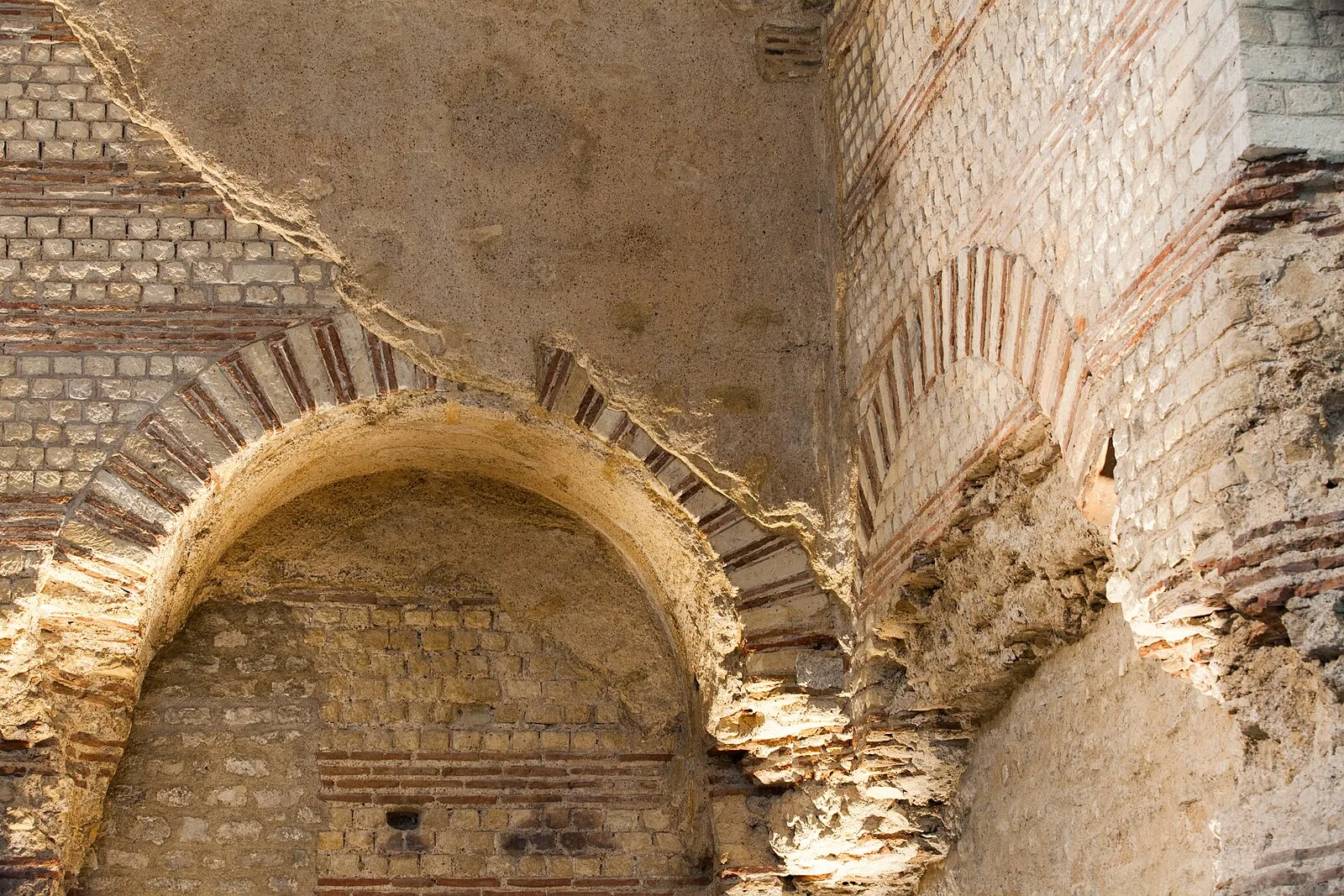
The Thermes de Cluny are the ruins of Gallo-Roman thermal baths lying in the heart of Paris' 5th arrondissement, and which are partly subsumed into the Musée National du Moyen Âge - Thermes et Hôtel de Cluny [1]. The present bath ruins constitute about one-third of a massive bath complex that is believed to have been constructed around the beginning of the 3rd century [1]. The best preserved room is the frigidarium, with intact architectural elements such as Gallo-Roman vaults, ribs and consoles [1]. It is believed that the bath complex was built by the influential guild of boatmen of 3rd-century Roman Paris or Lutetia, as the consoles on which the barrel ribs rest are carved in the shape of ships' prows [1]. Like all Roman Baths, these baths were freely open to the public, and were meant to be, at least partially, a means of romanizing the ancient Gauls [1]. As the baths lay across the Seine river on the Left Bank and were unprotected by defensive fortifications, they were easy prey to roving barbarian groups, who apparently destroyed the bath complex sometime at the end of the 3rd century [1].
Text: Wikipedia – 'Thermes de Cluny' (revision of 2026-07-22), CC BY-SA 4.0 · sentences selected and shortened by an AI system · source →Thermes de Cluny
Also known as: Cluny Hamamı, Lázně Cluny, Tèrmas de Clunhic, Termas de Cluny, Terme di Cluny, Termes de Cluny, Термы Клюни, Тэрмы Клюні, クリュニー浴場, テルム・ド・クリュニー
| Type | Bath |
|---|---|
| Period | 1 - 500 AD |
| Country | France |
| Coordinates | 48.8510° N, 2.3434° E |