
 France
The Vix Grave is a burial mound near the village of Vix in northern Burgundy [1]. The broader site is a prehistoric Celtic complex from the Late Hallstatt and Early La Tène periods, consisting of a fortified settlement and several burial mounds [1]. The grave of the Lady of Vix, dating to c. 500 BC, had never been disturbed and thus contained remarkably rich grave offerings [1]. Known in French as the Trésor de Vix, these included a great deal of jewelry and the bronze "Vix krater", the largest known metal vessel from Western classical antiquity [1]. The inhumation burial was placed in a 4 m x 4 m rectangular wooden chamber underneath a mound or tumulus of earth and stone which originally measured 42 m in diameter and 5 m in height [1]. The grave also contained an assemblage of imported objects from Italy and the Greek world, all of them associated with the preparation of wine [1]. The largest and most famous of the finds from the burial is an elaborately decorated bronze volute krater, 1.64 metres in height and weighing 208.6 kilograms [1].
Text: Wikipedia – 'Vix Grave' (revision of 2026-07-31), CC BY-SA 4.0 · sentences selected and shortened by an AI system · source →Vix Grave
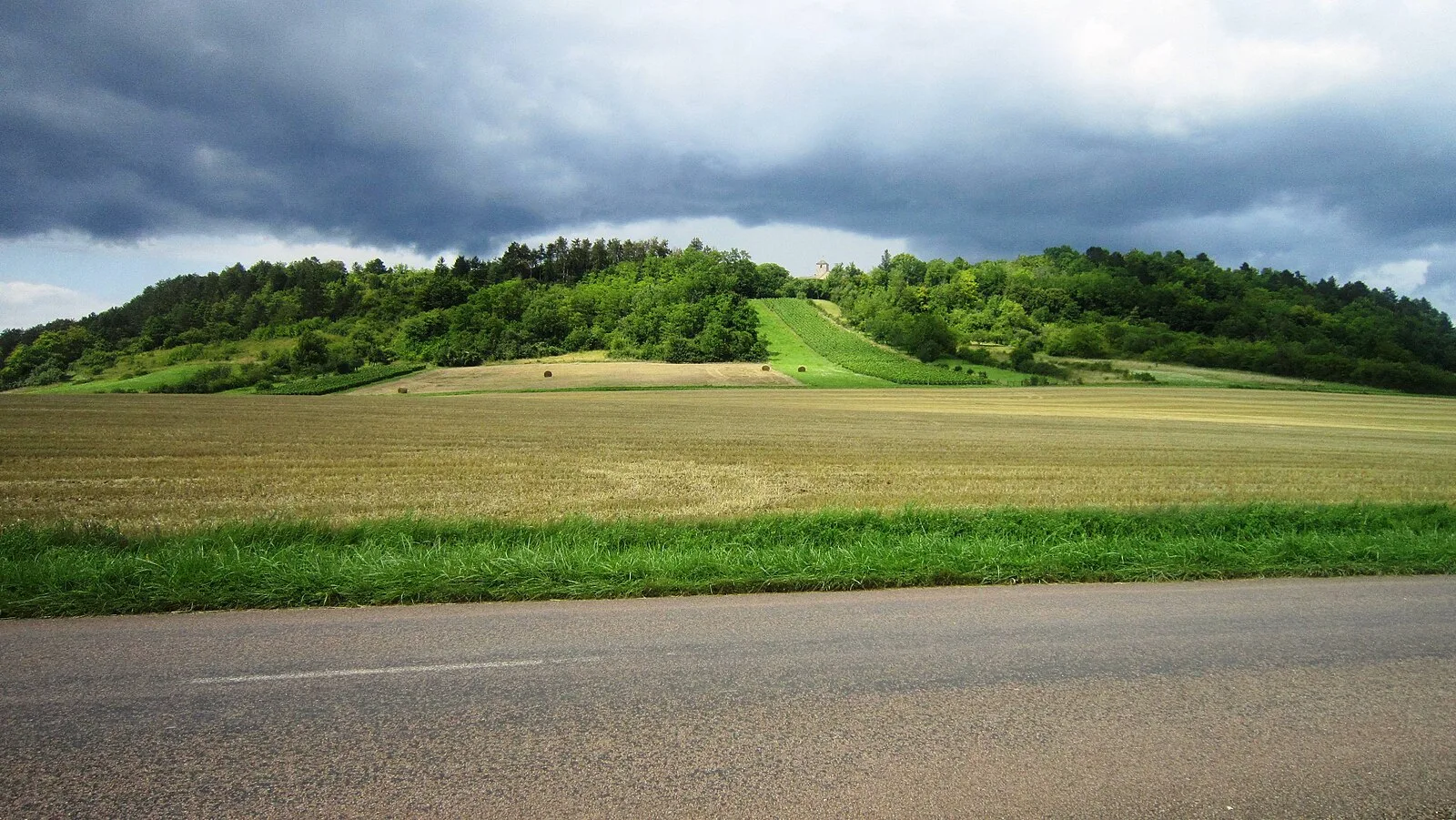
Also known as: Fürstin von Vix, fürstliche Grabstätte von Vix, Tomba de Vix, tomba di Vix, Tombe de la princesse de Vix, tombe de Vix, Trésor de Vix, tumba de Vix, Túmulo da Dama de Vix, Vixgraven, Vix (stanowisko archeologiczne), Vorstengraf
| Type | Mound/tumulus |
|---|---|
| Period | 500 BC - 1 AD |
| Country | France |
| Coordinates | 47.9065° N, 4.5329° E |