
 France
Alesia was the capital of the Mandubii, one of the Gallic tribes allied with the Aedui [1]. The Celtic oppidum was conquered by Julius Caesar during the Gallic Wars and afterwards became a Gallo-Roman town [1]. Alesia is best known for being the site of the decisive Battle of Alesia in 52 BC that marked the defeat of the Gauls under Vercingetorix by the Romans under Julius Caesar [1]. The enormous measures taken during the battle were impressive: in only six weeks, Caesar's troops built a ring of fortifications 15 km long around Alesia and an additional ring 21 km long around that to stop reinforcements (around 250,000 men according to Caesar) from reaching the Gauls [1]. After being conquered by Caesar, Alesia became a Gallo-Roman town [1]. It featured a town centre with monumental buildings such as temples and a forum [1]. There was also a theatre [1]. Not much of the Gallic oppidum is visible today, except for some remains of a rampart [1].
Text: Wikipedia – 'Alesia (city)' (revision of 2026-07-21), CC BY-SA 4.0 · sentences selected and shortened by an AI system · source →City of Alesia
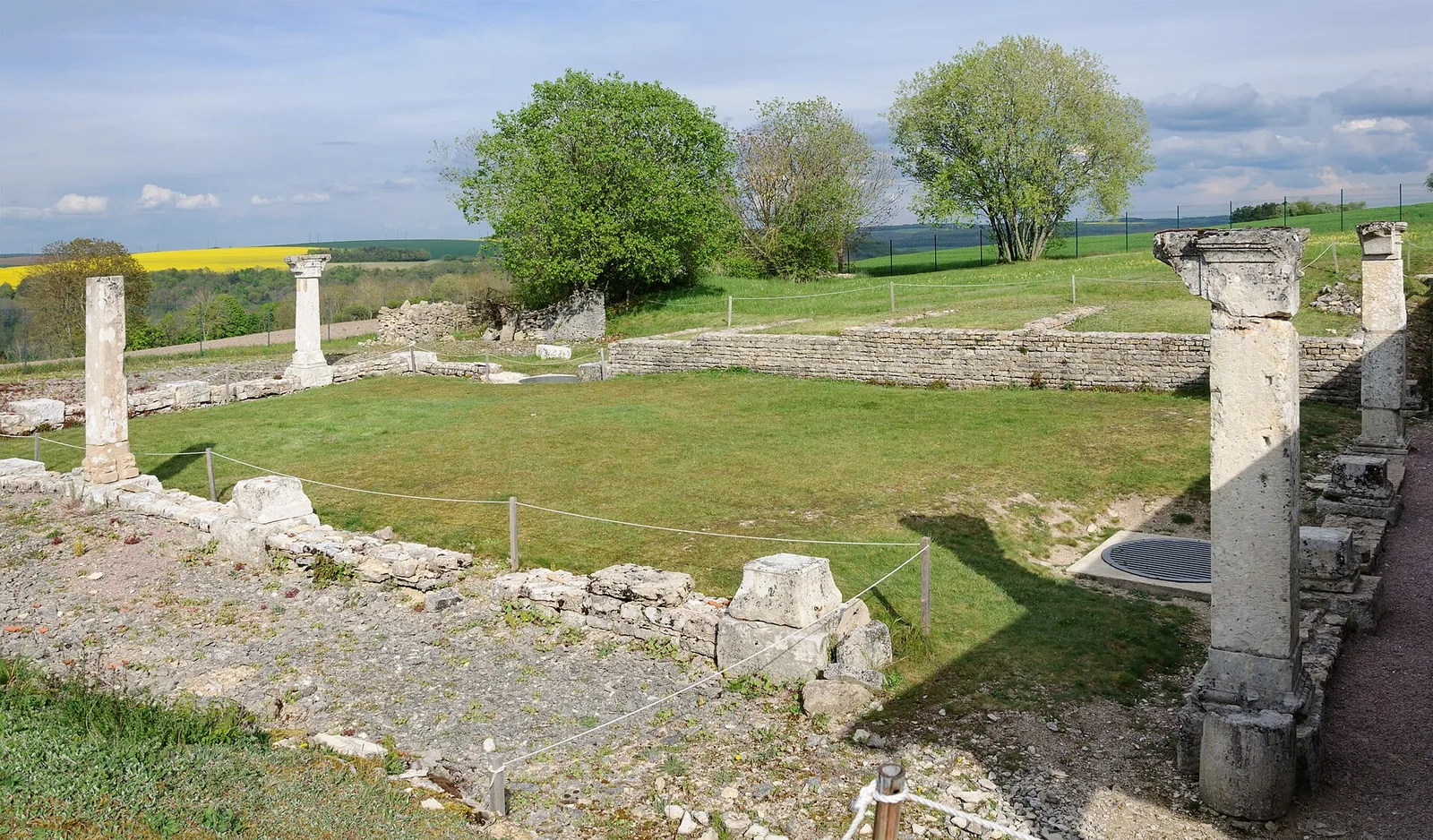
Also known as: Alesia, Alesia (city), Alesia (ciudad), Alésia (oppidum), Alesie, Alezija, Aleziya, Alezja, Alise-Sainte-Reine, Arkeologia loko de Alesia, Fortalesa d'Alèsia, site archéologique d'Alésia
| Type | City/town/settlement |
|---|---|
| Period | 500 BC - 1 AD |
| Country | France |
| Coordinates | 47.5393° N, 4.5006° E |