
 England
Whitley Castle is a large, unusually shaped Roman fort north-west of the town of Alston, Cumbria [1]. It is the highest stone-built Roman fort in Britain [1]. The castrum, which was first built by the Roman Army early in the 2nd century AD, was partly demolished and rebuilt around 200 AD [1]. It appears to have been sited to protect lead mining in the area as well as to support the border defences of Hadrian's Wall [1]. Unlike most Roman forts that have a "playing-card shape", Whitley Castle is lozenge-shaped to fit the site [1]. Numerous banks and ditches ring the stone ramparts [1]. Among finds at the fort are altars with inscriptions to Hercules by Legio VI Victrix and to Apollo by the 2nd Cohort of Nervians [1]. Other finds include a midden containing shoes; coins, fragments of Samian pottery, beads, nails, and a bronze handle shaped like a dolphin [1].
Text: Wikipedia – 'Whitley Castle' (revision of 2026-01-24), CC BY-SA 4.0 · sentences selected and shortened by an AI system · source →Whitley Castle
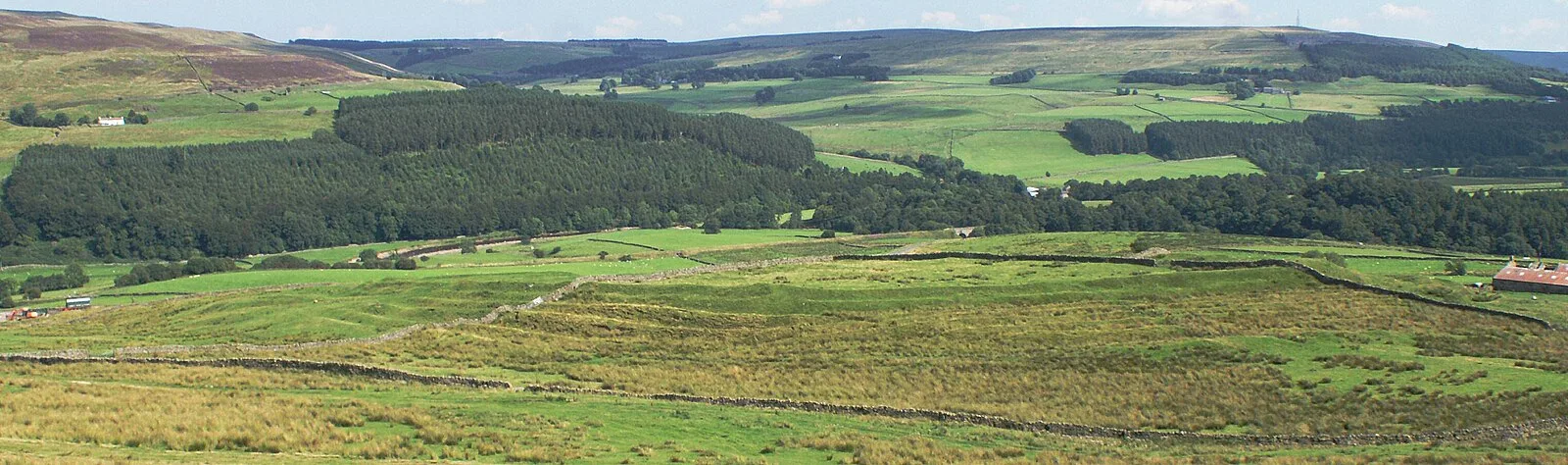
Also known as: Epiacum, Epiacum Roman Fort, Whitley Castle Roman fort and vicus, 280m south west of Castle Nook
| Type | Fortress/citadel |
|---|---|
| Period | 1 - 500 AD |
| Country | England |
| Coordinates | 54.8322° N, 2.4763° W |