
 England
Vindolanda was a Roman auxiliary fort just south of Hadrian's Wall in northern England, which it pre-dated [1]. Archaeological excavations of the site show it was under Roman occupation from roughly 85 AD to 370 AD [1]. Located near the modern village of Bardon Mill in Northumberland, it guarded the Stanegate, the Roman road from the River Tyne to the Solway Firth [1]. It is noted for the Vindolanda tablets, a set of wooden leaf-tablets that were, at the time of their discovery, the oldest surviving handwritten documents in Britain [1]. The first unit to be based at the site was the Cohors I Tungrorum, composed of Tungri from Gallia Belgica, led by Julius Verecundus, who seem to have arrived after Gnaeus Julius Agricola's conquest of the north and built the First Timber Fort [1]. The site consists of a series of fortresses built one on top of the other, which have been divided by archaeologists into nine periods [1]. Nearly 2000-year-old Roman boxing gloves were uncovered at Vindolanda in 2017 by the Vindolanda Trust experts led by Dr Andrew Birley [1].
Text: Wikipedia – 'Vindolanda' (revision of 2026-09-21), CC BY-SA 4.0 · sentences selected and shortened by an AI system · source →Vindolanda
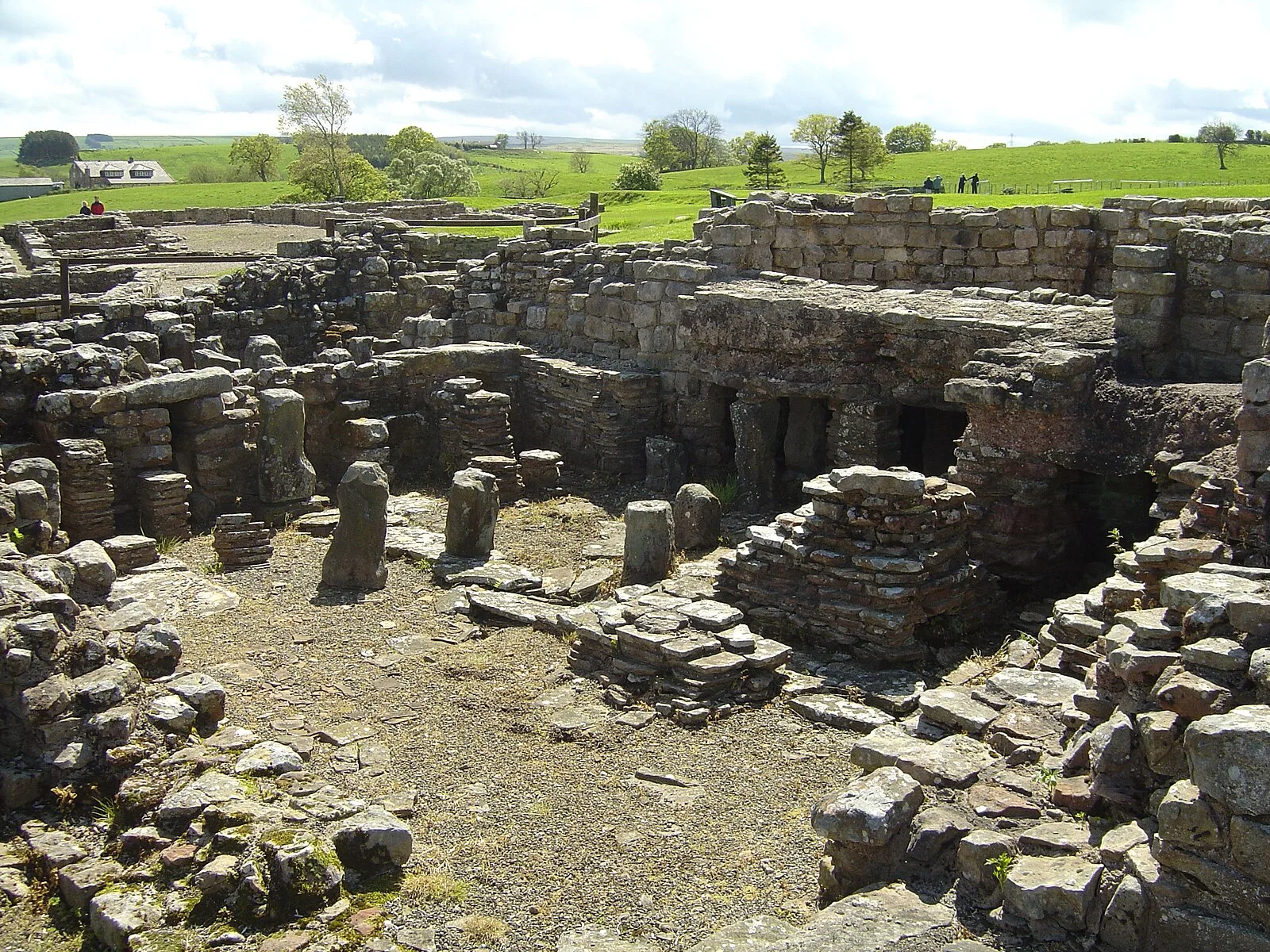
Also known as: castra de Vindolanda, Castra Vindolanda, castrum de Chesterholm, castrum de Vindolanda, Chesterholm Roman Fort, Chesterholm-Vindolanda (Samian Ware Discovery Site), Kastell Chesterholm, Kastell Vindolanda, Vindolanda Roman Fort, Vindolandia, Виндоланда, וינדולנדה
| Type | Fortress/citadel |
|---|---|
| Period | 1 - 500 AD |
| Country | England |
| Coordinates | 54.9912° N, 2.3608° W |