
 England
The Bull Ring is a Class II henge that was built in the Late Neolithic period near Dove Holes in Derbyshire, England [1]. The henge consists of a large, circular earthwork, which is currently about 1 metre high and 9–11 metres wide; however it was originally 2 metres high and 5.5–7 metres wide [1]. The henge has a ditch on the inside, which varies between 0.5 and 1 metre deep and 8 and 12 metres wide; it was originally 1.2–2 metres deep and 5–6.5 metres wide [1]. The ditch and bank are separated by a berm, which was originally 5 metres wide [1]. It encloses an area 53 by 46 metres, with entrances to the north and south, each of which have a causeway across the ditch [1]. A minor excavation was carried out in the west ditch in 1902 by Micah Salt; this reputedly discovered some pottery sherds and flint flakes, which have since been lost [1]. A trial excavation by Oxford University Archaeological Society in 1949 established that the ring has two entrances, and also provided information about the original size of the bank and ditch [1].
Text: Wikipedia – 'The Bull Ring' (revision of 2026-06-13), CC BY-SA 4.0 · sentences selected and shortened by an AI system · source →The Bull Ring
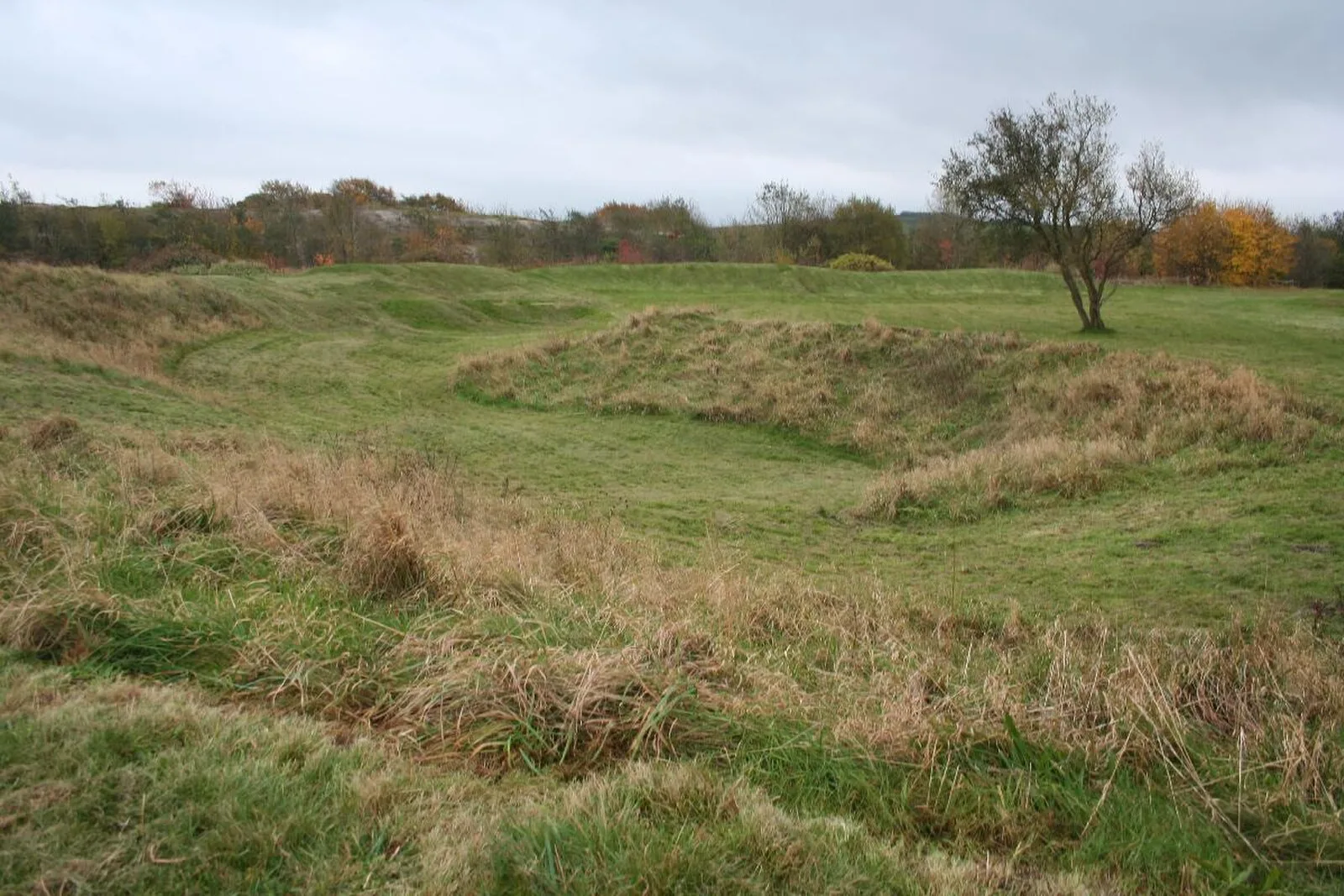
Also known as: Bull Ring henge, oval barrow and bowl barrow
| Type | Henge |
|---|---|
| Period | 3000 - 1500 BC |
| Country | England |
| Coordinates | 53.3008° N, 1.8844° W |