
 England
Chestnuts Long Barrow, also known as Stony Warren or Long Warren, is a chambered long barrow near the village of Addington in the south-eastern English county of Kent [1]. The long barrow was built on land previously inhabited in the Mesolithic period [1]. It consisted of a sub-rectangular earthen tumulus, estimated to have been 15 metres in length, with a chamber built from sarsen megaliths on its eastern end [1]. Both inhumed and cremated human remains were placed within this chamber during the Neolithic period, representing at least nine or ten individuals [1]. These remains were found alongside pottery sherds, stone arrow heads, and a clay pendant [1]. In the 4th century AD, a Romano-British hut was erected next to the long barrow [1]. In the 12th or 13th century, the chamber was dug into and heavily damaged, either by treasure hunters or iconoclastic Christians [1]. The ruin attracted the interest of antiquarians in the 18th and 19th centuries, while archaeological excavation took place in 1957, followed by limited reconstruction [1].
Text: Wikipedia – 'Chestnuts Long Barrow' (revision of 2026-09-21), CC BY-SA 4.0 · sentences selected and shortened by an AI system · source →Chestnuts Long Barrow
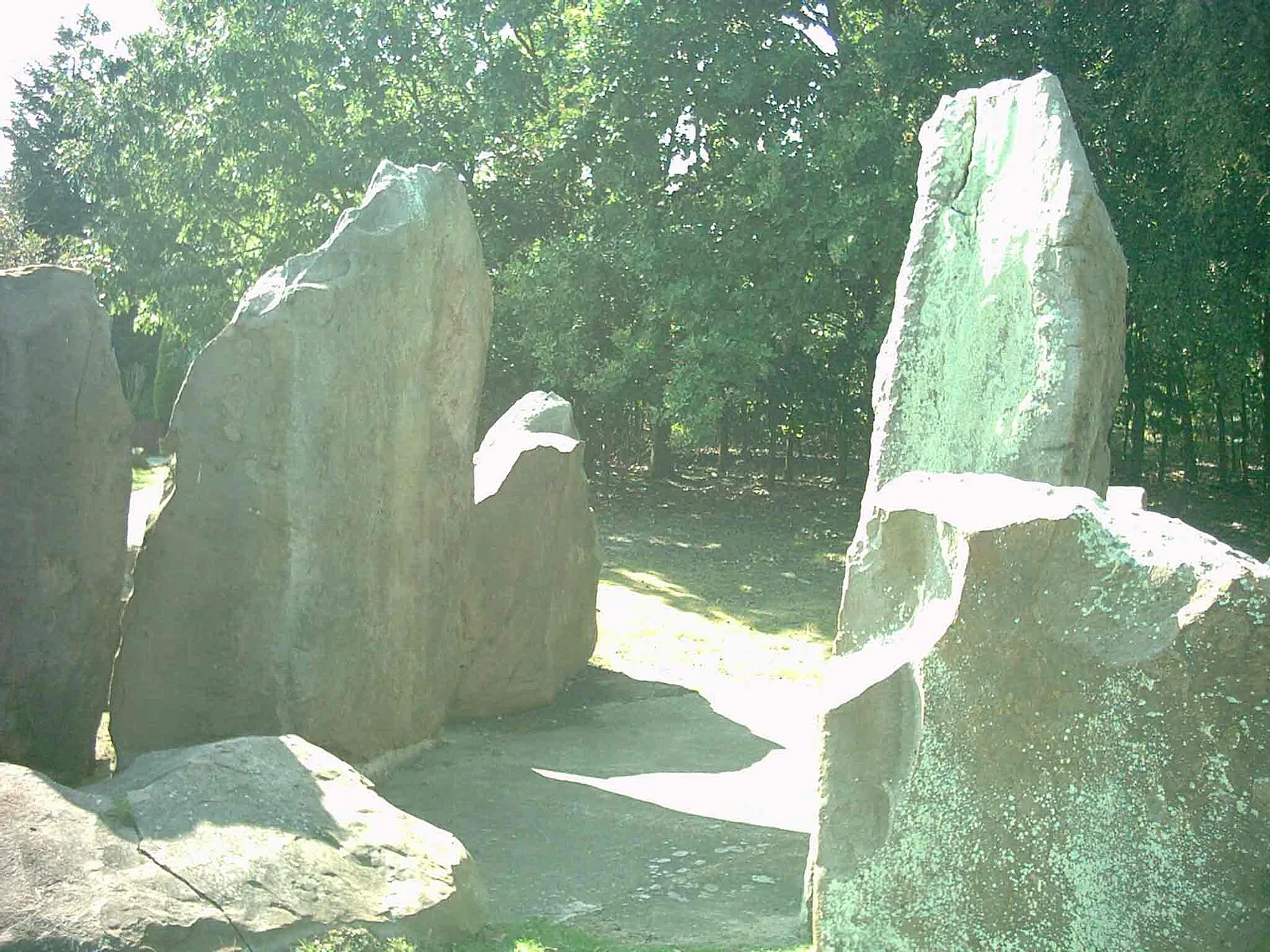
Also known as: The Chestnuts Long Barrow, تل دفن الكستناء الطويل, چستناتز لانگزبارو, ചെസ്റ്റ്നട്ട്സ് ലോംഗ് ബാരോ
| Type | Barrow |
|---|---|
| Period | < 4500 BC |
| Country | England |
| Coordinates | 51.3078° N, 0.3695° E |