
 England
Hembury is a Neolithic causewayed enclosure and Iron Age hillfort near Honiton in Devon [1]. Its history stretches from the late fifth and early fourth millennia BC to the Roman invasion [1]. The fort is situated on a south facing promontory at the end of a 240m high ridge in the Blackdown Hills [1]. Originally a Neolithic site, an Iron Age hill fort was later built on the same site [1]. It was excavated between 1930 and 1935 by Dorothy Liddell [1]. She identified a timber framed entrance to the causewayed enclosure and an oval arrangement of postholes in the middle which she interpreted as being a building destroyed by fire before the enclosure earthworks were built [1]. During an excavation in the 1980s headed by Malcolm Todd, archaeological evidence was found on the site of Roman military occupation, suggesting a fort within the existing Iron Age site [1]. The site has given its name to some of the earliest Neolithic pottery in southern Britain after a large collection of pieces of this type of pottery were found during excavations by Dorothy Liddell [1].
Text: Wikipedia – 'Hembury' (revision of 2026-07-18), CC BY-SA 4.0 · sentences selected and shortened by an AI system · source →Hembury
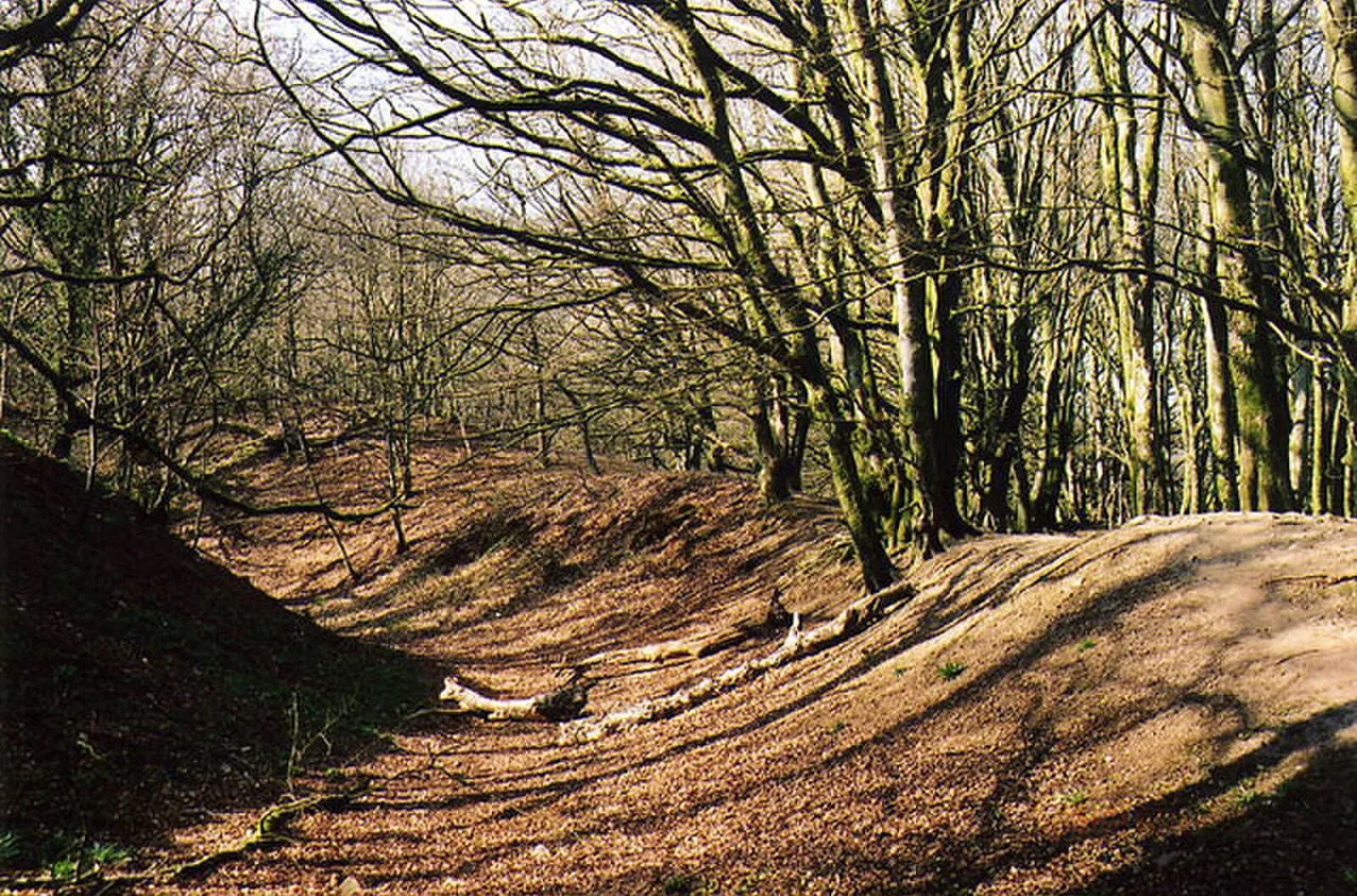
Also known as: Hembury Fort, Hembury, Payhembury, המבורי
| Type | Earthwork |
|---|---|
| Period | 4500 - 3000 BC |
| Country | England |
| Coordinates | 50.8207° N, 3.2614° W |