
 England
Danebury (formerly ‘Dunnebury Hill’) is an Iron Age hillfort in Hampshire, England, about 19 kilometres (12 mi) north-west of Winchester [1]. The site, covering 5 hectares (12 acres), was excavated by Barry Cunliffe over twenty years [1]. Danebury is considered a type site for hillforts, and was important in developing the understanding of hillforts [1]. The first excavation at Danebury was carried out in November 1859, under antiquarian Augustus Wollaston Franks [1]. His workers cleared out an Iron Age pit that was 2 metres deep and 1.5 m in diameter, although they were not able to ascertain its purpose [1]. The hillfort was occupied from the mid-6th century BC until around 100 BC, and the defences were remodelled numerous times [1]. The north part of the fort was occupied by four-post structures, probably granaries, which were later replaced by storage pits, and in the south part, there were roundhouses in between granaries and storage pits [1]. The Danebury meteorite is an H5 ordinary chondrite meteorite found in 1974 during the excavation of a grain pit at the hillfort [1].
Text: Wikipedia – 'Danebury' (revision of 2026-09-22), CC BY-SA 4.0 · sentences selected and shortened by an AI system · source →Danebury
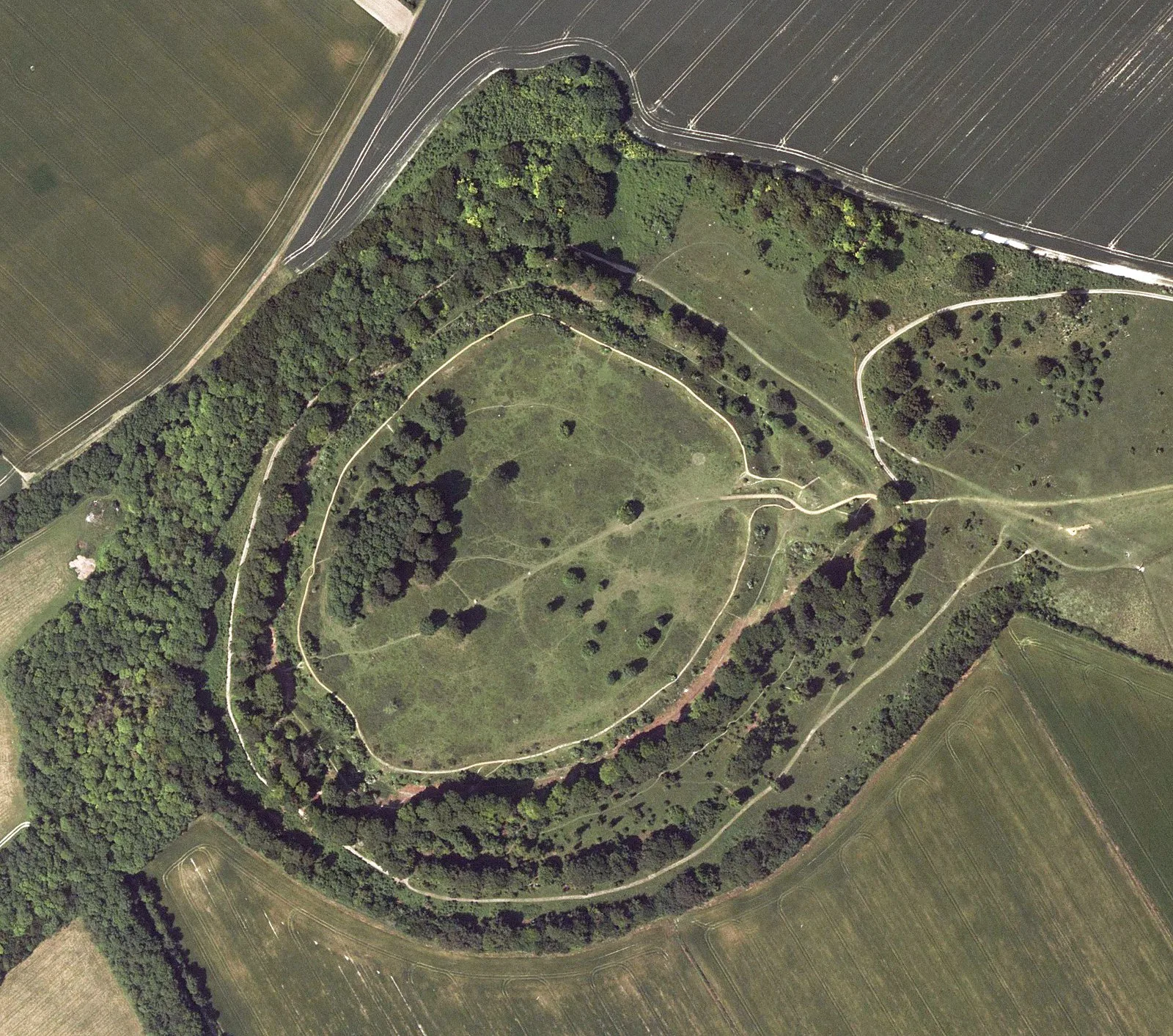
Also known as: Danebury Hill, Danebury Hill Camp, Danebury (ralma), Dunbury
| Type | Fortress/citadel |
|---|---|
| Period | 1500 - 500 BC |
| Country | England |
| Coordinates | 51.1367° N, 1.5376° W |