
 England
Cilurnum or Cilurvum was an ancient Roman fort on Hadrian's Wall at Chesters near the village of Walwick [1]. Cilurnum is included in the Notitia Dignitatum of the late 4th/early 5th century [1]. Cilurnum is considered to be the best-preserved and best example of a Roman cavalry fort on Hadrian's Wall [1]. Cilurnum was first built as a cavalry fort with its walls projecting north of the Wall and with three of its main gateways on the north allowing easier and rapid access to that side [1]. It was given over to infantry later [1]. An early inscription on an altar dedicated to Disciplina, found in 1978, indicates the earliest-known military presence was a wing of cavalry, ala Augusta ob virtutem appellata [1]. The fort baths were on the western bank of the river North Tyne [1].
Text: Wikipedia – 'Cilurnum' (revision of 2026-09-12), CC BY-SA 4.0 · sentences selected and shortened by an AI system · source →Cilurnum
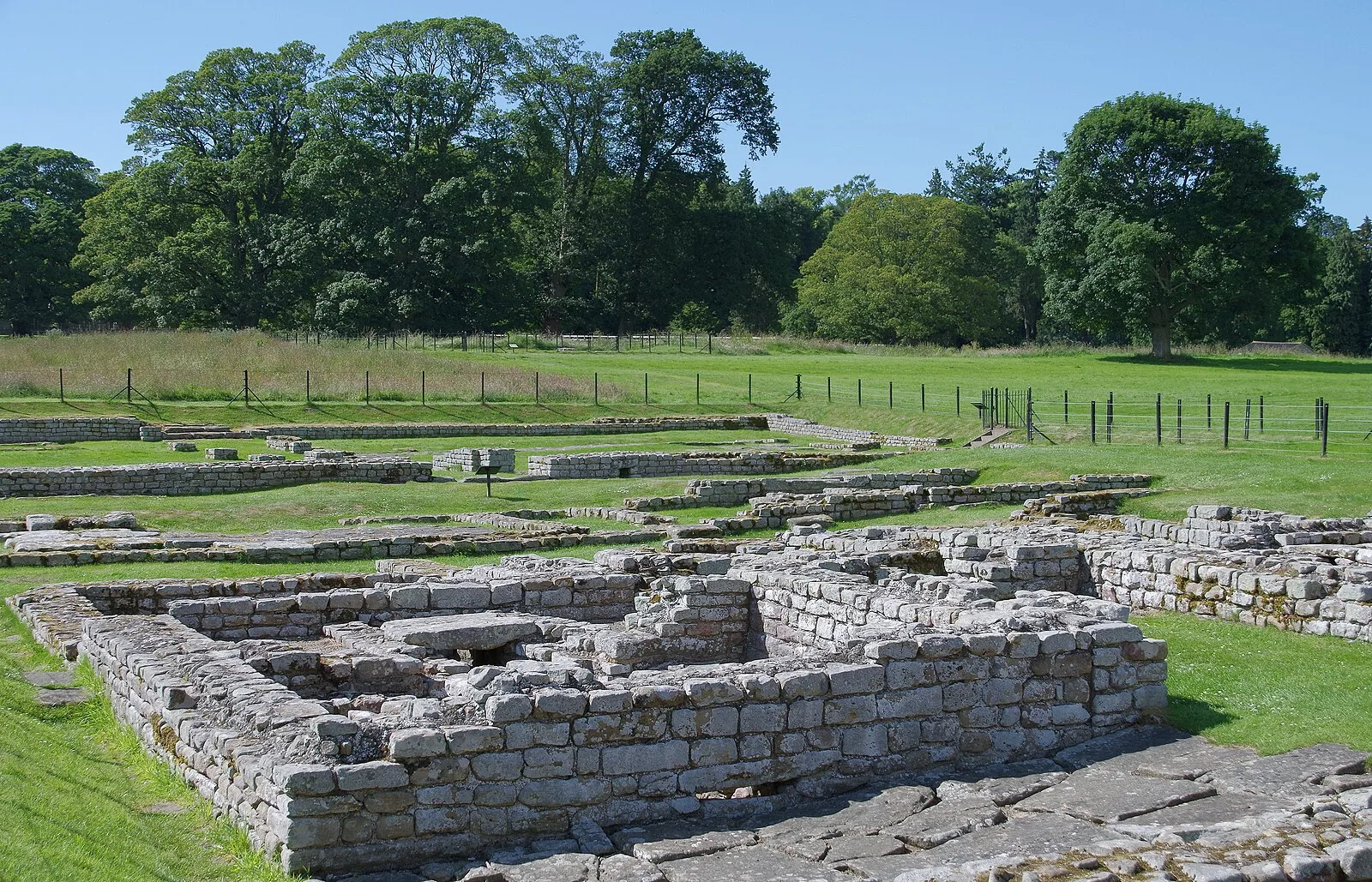
Also known as: Chesters Roman Fort, Chesters Roman Fort Cilurnum, Cilurvum, fort de Chesters, fort de Walwick Chesters, Kastell Chesters, Kastell Cilurnum, 車士打羅馬兵營
| Type | Fortress/citadel |
|---|---|
| Period | 1 - 500 AD |
| Country | England |
| Coordinates | 55.0261° N, 2.1390° W |