

Deir el-Medina ('Place of Truth') housed the tomb builders for ~400 years. In 1156 BCE, workers staged history's first documented labor strike when grain rations failed—they marched on Waset, recorded on the Turin Strike Papyrus. Mayhem! 🥖⚒️
Deir el-Medina village housed skilled artisans who built Valley of the Kings tombs for 400 years
 EgyptGeneral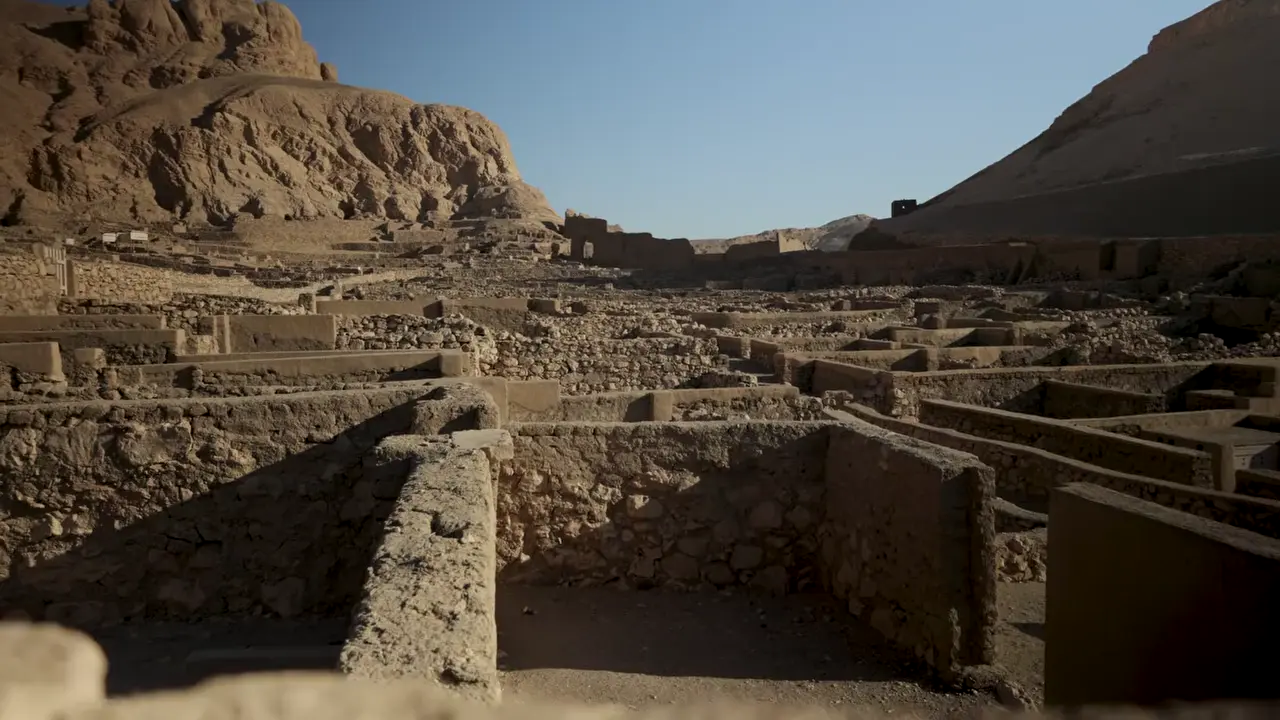
Key facts
- Deir el-Medina ancient name: Set Maat (place of truth or justice)
- Purpose-built state-run settlement housing artisans for nearly 400 years, roughly 1550 to 1080 BCE
- Founded during Thutmose I or possibly Amenhotep I; reached peak during Ramesses period
- Village enclosed by 6-meter-high mud brick wall with controlled gates at north and south ends
- Workers paid in monthly grain rations supplemented with beer, vegetables, and occasional meat
- Two main work groups: workers on left and workers on right, divided labor by tomb sides
- Workers possibly blindfolded when taken to tombs to prevent remembering locations
- In 1156 BCE during Ramesses III reign, grain rations failed to arrive; workers laid down tools and marched on Waset in first documented labor strike in human history (Turin Strike Papyrus)
- Village had western cemetery where workers buried themselves
- Foreman Inherka's tomb dated to 20th dynasty contains Book of Gates and Book of Dead scenes
- Large cache of written documents found in pit: letters, grocery lists, daily life records providing rare evidence of common Egyptian life
Site mentioned
Was this story useful?
Keep exploring
Every site on this page sits on the globe, and the people who research them are on the Discord.
3D Globe · Sites by country · Story Archive · Research Library · Weekly Journal · Search
AI-generated text · images from the original sources · always verify with the sources.