
 Croatia
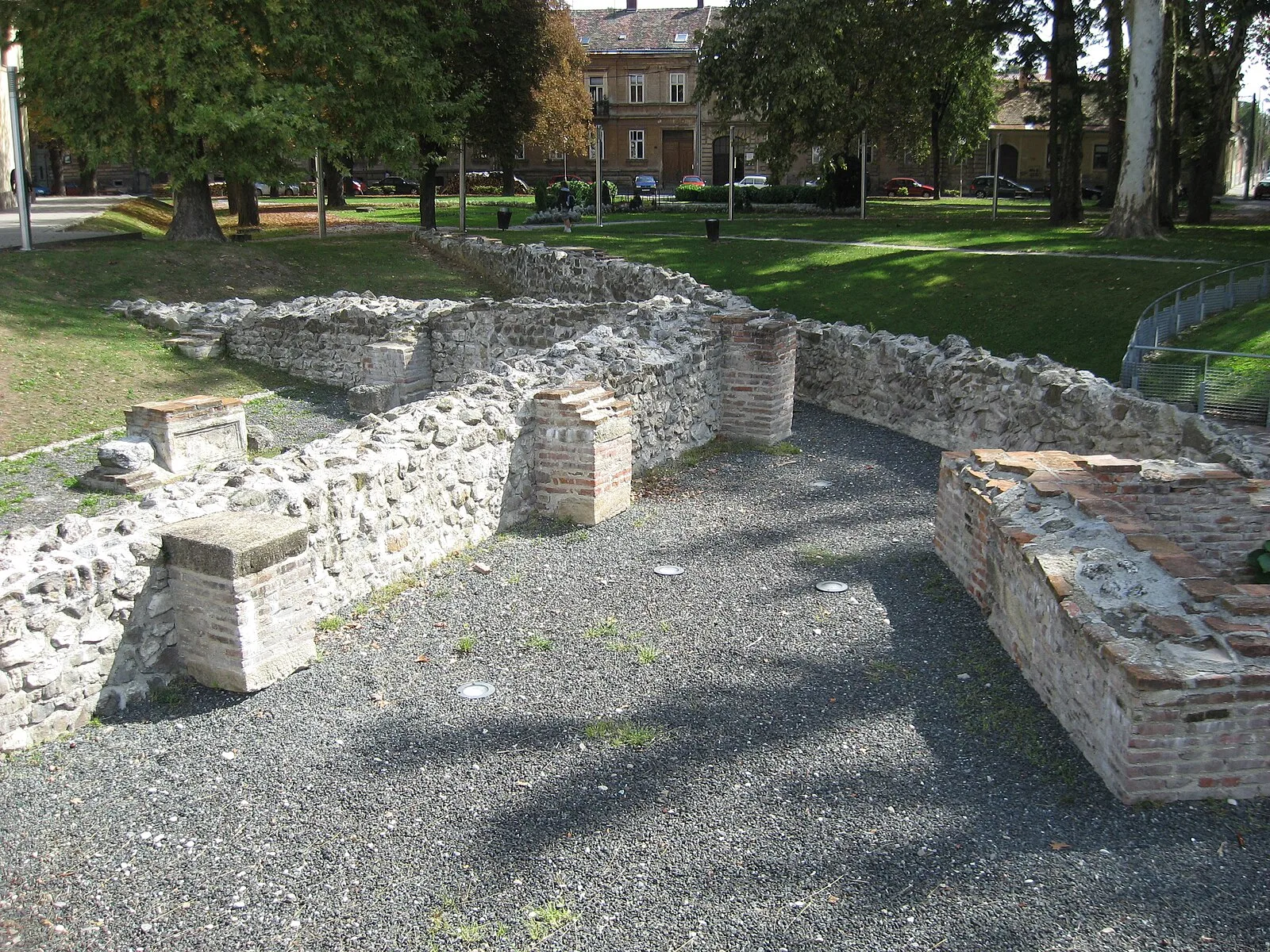
Siscia is described by Roman writers as a great town in the south of Upper Pannonia, on the southern bank of the Savus, on an island formed by that river and two others, the Colapis and Odra, a canal dug by Tiberius completing the island [1]. It was on the great road from Aemona to Sirmium [1]. Siscia was from the first a strongly fortified town; and after its capture by Tiberius, in the reign of Augustus, it became one of the most important places of Pannonia; for being on two navigable rivers, it not only carried on considerable commerce, but became the central point from which Augustus and Tiberius carried on their undertakings against the Pannonians and Illyrians [1]. Tiberius did much to enlarge and embellish the town, which as early as that time seems to have been made a colonia, for Pliny mentions it as such: in the time of Septimius Severus it received fresh colonists [1]. The town contained an imperial mint, which produced coins under a series of emperors between 262 and 383 AD [1].
Text: Wikipedia – 'Sisak' (revision of 2026-09-06), CC BY-SA 4.0 · sentences selected and shortened by an AI system · source →Siscia
Also known as: 시사크, Grad Sisak, Segesta, Segestica, Sisak, Sisaka, Sisakas, Sisak (kota), Sisak (Kroatië), Sisek, Siska, Sissek
| Type | City/town/settlement |
|---|---|
| Period | 1 - 500 AD |
| Country | Croatia |
| Coordinates | 45.4874° N, 16.3761° E |