
 Croatia
Aquae Iasae was the Roman settlement and Roman bath in the area of present city Varaždinske Toplice [1]. In the 3rd century BC, in this area lived the Illyrian tribe Jasi, whose name the Romans referred to later in calling this place Aquae Iasae, "Waters of the Jasi" [1]. The village Jasa, thanks to its springs of water, grew into a significant medical, ceremonial, cultural and economic center of Pannonia Superior [1]. The biggest boom was seen under the Roman Empire from the 1st to the 4th centuries [1]. The public part of the Roman settlement was located on the highest terrace of the hill Varaždin spa [1]. At the end of 3rd century AD Aquae Iasae were ravaged during the incursion of the Goths, then, in the beginning of the 4th century, the thermae were restored by Emperor Constantine [1]. The excavations at the site uncovered numerous remains: parts of swords, shields, knives, razors, imperial coins, many statues of nymphs and the well preserved marble pavement of the 2nd century [1]. The most valuable finding is the statue of the goddess Minerva with a pedestal [1].
Text: Wikipedia – 'Aquae Iasae' (revision of 2026-07-02), CC BY-SA 4.0 · sentences selected and shortened by an AI system · source →Aquae Iasae
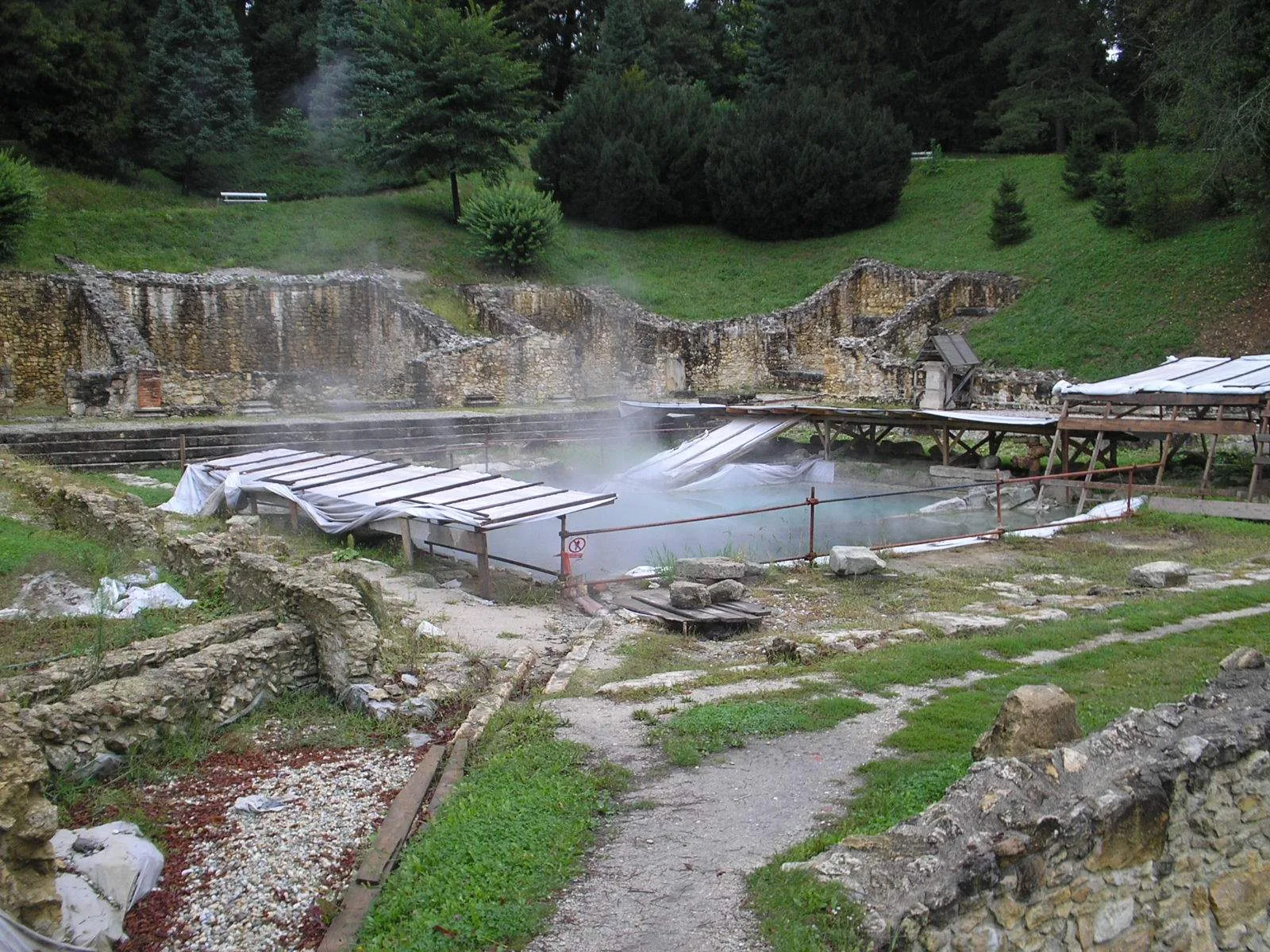
Also known as: Aquae Iasae (Вараждинске Топлице), Вараждинске топлице
| Type | City/town/settlement |
|---|---|
| Period | 1 - 500 AD |
| Country | Croatia |
| Coordinates | 46.2081° N, 16.4213° E |