
 Croatia
Krapina Neanderthal site, also known as Hušnjakovo Hill is a Paleolithic archaeological site located near Krapina, Croatia [1]. Krapina represents the largest known recovery of human skeletal remains from any Upper Pleistocene site [1]. The site was first discovered by Dragutin Gorjanović-Kramberger, who excavated the site between 1899 and 1905 and subsequently published two monographs [1]. The prehistoric site itself is located in a collapsed cave, nestled in a sandstone bluff overlooking the Krapinica River in Hrvatsko Zagorje [1]. More recently, it was determined that the site was about 120–130 kyr [1]. Researchers determined its date by using ESR and U-series dating [1]. 1191 lithic artifacts were discovered during the century of research at the site [1]. Eight white-tailed eagle talons and one foot phalanx were found at the site, and were dated by uranium–thorium dating to 130 000 BP [1].
Text: Wikipedia – 'Krapina Neanderthal site' (revision of 2026-07-18), CC BY-SA 4.0 · sentences selected and shortened by an AI system · source →Krapina Neanderthal Site
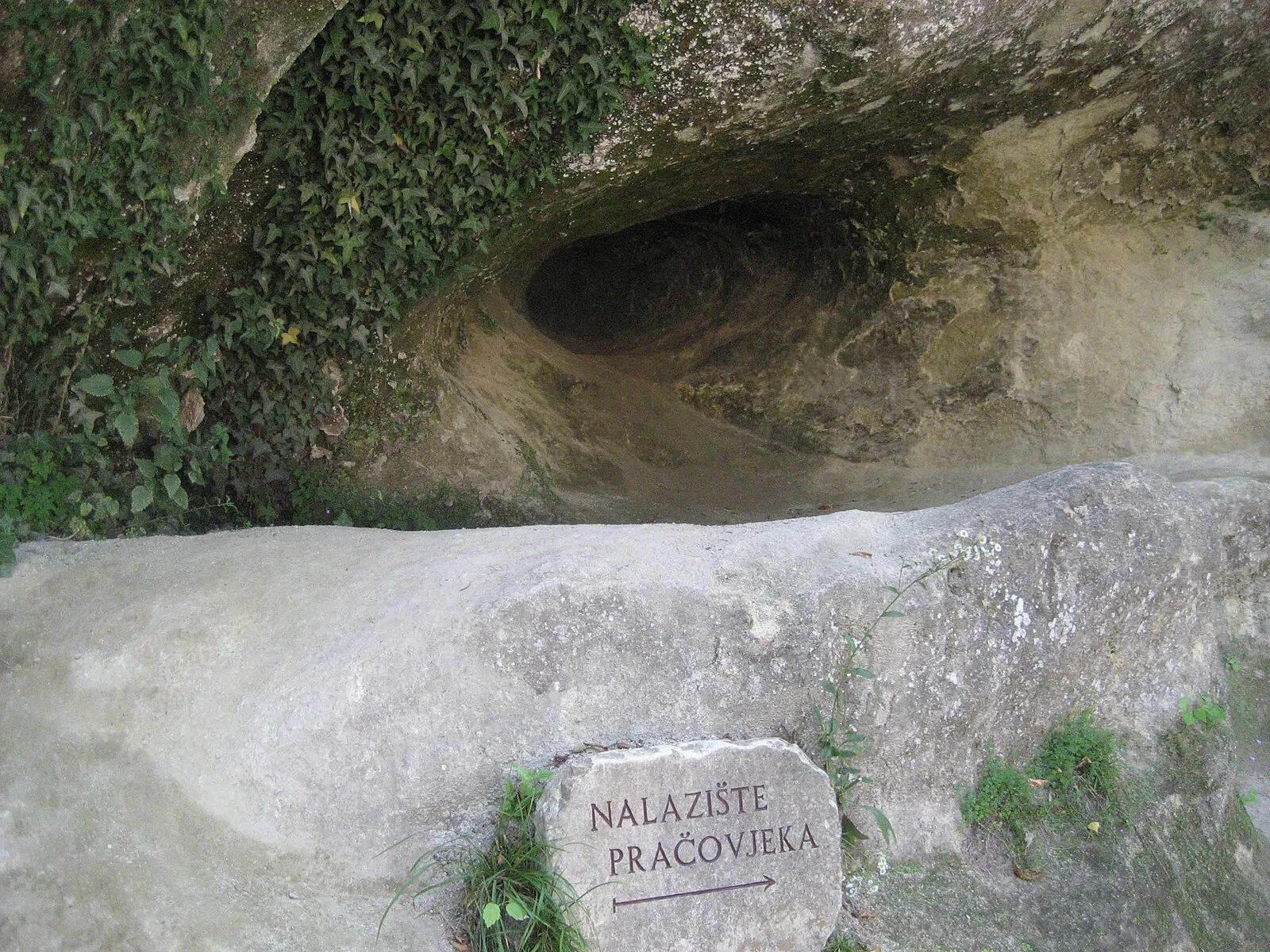
Also known as: Hušnjakov brijeg, Hušnjakovo, Hušnjakovo brdo, Krapina, Krapina (archäologischer Fundplatz), Krapina (jaskinia), Krapina Neandertal Sit Alanı, Krapina (site), Najdišče krapinskih neandertalcev, Sito archeologico di Krapina, Крапина (печера), Стоянка неандертальцев Крапина
| Type | Cave |
|---|---|
| Period | < 4500 BC |
| Country | Croatia |
| Coordinates | 46.1648° N, 15.8636° E |