
 Ukraine
The study of the settlements of the Cucuteni-Trypillia culture provides important insights into the early history of Europe [1]. The Cucuteni-Trypillia culture, which existed in the present-day southeastern European nations of Moldova, Romania, and Ukraine during the Neolithic Age and Copper Age, from approximately 5500 to 2750 BC, left behind thousands of settlement ruins containing a wealth of archaeological artifacts attesting to their cultural and technological characteristics [1]. Maidanetske may have contained almost 3,000 houses and a population between 12,000 and 46,000 [1]. Academicians have not designated the gigantic settlements of Cucuteni-Trypillia culture as "cities" due to the lack of conclusive evidence for internal social differentiation or specialization [1]. The existence of the giant settlements was discovered in the 1960s [1].
Text: Wikipedia – 'Settlements of the Cucuteni–Trypillia culture' (revision of 2026-08-24), CC BY-SA 4.0 · sentences selected and shortened by an AI system · source →Settlements of the Cucuteni-Trypillia Culture
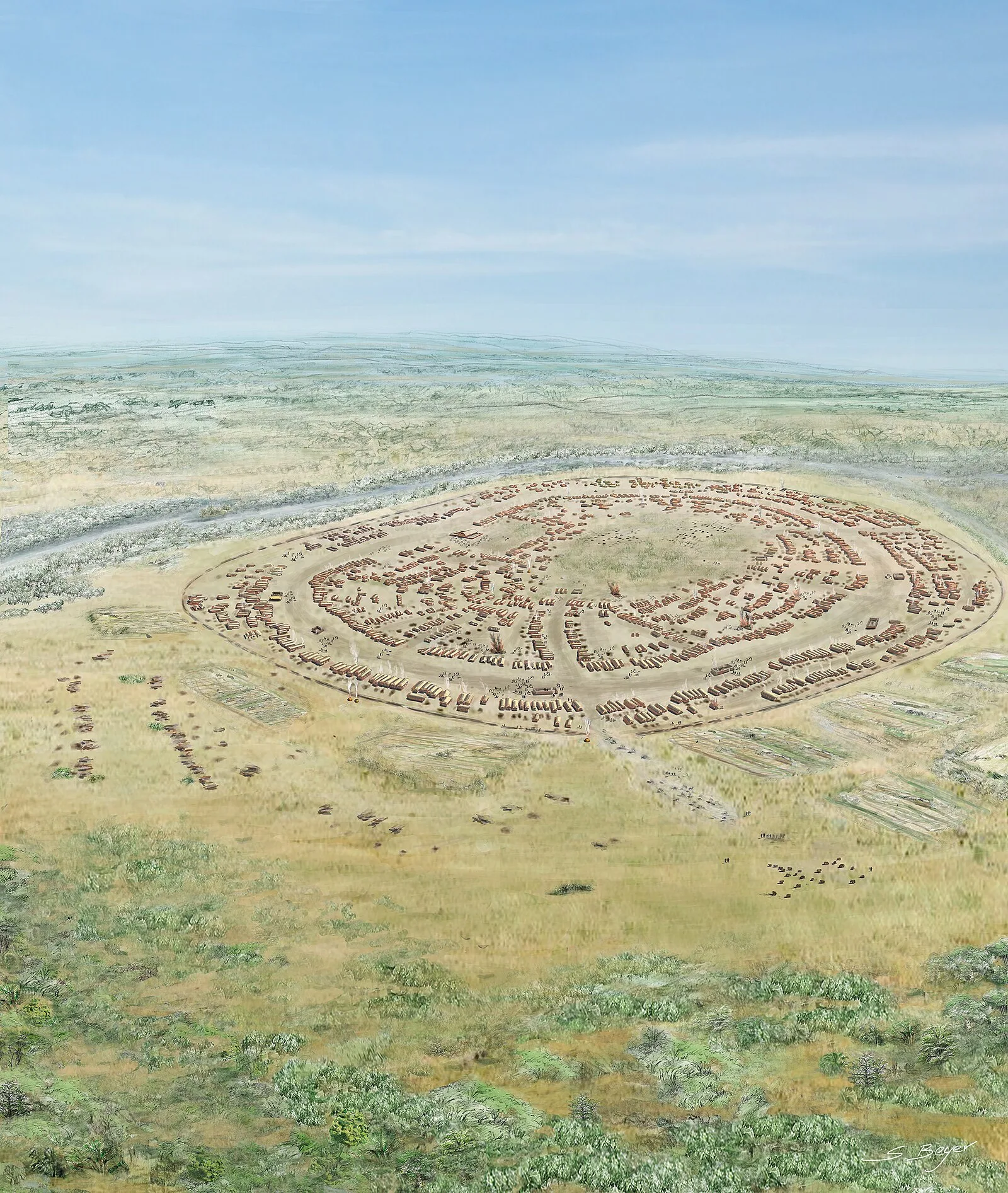
Also known as: așezările culturii Cucuteni-Tripoli, Settlements of the Cucuteni–Trypillian culture, Поселення Кукутень-Трипільської культури, Трипільські міста, కుకుటెని-ట్రిపిలియా సంస్కృతి స్థావరాలు
| Type | City/town/settlement |
|---|---|
| Period | < 4500 BC |
| Country | Ukraine |
| Coordinates | 49.0001° N, 32.0000° E |