
 Ukraine
The Solokha kurgan is on the left bank of the Dnieper, 18 km from Kamianka-Dniprovska, opposite Nikopol [1]. It has a height of 19 m and a diameter of about 100 m, dating to the early 4th century BC [1]. The burial mound contained two royal Scythian tombs, the central tomb had been robbed already in antiquity, but still contained the remains of a female ruler and two horses in rich attire, while the side tomb was found intact by the 1912–13 campaign by the Russian archaeologist Nikolay Veselovsky [1]. The intact lateral tomb yielded spectacular treasures [1]. It contained the remains of a male ruler, completely covered in gold [1]. He had been buried with his weapon bearer, a servant and five horses [1]. The most notable find in the grave, however, was a golden comb with an extremely detailed group of three fighting warriors worked in gold [1].
Text: Wikipedia – 'Solokha' (revision of 2026-06-13), CC BY-SA 4.0 · sentences selected and shortened by an AI system · source →Solokha Kurgan
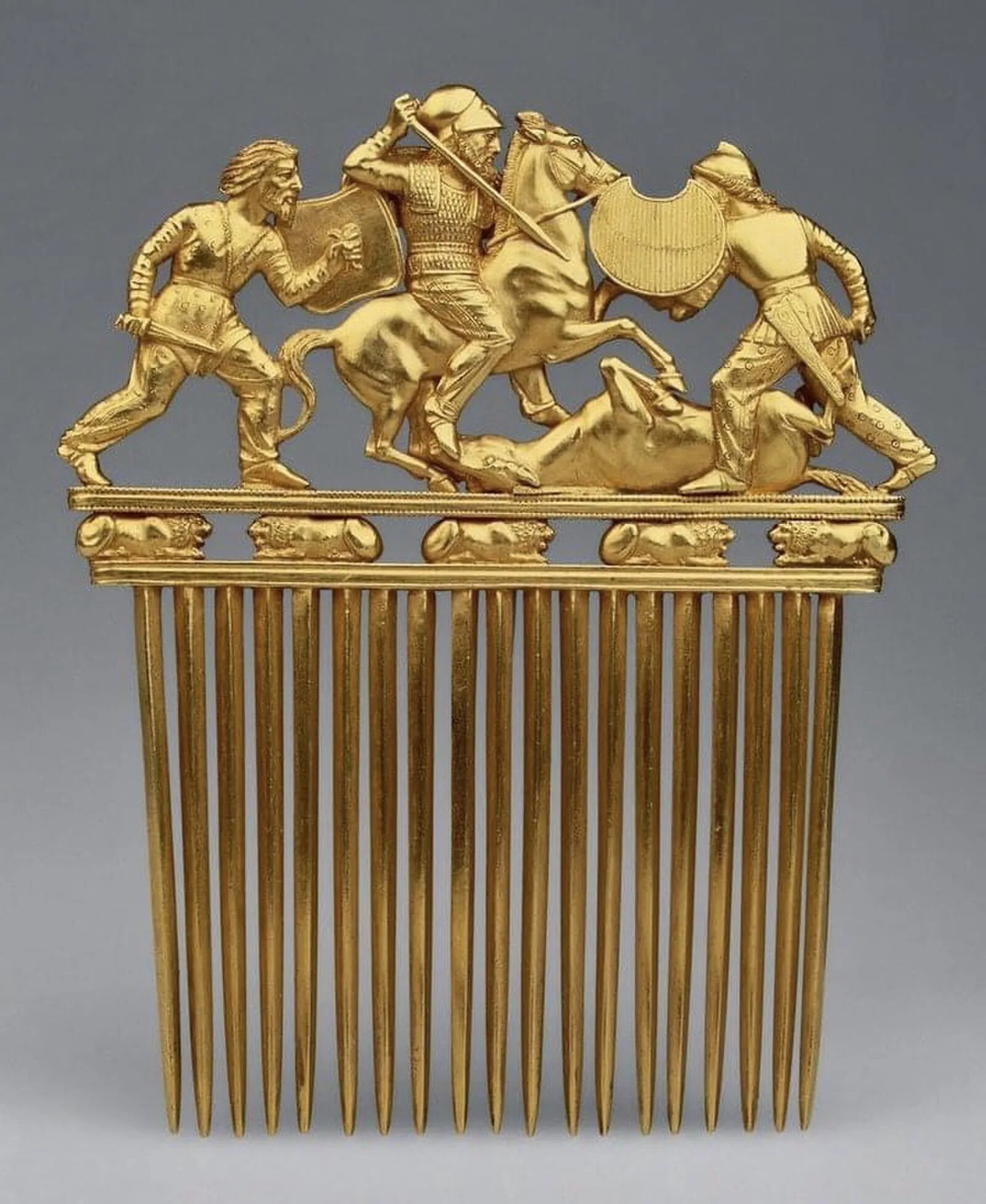
Also known as: Sołocha, Solocha-kurgán, Solokha, Soloxa, Szoloha-kurgán, Курган Солоха, Солоха, Солоха (курган), Солоха (могила), சோலோகா, ソロハ
| Type | Mound/tumulus |
|---|---|
| Period | 500 BC - 1 AD |
| Country | Ukraine |
| Coordinates | 47.3260° N, 34.3390° E |