
 Spain
SpainThe Caves of Nerja are a series of caverns close to the town of Nerja in the Province of Málaga, Spain [1]. The caves were re-discovered in modern times on 12 January 1959 by five friends, who entered through a narrow sinkhole known as "La Mina" [1]. The cave is divided into two main parts known as Nerja I and Nerja II [1]. Skeletal remains found in the caverns indicate that they were inhabited from about 25,000 BC up until the Bronze Age [1]. Cave paintings from the Paleolithic and post-Paleolithic eras have been discovered on the walls of the cave [1]. For about 4,000 years from 25,000 BC the caves were used seasonally by a small group of humans, and were occupied by cave hyena during the periods that the humans were absent [1]. By 21,000 BC the human population had taken up year-round residence in the caves and had increased in number [1].
Text: Wikipedia – 'Caves of Nerja' (revision of 2026-07-18), CC BY-SA 4.0 · sentences selected and shortened by an AI system · source →Caves of Nerja
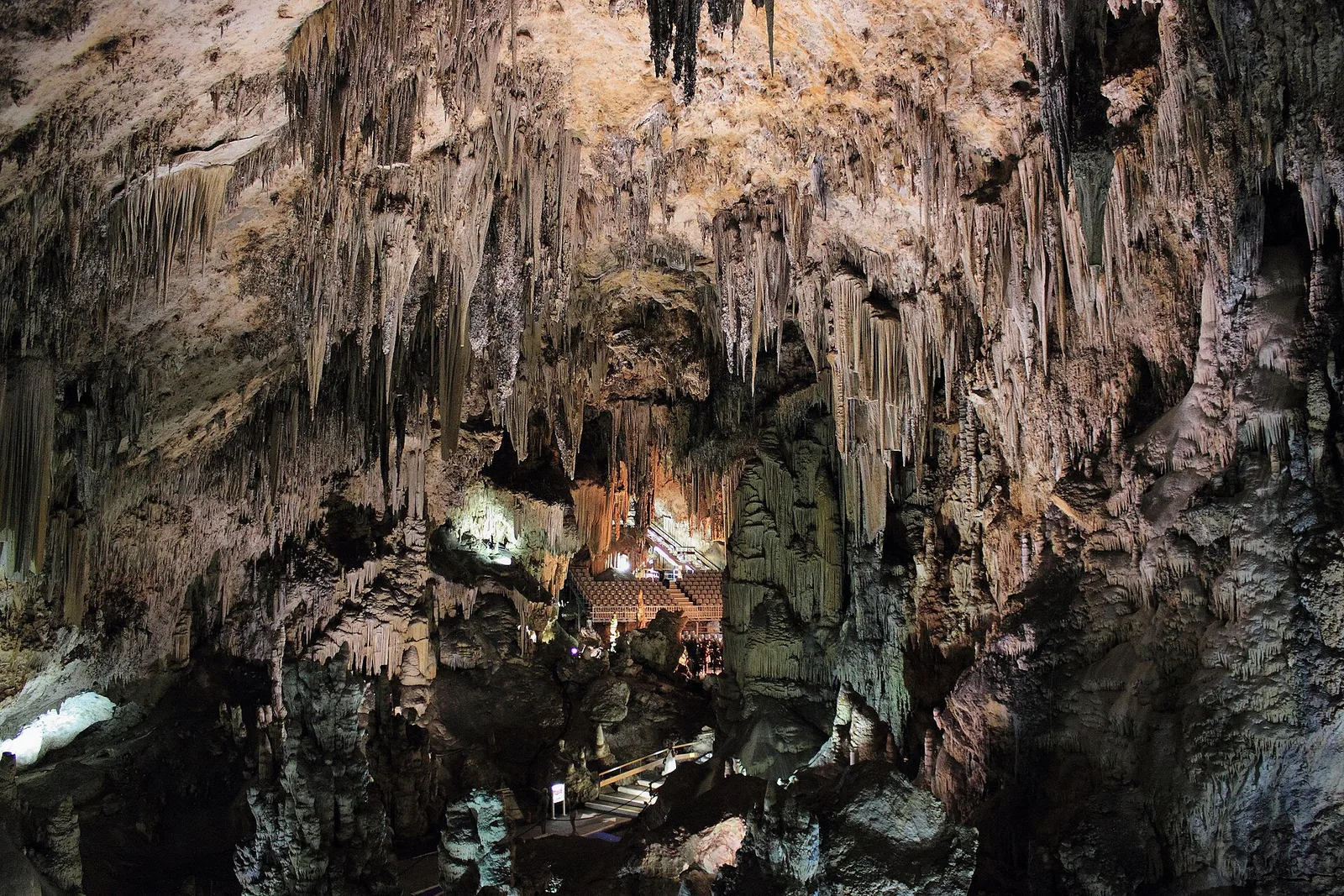
Also known as: Caverna de Nerja, Cueva de Nerja, Cuevas de Nerja, grotta di Nerja, Grotte de Nerja, Höhlen von Nerja, Höhle von Maro, Höhle von Nerja, Kathedrale der Vorgeschichte, Nerjai-barlang, Nerjako leizea, Nerja koobas
| Type | Rock art |
|---|---|
| Period | < 4500 BC |
| Country | Spain |
| Coordinates | 36.7618° N, 3.8458° W |