
 Spain
SpainThe Tito Bustillo Cave is a prehistoric rock shelter located in the small town of Ribadesella, in the autonomous community of Asturias [1]. The cave was inhabited by humans before the year 10,000 BC [1]. Due to the collapse of the rock, the original entrance to the cave was sealed thousands of years ago, which made it possible for preservation of objects, tools and wall paintings that were discovered in 1968 [1]. Based on those objects found in the cave, it is known that there was a significant human presence during the Magdalenian culture of the Upper Palaeolithic, but the cave was probably inhabited before that time [1]. The Tito Bustillo Cave has been designated a World Heritage Site, as part of the Cave of Altamira and Paleolithic Cave Art of Northern Spain, and it has 12 prehistorical paintings [1]. The oldest of these paintings shows human figures and is around 33,000 years old [1]. Apart from the paintings, some objects from the Magdalenian period were perfectly preserved [1]. The most important ones are some harpoons made of bone and a carved staghorn of a goat head [1].
Text: Wikipedia – 'Tito Bustillo Cave' (revision of 2026-07-19), CC BY-SA 4.0 · sentences selected and shortened by an AI system · source →Tito Bustillo Cave
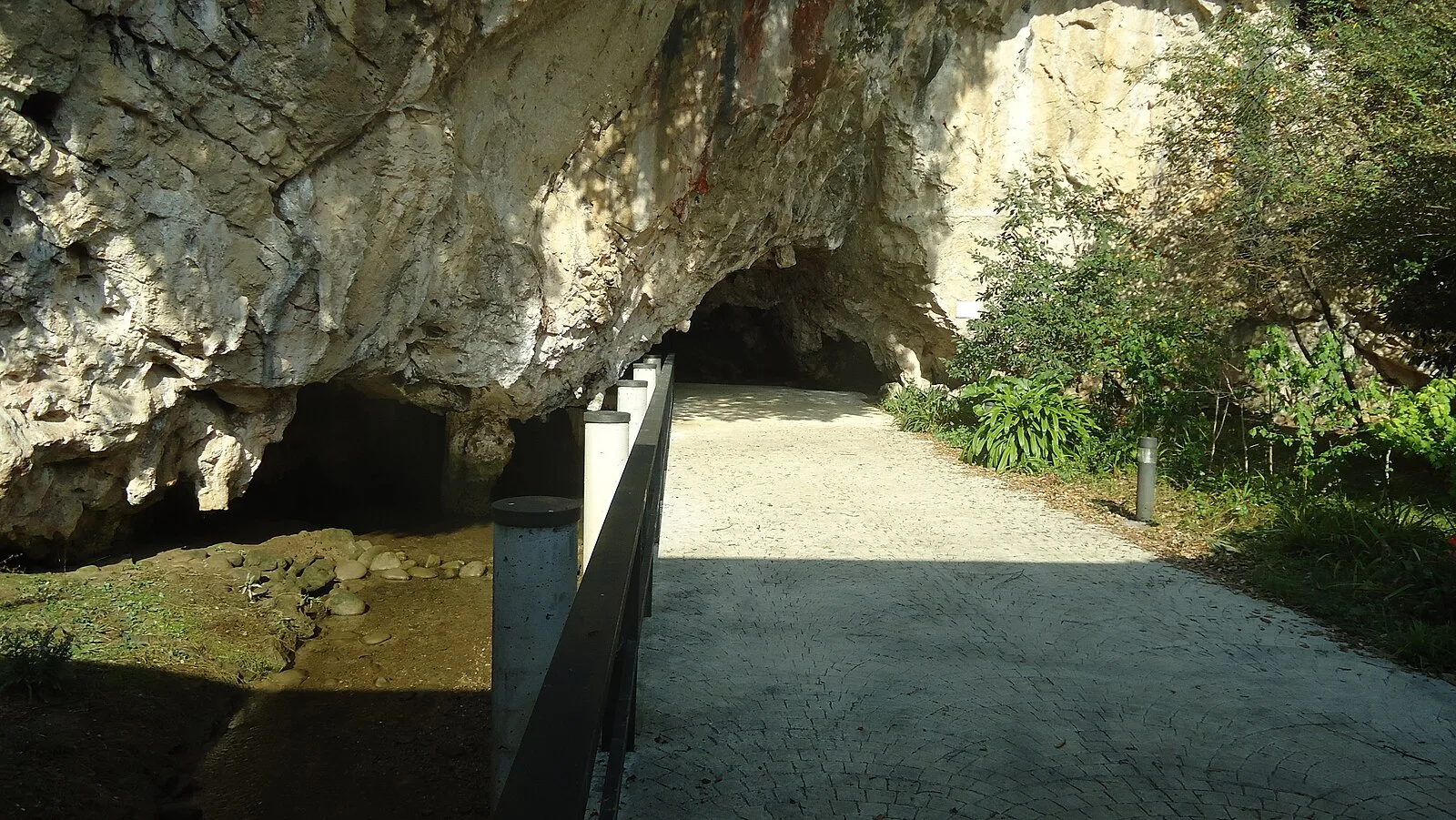
Also known as: Cova de Tito Bustillo, Cueva d'El Pozu'l Ramu, Cueva de Tito Bustillo, Cuevas de Tito Bustillo, grotte de Tito Bustillo, Spelunca Caelestini Bustillo, Spelunca Celestini Bustillo, Tito Bustillo, מערת טיטו בוסטייו, غار تیتو بوستیو, كهف تيتو بوستيلو, 蒂托·巴斯蒂罗洞
| Type | Cave Structures |
|---|---|
| Period | < 4500 BC |
| Country | Spain |
| Coordinates | 43.4609° N, 5.0677° W |