
 Peru
PeruChavín de Huántar is an archaeological site in Peru, containing ruins and artifacts constructed as early as 1200 BC, and occupied until around 400–500 BC by the Chavín, a major pre-Inca culture [1]. The site is located in the Ancash Region, 434 kilometers north of Lima, at an elevation of 3,180 meters, east of the Cordillera Blanca at the start of the Conchucos Valley [1]. Occupation at Chavín de Huántar has been carbon-dated to at least 3000 BC, with ceremonial center activity occurring primarily toward the end of the second millennium, and through the middle of the first millennium BC [1]. Chavín de Huántar served as a gathering place for people of the region to come together and worship [1]. At Chavín de Huántar, no later than 500 BC, a small village replaced the Circular Plaza [1]. The site contains a number of major structures, including Temples A, B, C and D, and areas and buildings designated as the Major Plaza, the Circular Plaza, the Old Temple and New Temple [1].
Text: Wikipedia – 'Chavín de Huántar' (revision of 2026-07-18), CC BY-SA 4.0 · sentences selected and shortened by an AI system · source →Sitio Arqueológico Chavín de Huántar
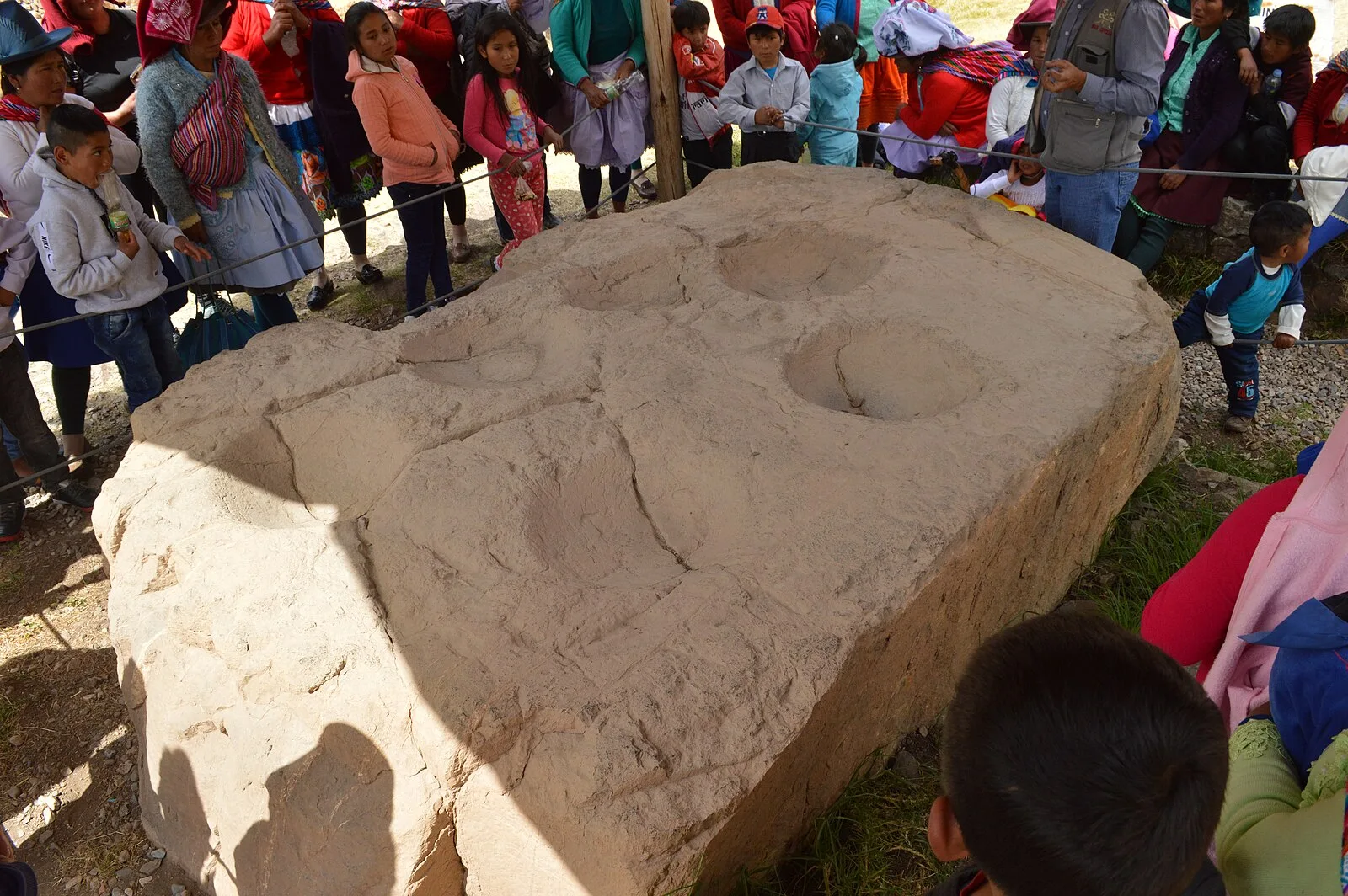
Also known as: Archeologisch gebied van Chavín, Cagar Alam Chavín de Huantar, Čavinas, Čavin de Uantaras, Centro ceremonial de Chavín de Huántar, Chavin, Chavin de Huantar, Chavinkultur, Chavín-Kultur, Cultura chavin, Huantar, Site archéologique de Chavin
| Type | Temple complex |
|---|---|
| Period | 1500 - 500 BC |
| Country | Peru |
| Coordinates | 9.5934° S, 77.1767° W |