
 Pakistan
Uch was an early stronghold during the Muslim conquest of the subcontinent [1]. Uch was a regional metropolitan centre between the 12th and 17th centuries, and became refuge for Muslim religious scholars fleeing persecution from other lands [1]. Though Uch is now a relatively small city, it is renowned for its intact historic urban fabric, and for its collection of shrines dedicated to Muslim mystics from the 12th to 15th centuries that are embellished with extensive tile work [1]. Uch Sharif may have been founded in 325 BCE by Alexander the Great as the city of Alexandria on the Indus, according to British officer and archaeologist Alexander Cunningham [1]. In 712 CE, Muhammad bin Qasim conquered Uch [1]. Uch was probably the town recorded as Bhatia that was conquered in 1006 by Mahmud of Ghazni [1]. 17 tiled funerary monuments and associated structures remain tightly knit into the urban fabric of Uch [1]. Three shrines built over the course of 200 years are particularly well known, and along with an accompanying 1400 graves form the Uch Monument Complex [1].
Text: Wikipedia – 'Uch' (revision of 2026-09-09), CC BY-SA 4.0 · sentences selected and shortened by an AI system · source →Uch
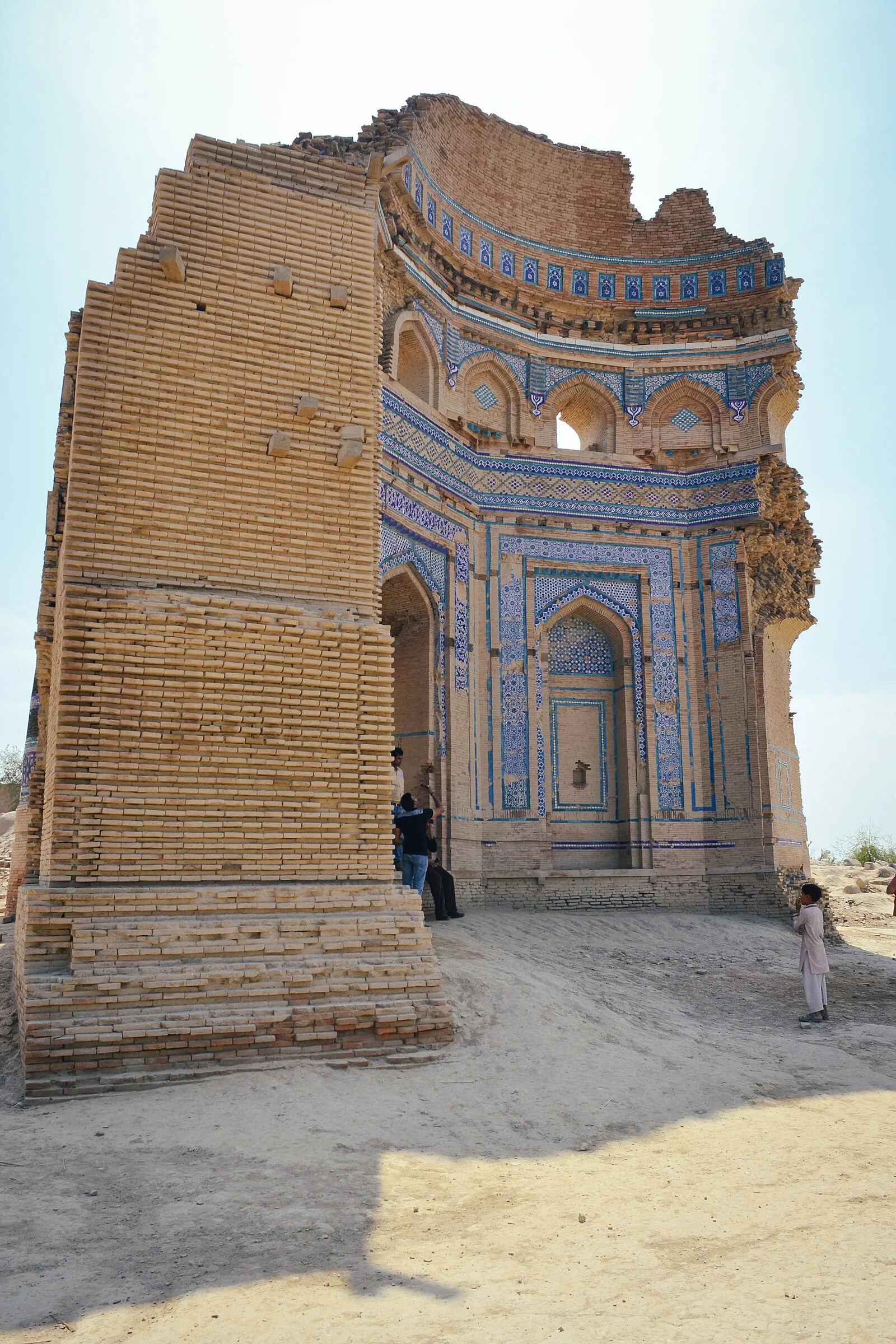
Also known as: 우치 (파키스탄), Uch Šaríf, Uch Shareef, Uch Sharif, Úč Šaríf, Uč Šarifa, Uç Şerif, Uuch, Uuch Sharīf, Vznešený Uč, Ουτς, Уч-Шариф
| Type | City/town/settlement |
|---|---|
| Period | 500 BC - 1 AD |
| Country | Pakistan |
| Coordinates | 29.2336° N, 71.0666° E |