
 Pakistan
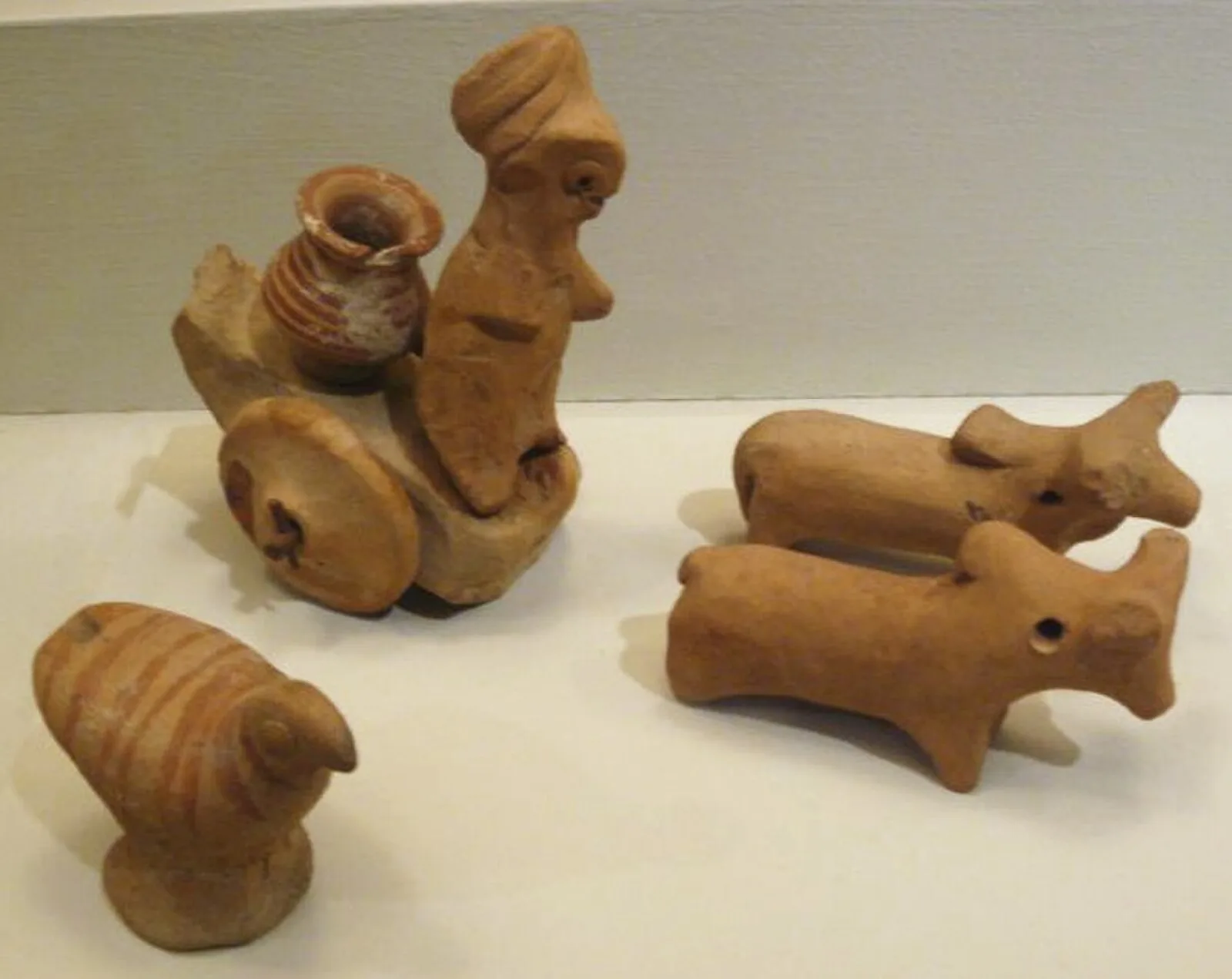
Harappa was a settlement in Punjab, Pakistan, about 24 kilometres west of Sahiwal [1]. The city of Harappa is believed to have had as many as 23,500 residents and occupied about 150 hectares with clay brick houses, at its greatest extent during the Mature Harappan phase (2600 BC – 1900 BC), which is considered large for its time [1]. Although the archaeological site at Harappa was damaged in 1857 when engineers constructing the Lahore-Multan railway used bricks from the ruins for track ballast, an abundance of artefacts has nevertheless been recovered [1]. Harappa is the type site of the Bronze Age Indus Valley Civilisation ("IVC"), as it was the first IVC site to be excavated by the Archaeological Survey of India during the British Raj, although its significance did not become manifest until the discovery of Mohenjo-daro in Sindh, Pakistan, some years later [1]. Clay and stone tablets unearthed at Harappa, which were carbon-dated 3300–3200 BC, contain trident-shaped and plant-like markings [1].
Text: Wikipedia – 'Harappa' (revision of 2026-09-25), CC BY-SA 4.0 · sentences selected and shortened by an AI system · source →Harappa
Also known as: 하라파, Cultura de Harappa, Cultura de Jarappa, Cultura d'Harappa, Cultura Jarappa, Harapa, Harapan, Harapo, Harappan, Harrappa, Jarappa, Xarappa
| Type | City/town/settlement |
|---|---|
| Period | 4500 - 3000 BC |
| Country | Pakistan |
| Coordinates | 30.6291° N, 72.8638° E |