
 Pakistan
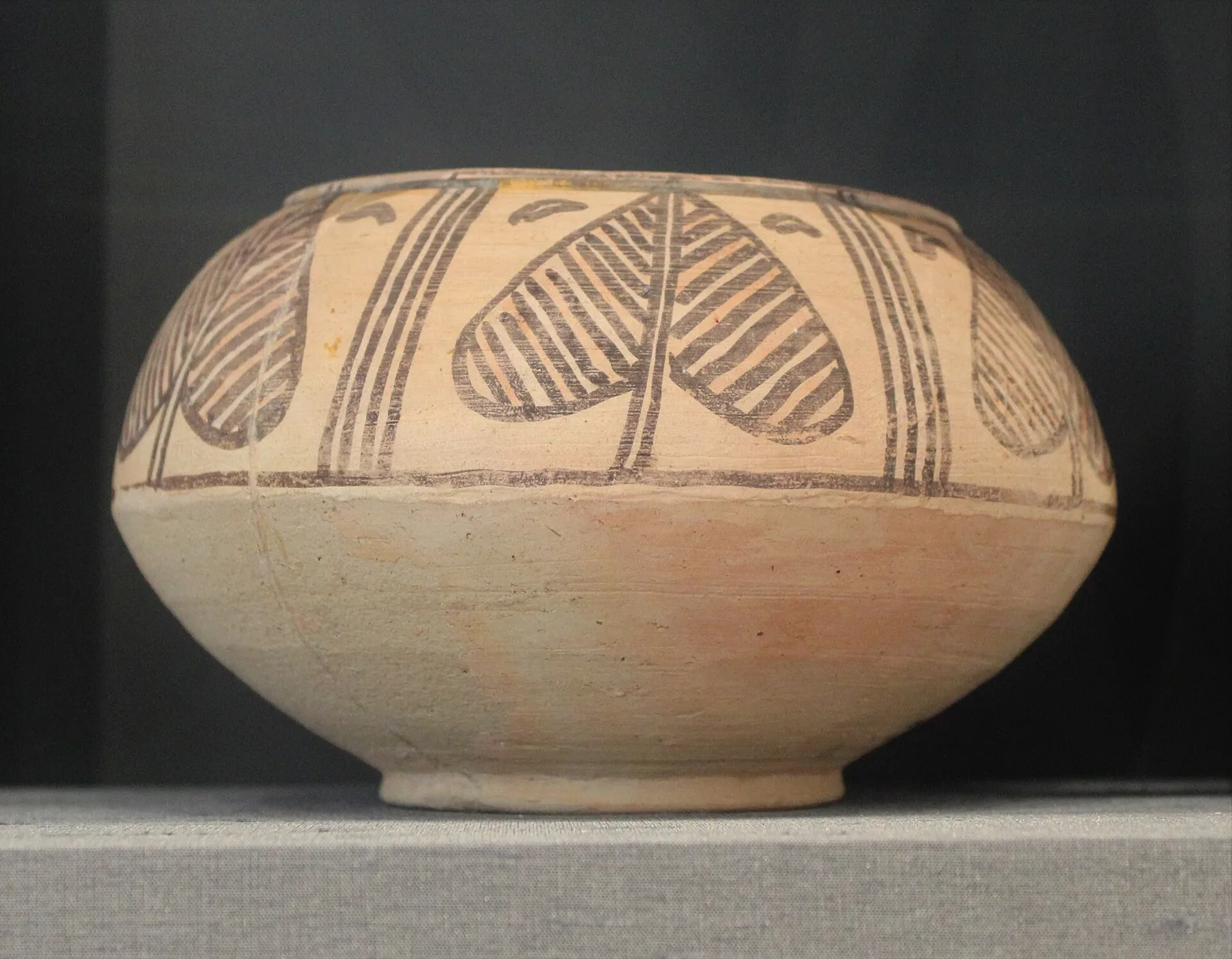
Sohr Damb, c. 3800–2300 BC, is an archaeological site near Nal in central Balochistan, Pakistan that begins before the Indus Valley Civilization featuring Togau, Kili Ghul Mohammad, and Kechi Beg pottery styles [1]. It has also been known as Naal, Balochistan, and gave its name to the prehistoric Amri-Nal culture, which is attributed to the dual typesites of Amri and Nal [1]. The site extends around 4,5 hectares; the mound (mostly geologically formed) is 13 m high [1]. The excavations reveal four periods of occupation, and they could be further divided into several sub-periods [1]. The locality was first discovered in 1903 [1]. Since 2001, the site has been systematically excavated by the German Archaeological Institute and the Department of Archeology and Museums, Government of Pakistan [1]. Domesticated cattle bones are plentiful in the settlement, and bull figurines are also found [1].
Text: Wikipedia – 'Sohr Damb' (revision of 2026-06-13), CC BY-SA 4.0 · sentences selected and shortened by an AI system · source →Sohr Damb
Also known as: سور دمب, ソール・ダム
| Type | Mound/tumulus |
|---|---|
| Period | 4500 - 3000 BC |
| Country | Pakistan |
| Coordinates | 27.6930° N, 66.3105° E |