
 Pakistan
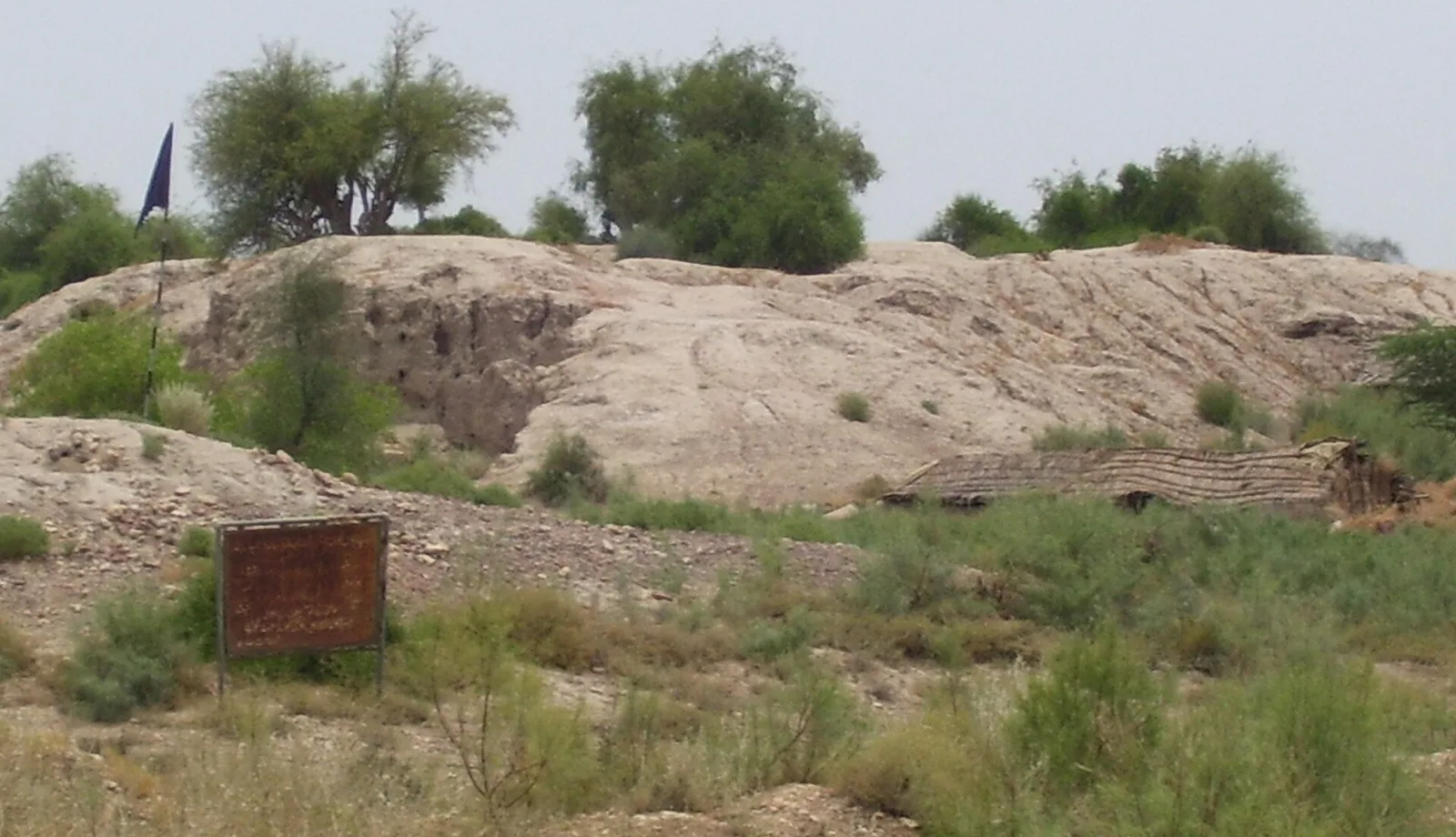
Amri is an ancient settlement in modern-day Sindh, Pakistan, that goes back to 3600 BCE [1]. The site is located south of Mohenjo Daro on Hyderabad-Dadu Road more than 100 kilometres north of Hyderabad, Pakistan [1]. Amri is a type site for Amri culture which developed in Sindh during 4th millennium BCE [1]. The ancient mounds of 8 hectares on the west bank of Indus River have been extensively excavated [1]. The earliest phase was a fortified town that flourished from 3600 to 3300 BC, and belonged to the Pre-Harappan stage of the Indus Valley civilization [1]. The pottery discovered here had its own characteristics and is known as Amri Ware [1]. In period II (ca. 2750-2450 BC), more and more elements of Indus Valley culture appear [1]. Period III (ca. 2450-1900 BC) belongs almost entirely to Indus Valley culture [1].
Text: Wikipedia – 'Amri, Sindh' (revision of 2026-06-21), CC BY-SA 4.0 · sentences selected and shortened by an AI system · source →Amri, Sindh
Also known as: Amri, Amri (Pakistan), Amri (Pakisztán), Amri (Pre-Harappa), Amris, Амри, Амрі, آمري, آمري (قديم آثار), آمری, अमरी, सिंध, ਅਮਰੀ, ਸਿੰਧ
| Type | City/town/settlement |
|---|---|
| Period | 4500 - 3000 BC |
| Country | Pakistan |
| Coordinates | 25.9112° N, 67.9238° E |