
 Pakistan
Taxila is a UNESCO World Heritage Site (1980) in Punjab, Pakistan [1]. A major Buddhist centre of learning on a branch of the Silk Road, it was ruled by Greeks, Mauryans, Indo-Greeks, Scythians, Parthians, and Kushans [1] [2]. Key monuments include the Dharmarajika stupa, which yielded a silver Kharoshthi inscription and gold casket with bone relics attributed to the Buddha, along with Jaulian and Mohra Muradu monasteries [1] [3] [4]. The site was sacked by the Huns in the 5th century and never recovered [1].
Taxila
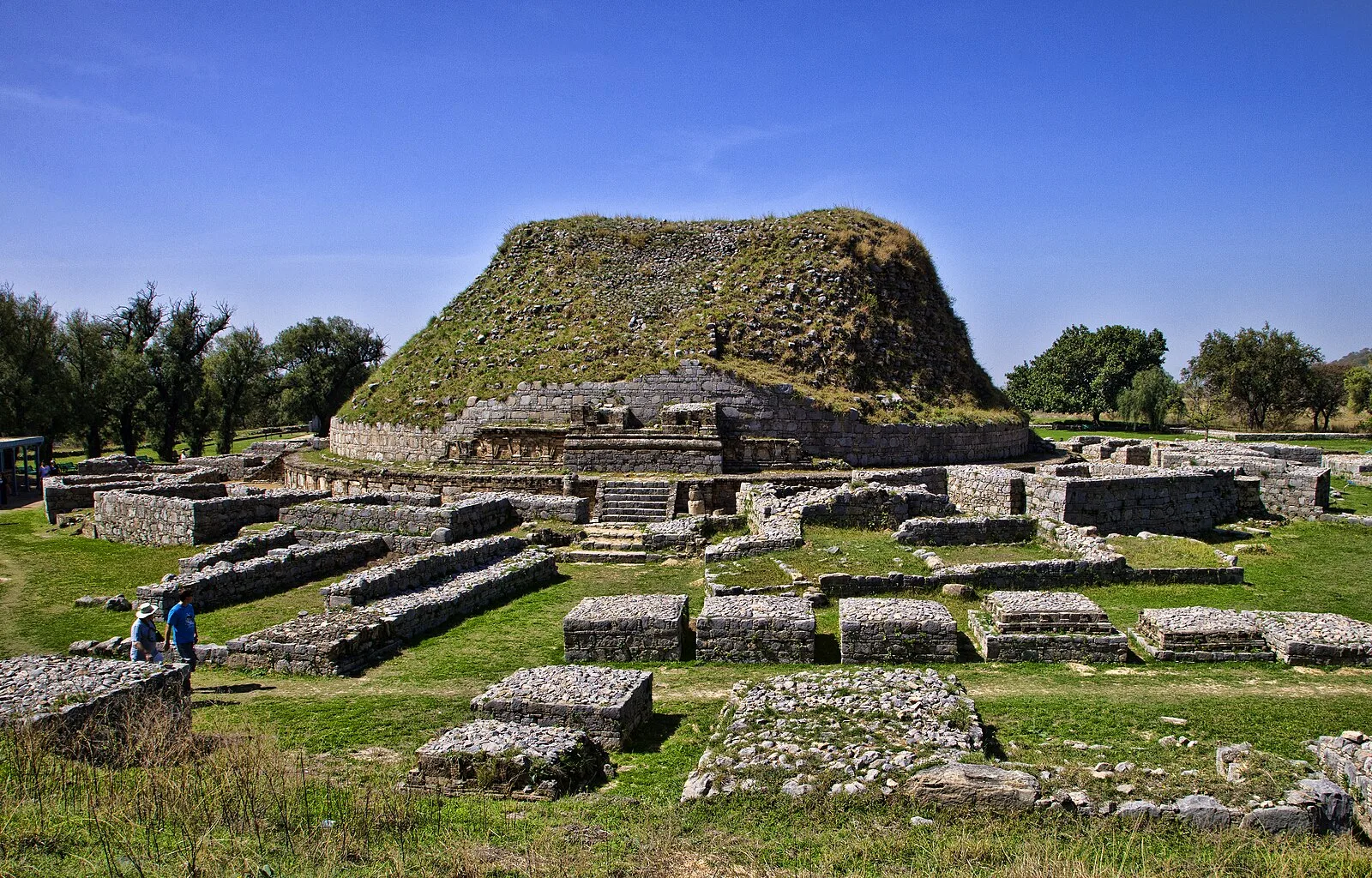
Also known as: 탁실라, Mint of Taxila, Sirkap, Sirsukh, Takashila, Takhasila, Takkasilá, Taksasila, Takshashila, Takshasila, Takshila, Takshishila
| Type | City/town/settlement |
|---|---|
| Period | 1500 - 500 BC |
| Country | Pakistan |
| Coordinates | 33.7459° N, 72.7875° E |