
 Pakistan
The Manikyala Stupa or Mankiala Stupa is a Buddhist stupa near the village of Tope Mankiala, in the Pothohar region of Pakistan's Punjab province [1]. The stupa was built to commemorate the spot, where according to the Jataka tales, an incarnation of the Buddha called Prince Sattva sacrificed himself to feed seven hungry tiger cubs [1]. The stupa was discovered by Mountstuart Elphinstone, the first British emissary to Afghanistan [1]. Mankiala stupa's relic deposits were discovered by Jean-Baptiste Ventura in 1830 [1]. The relics were then removed from the site during the British Raj, and are now housed in the British Museum [1]. The stupa has not been restored since 1891, and remains largely abandoned [1]. The stupa features a large defect in its mound, which was created by plunderers [1].
Text: Wikipedia – 'Manikyala Stupa' (revision of 2026-07-30), CC BY-SA 4.0 · sentences selected and shortened by an AI system · source →Manikyala Stupa
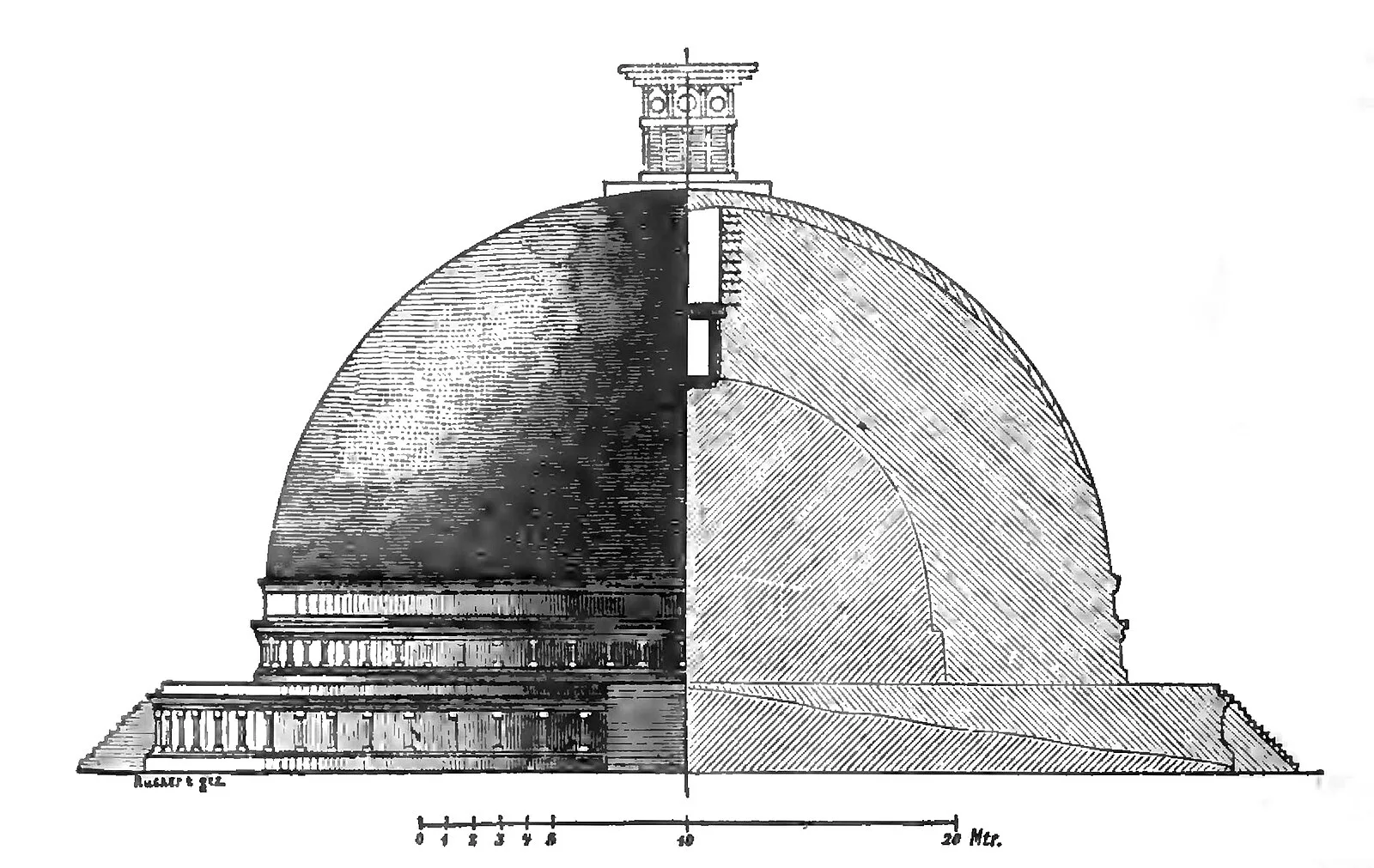
Also known as: Manikiala-Stupa, Mankiala Stupa, Mankiala-Stupa, Stoepa van Maniakala, Stupa de Mankiala, Stupa ng Mankiala, مانکیالا سٹوپا, مانکیالہ اسٹوپا, माणिक्यल स्तूप, மாணிக்யாலா தூபி, മണ്ക്യല സ്തൂപം, මාණික්යාලා ස්තූපය
| Type | Monument |
|---|---|
| Period | 1 - 500 AD |
| Country | Pakistan |
| Coordinates | 33.4482° N, 73.2433° E |