
 Pakistan
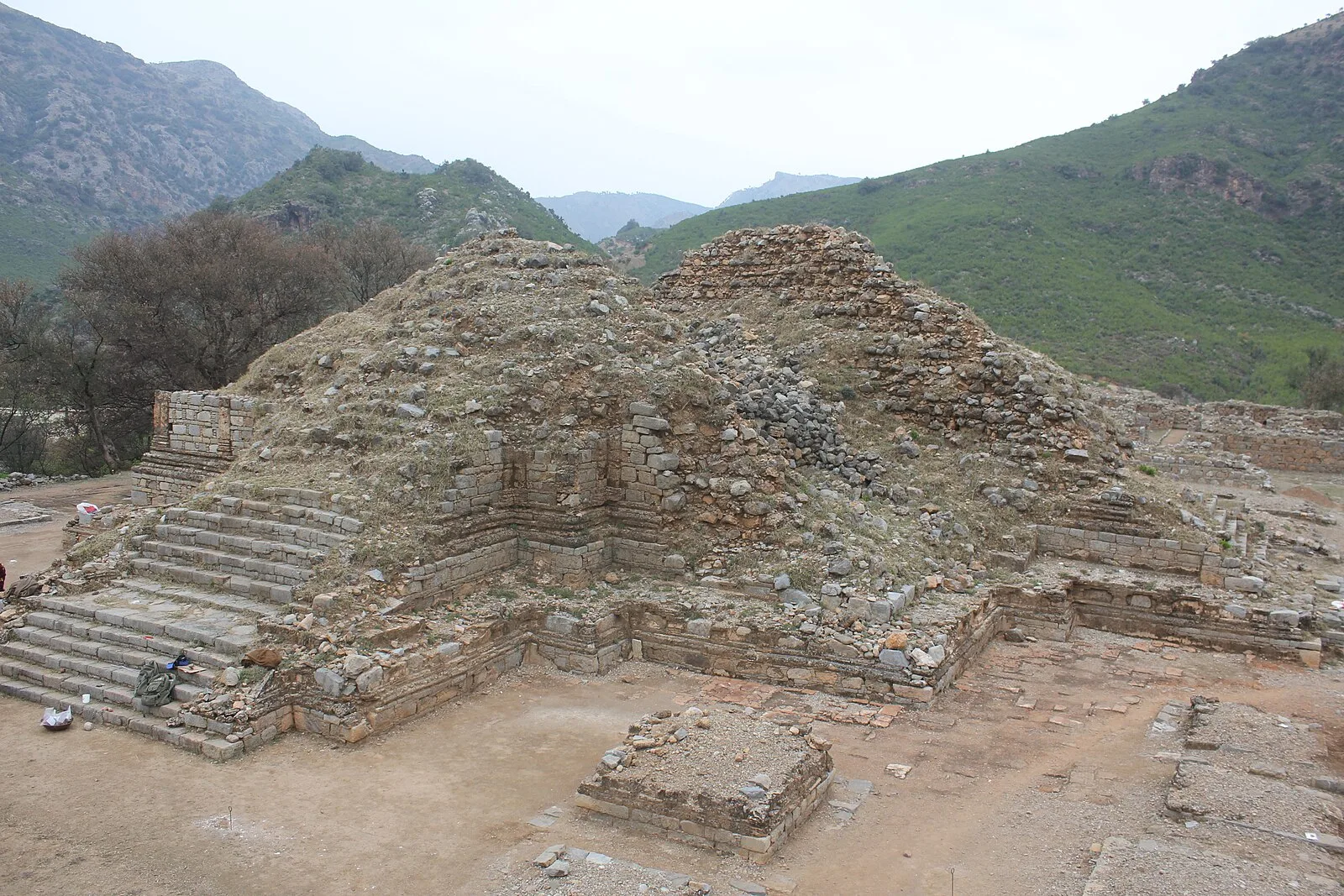
Bhamala Stupa is a ruined Buddhist stupa near Haripur, Pakistan, that dates to the 2nd century CE [1]. It is located on the banks of the Haro River, near Khanpur Dam [1]. Bhamala stupa is part of the larger Bhamala Buddhist Complex [1]. The site is known for its 1,700-year-old statue of the Buddha attaining enlightenment—considered to be the oldest such statue in the world [1]. Dating to the 2nd–5th century CE, the site was first excavated by John Marshall in 1929, and work continued until the early 1930s; excavations resumed in 2017 [1]. According to current understanding, the shape of the main stupa is cruciform, and it is the largest surviving example of this shape in the Taxila and Gandhara regions [1]. There are about nineteen small, votive stupas in the courtyard surrounding the main one [1].
Text: Wikipedia – 'Bhamala Stupa' (revision of 2026-07-30), CC BY-SA 4.0 · sentences selected and shortened by an AI system · source →Bhamala Stupa
Also known as: Bhamala Buddhist Complex, Bhamala Complex, بھامالا اسٹوپا, பாமலா தூபி, භාමාලා ස්තූපය, ဘမ်းမလစေတီတော်
| Type | Temple complex |
|---|---|
| Period | 1 - 500 AD |
| Country | Pakistan |
| Coordinates | 33.8337° N, 72.9668° E |