
 Pakistan
The Butkara Stupa is an important Buddhist stupa near Mingora, in the area of Swat [1]. The stupa was excavated by an Italian mission, led by archaeologist Domenico Faccenna from 1956 [1]. The mission established that the stupa was "monumentalized" by the addition of Hellenistic architectural decorations during the 2nd century BCE, suggesting a direct involvement of the Indo-Greeks, rulers of Indus during that period, in the development of Greco-Buddhist architecture [1]. An Indo-Corinthian capital representing a Buddhist devotee within foliage has been found which had a reliquary and a coin of Azes II buried at its base, securely dating the sculpture to earlier than 20 BCE [1]. A large quantity of the artifacts are preserved in the National Museum of Oriental Art and the City Museum of Ancient Oriental Art in Turin [1]. The in-situ seated Buddha (or Bodhisattva) statue at Butkara is considered one of the earliest, if not the earliest, known iconographical statues of the Buddha in northwestern India [1].
Text: Wikipedia – 'Butkara Stupa' (revision of 2026-07-18), CC BY-SA 4.0 · sentences selected and shortened by an AI system · source →Butkara Stupa
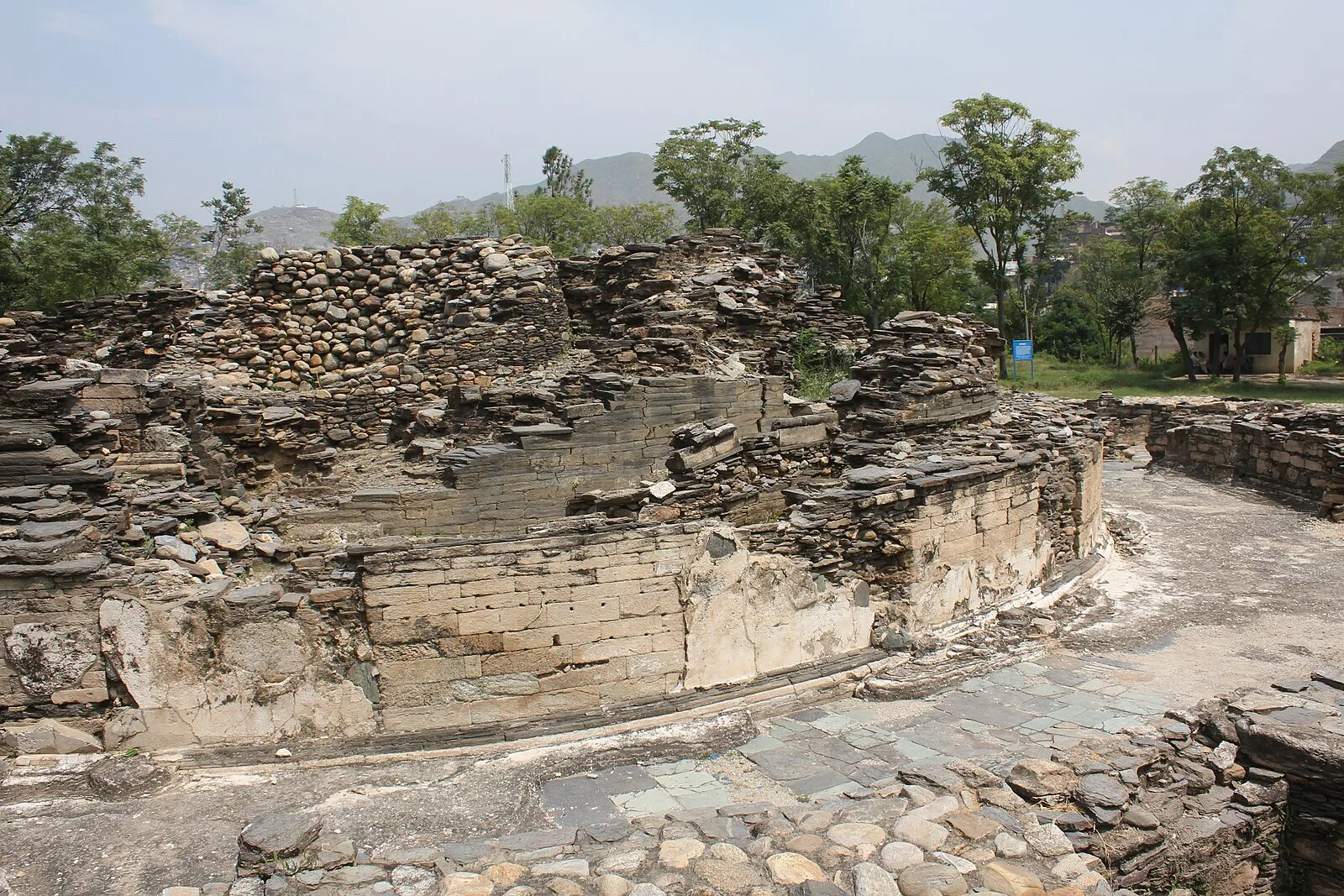
Also known as: Butkara, Butkara I, Butkara-Stupa, Stupa di Butkara, Буткара ступа, بت کڑہ اسٹوپا, बटकारा स्तूप, बुतकारा स्तूप, புத்கார தூபி, බුත්කාර ස්තූපය, 布特拉佛塔
| Type | Temple complex |
|---|---|
| Period | 500 BC - 1 AD |
| Country | Pakistan |
| Coordinates | 34.7573° N, 72.3621° E |