
 Pakistan
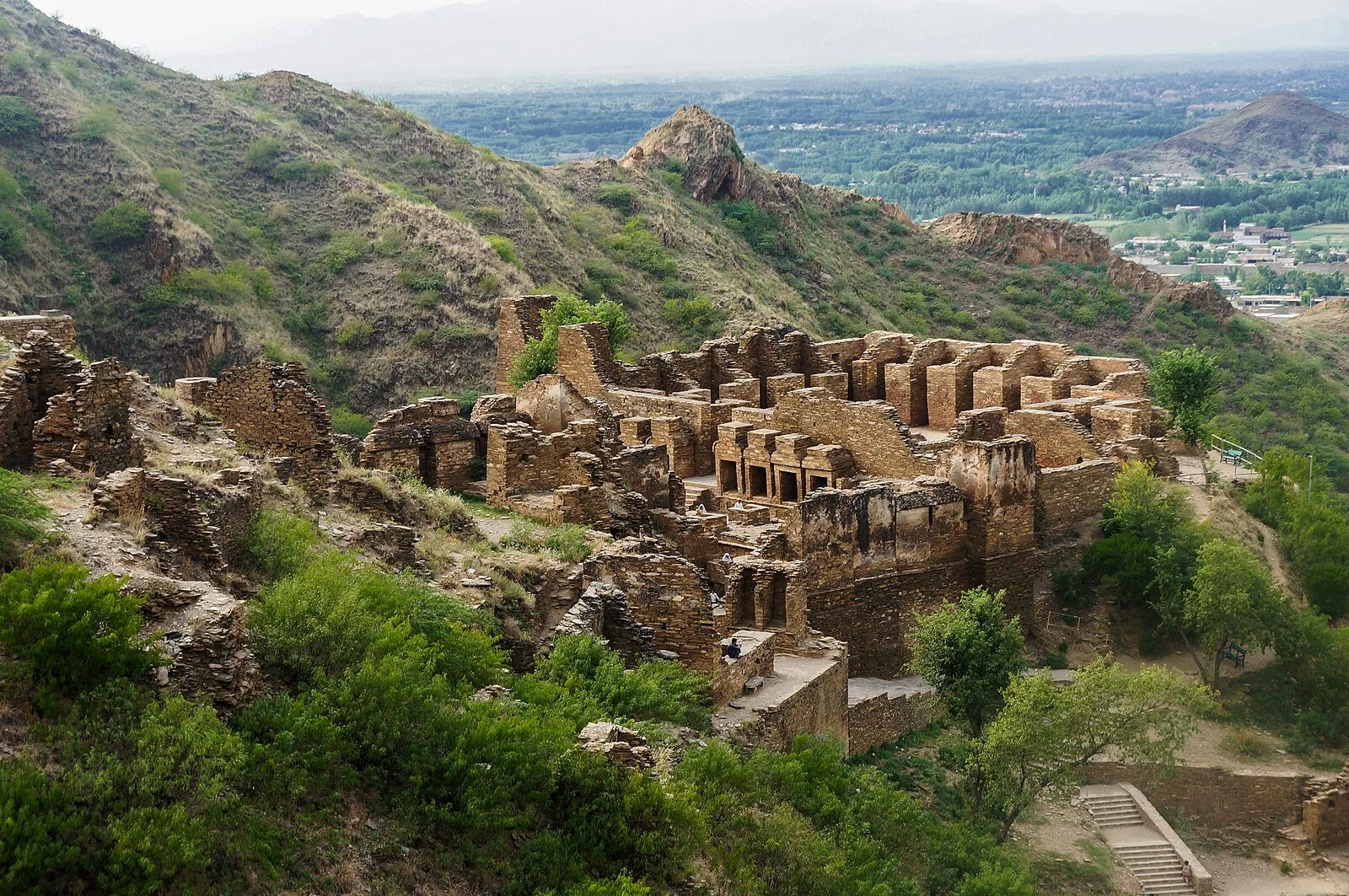
Takht-i-Bahi, is an Indo-Parthian archaeological site of an ancient Buddhist monastery in Mardan, Khyber-Pakhtunkhwa, Pakistan [1]. The site is considered among the most important relics of Buddhism in all of what was once Gandhara [1]. The complex is regarded by archaeologists as being particularly representative of the architecture of Buddhist monastic centers from its era [1]. The ruins are located about 15 kilometres (9.3 mi) from Mardan in Pakistan's Khyber-Pakhtunkhwa Province [1]. The monastic chambers consist of individual cells arranged around a courtyard, assembly halls, and a dining area [1]. All of the buildings on the site are constructed from local stone and are mortared with lime and mud [1]. An inscription bearing the name of Gondophares (20–46 CE) has been found at the site [1].
Text: Wikipedia – 'Takht-i-Bahi' (revision of 2026-09-08), CC BY-SA 4.0 · sentences selected and shortened by an AI system · source →Takht-i-Bahi
Also known as: 탁트이바히, Tacht-e Bháʼí, Tacht-i Bahi, Tacht i Bahis, Tachti Bahis, Taht-i-Bahi, Tahti Bahi, Takht Bahai, Takht Bahi, Takhtbai, Takht i Bahi, Takht i-Bahi
| Type | Monastery |
|---|---|
| Period | 1 - 500 AD |
| Country | Pakistan |
| Coordinates | 34.2863° N, 71.9467° E |