
 Pakistan
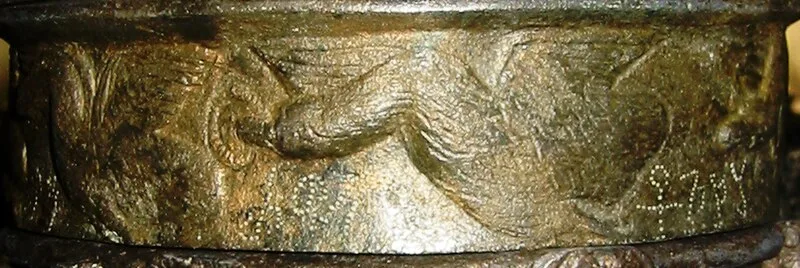
Shaji-ki-Dheri is the site of an ancient Kanishka stupa about 6 kilometers from Peshawar [1]. French archaeologist Alfred Charles Auguste Foucher had visited Peshawar towards the end of the 19th century, and had noticed two mounds southeast of Peshawar outside the walled city [1]. He tried to relate them to Hiuen Tsang's description of the place [1]. American archaeologist David Brainard Spooner conducted excavations there in 1908-09 for the Archaeological Survey of India leading to the identification of the Kanishka stupa dated to the 2nd century CE, and the discovery of the Kanishka casket [1]. Many statues of the Buddha at Shaji-ki-Dheri feature a halo similar to the haloes seen in the Buddha coins of Kanishka I, suggesting a 2nd century CE date for the creation of the statues, rather than the usual datation to the 3-4th century CE [1].
Text: Wikipedia – 'Shaji-ki-Dheri' (revision of 2024-02-19), CC BY-SA 4.0 · sentences selected and shortened by an AI system · source →Shaji-ki-Dheri
Also known as: Kanishka Stupa, शाहजी की ढेरी, ශාජි-කී-ඪේරි
| Type | Monastery |
|---|---|
| Period | 1 - 500 AD |
| Country | Pakistan |
| Coordinates | 33.9994° N, 71.5918° E |