
 Pakistan
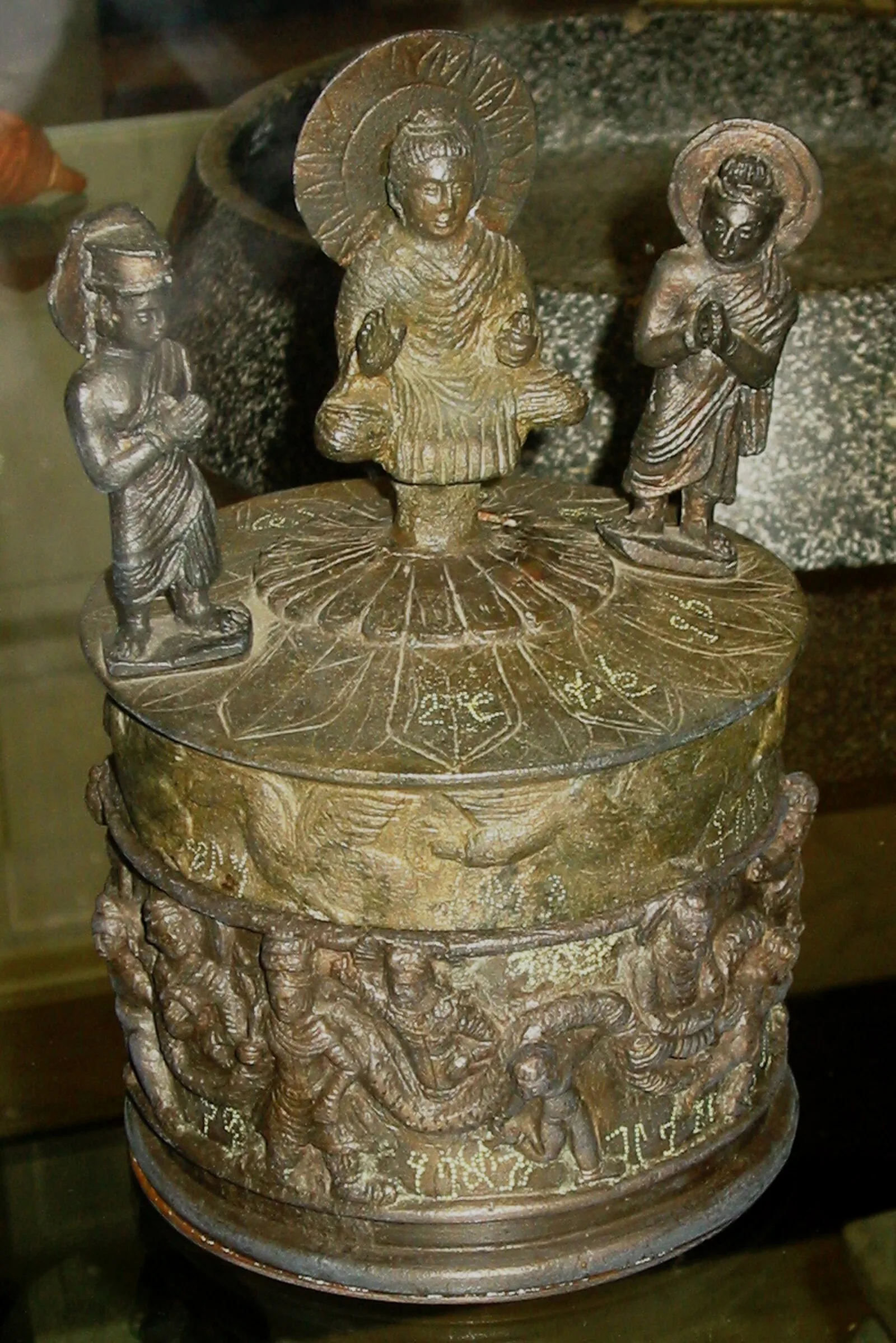
The Kanishka Stupa was a monumental Buddhist stupa built c. 127 CE by Kushan emperor Kanishka I at Purushapura (modern Peshawar, Pakistan), standing over 400 feet (c. 123 m) tall -- among the tallest buildings in the ancient world. The 7th-century Chinese pilgrim Xuanzang described it as over 150 meters tall with a cross-shaped form, noting it had been damaged by three fires. Excavated by D.B. Spooner in 1908-1911, the dig uncovered the famous Kanishka Casket, a gilded bronze reliquary containing three bone fragments believed to be relics of the Buddha, later transferred to Mandalay, Myanmar.
Kanishka Stupa
Also known as: Kanischka-Dose, Kanischka-Stupa, Kanishka-Stupa, Kaniškova stúpa, Ступа Канишки, סטופת קנישקה, کنشک اسٹوپا, کنشک سٹوپا, कनिष्क स्तूप, கனிஷ்கரின் தூபி
| Type | Temple complex |
|---|---|
| Period | 1 - 500 AD |
| Country | Pakistan |
| Coordinates | 33.9996° N, 71.5917° E |