
 Mexico
Palenque, also anciently known in the Itzaʼ language as Lakamha, was a Maya city-state in southern Mexico that perished in the 8th century [1]. The Palenque ruins date from ca. 226 BC to ca. 799 AD [1]. Palenque is a medium-sized site, smaller than Tikal, Chichen Itza, or Copán, but it contains some of the finest architecture, sculpture, roof comb and bas-relief carvings that the Maya produced [1]. Much of the history of Palenque has been reconstructed from reading the hieroglyphic inscriptions on the many monuments; historians now have a long sequence of the ruling dynasty of Palenque in the 5th century and extensive knowledge of the city-state's rivalry with other states such as Calakmul and Toniná [1]. The most famous ruler of Palenque was Kʼinich Janaabʼ Pakal, or Pacal the Great, whose tomb has been found and excavated in the Temple of the Inscriptions [1]. One of the main figures responsible for rebuilding Palenque and for a renaissance in the city's art and architecture is also one of the best-known Maya Ajaw, Kʼinich Janaabʼ Pakal, who ruled from 615 to 683 [1].
Text: Wikipedia – 'Palenque' (revision of 2026-09-24), CC BY-SA 4.0 · sentences selected and shortened by an AI system · source →Palenque
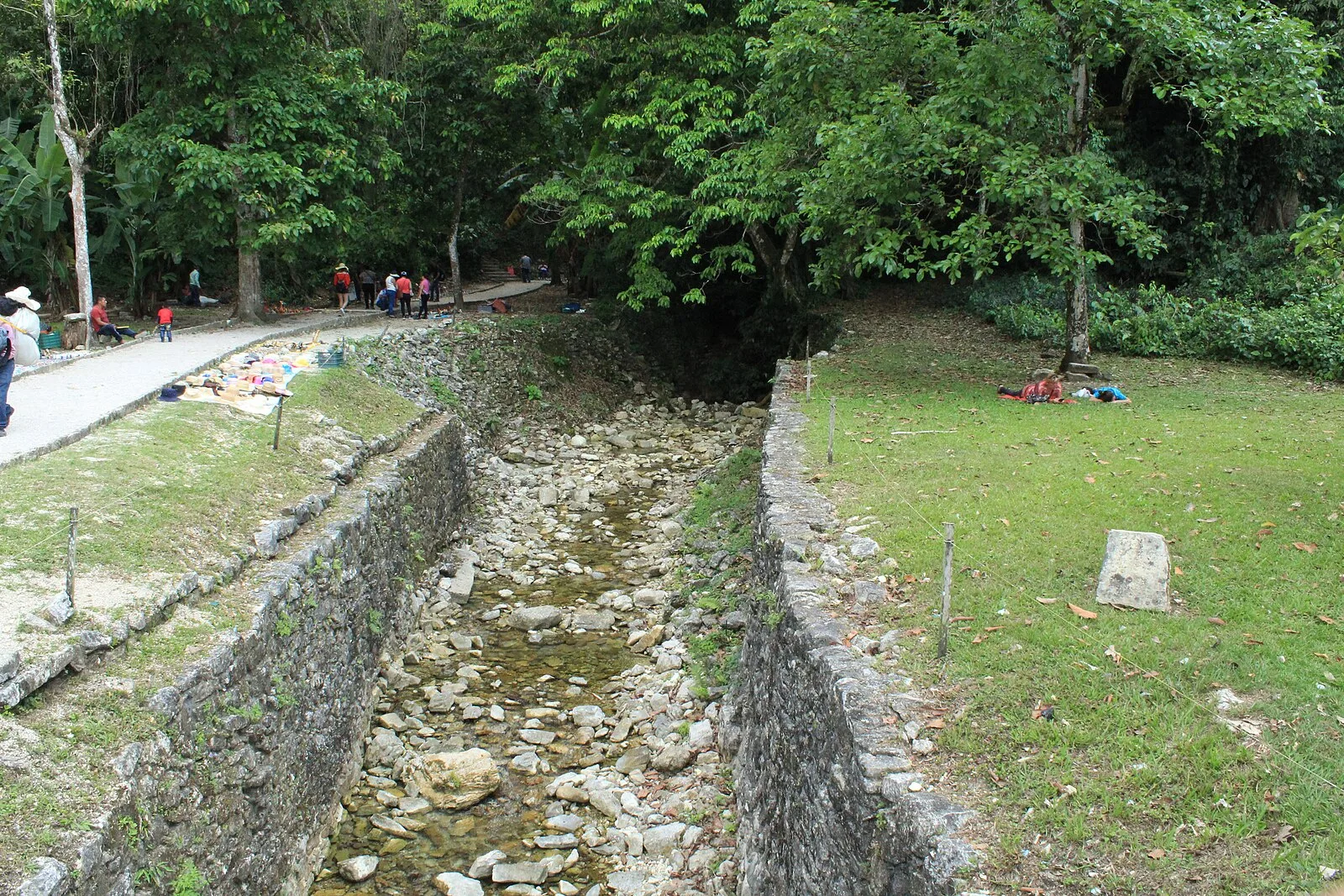
Also known as: 팔렌케, 팔렝케, B'aakal, Cidade Pré-Hispânica e Parque Nacional de Palenque, Palau del Governador, Palenke, Palenkė (miestas), Palenque, Chiapas, Palenque (Mayastad), parco nazionale di Palenque, parco nazionale Palenque, Park Narodowy Palenque
| Type | City/town/settlement |
|---|---|
| Period | 500 BC - 1 AD |
| Country | Mexico |
| Coordinates | 17.4849° N, 92.0466° W |