
 Mexico
The Cascajal Block was discovered by road builders in the late 1990s in a pile of debris in the village of Lomas de Tacamichapan in the Veracruz lowlands in the ancient Olmec heartland on the southeastern coast of Mexico [1]. Archaeologists Carmen Rodriguez and Ponciano Ortiz of the National Institute of Anthropology and History of Mexico examined and registered it with government historical authorities [1]. It weighs about 11.5 kilograms and measures 36 by 21 by 13 centimetres [1]. The block holds a total of 62 glyphs, some of which resemble plants such as maize and pineapple, or animals such as insects and fish [1]. Many of the symbols are more abstract boxes or blobs [1]. X-ray fluorescence (XRF) spectrometry indicates that the block is geologically indistinguishable from serpentinite sourced from Tehuitzingo, Puebla, a site which has acted as the source quarry for other Olmec artifacts [1]. The surface of the block is covered with a uniform patina depleted in silicon and magnesium [1].
Text: Wikipedia – 'Cascajal Block' (revision of 2026-09-07), CC BY-SA 4.0 · sentences selected and shortened by an AI system · source →Cascajal Block
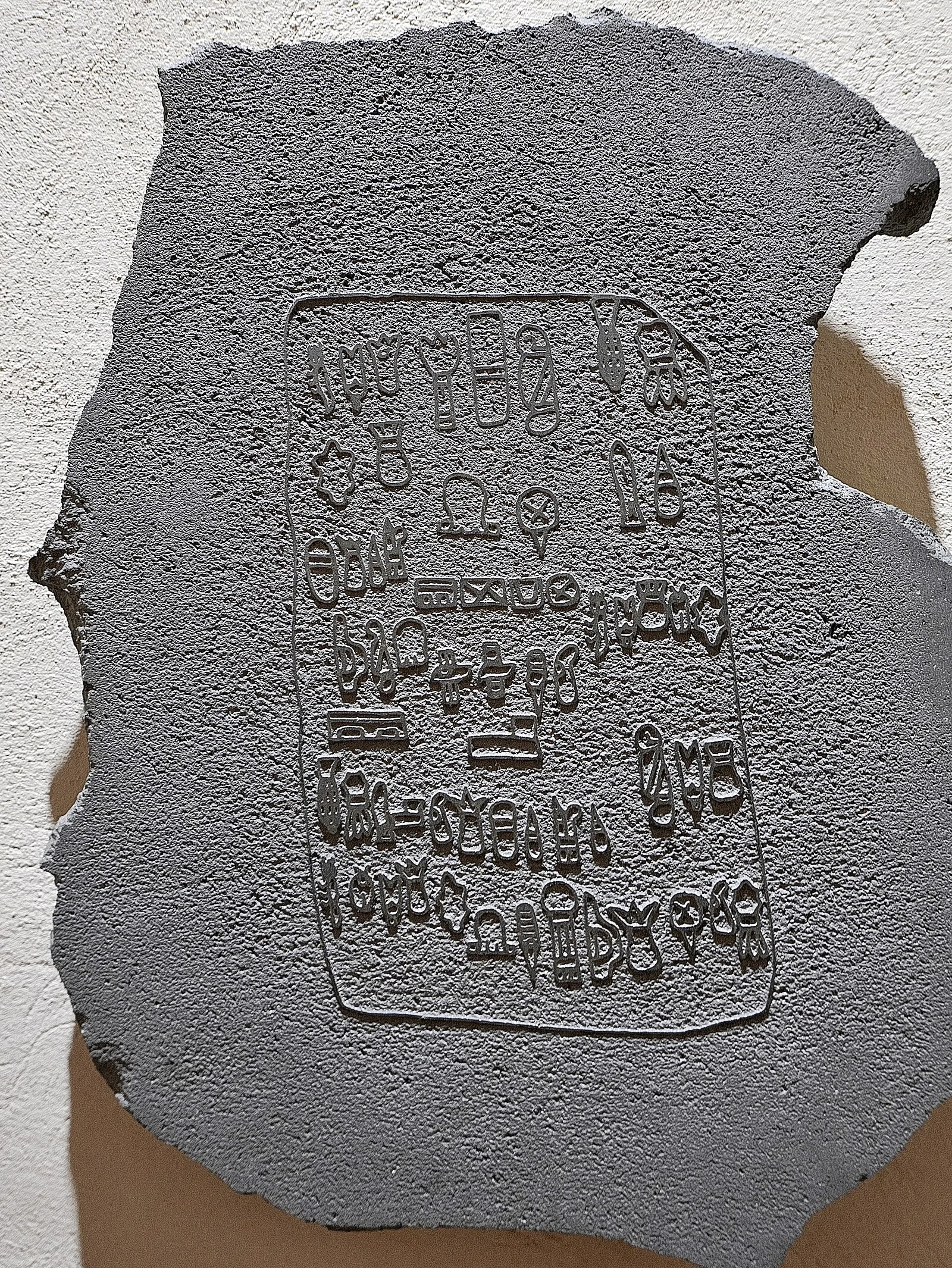
Also known as: Bloc de Cascajal, Bloco de Cascajal, Blok z Cascajal, Bloque de Cascajal, Cascajal, Cascajalblocket, Cascajal Bloğu, Cascajalská deska, Cascajal-Stein, Écriture olmèque, Escrita olmeca, Estela de Cascajal
| Type | Inscription |
|---|---|
| Period | 1500 - 500 BC |
| Country | Mexico |
| Coordinates | 17.9832° N, 94.7017° W |