
 Mexico
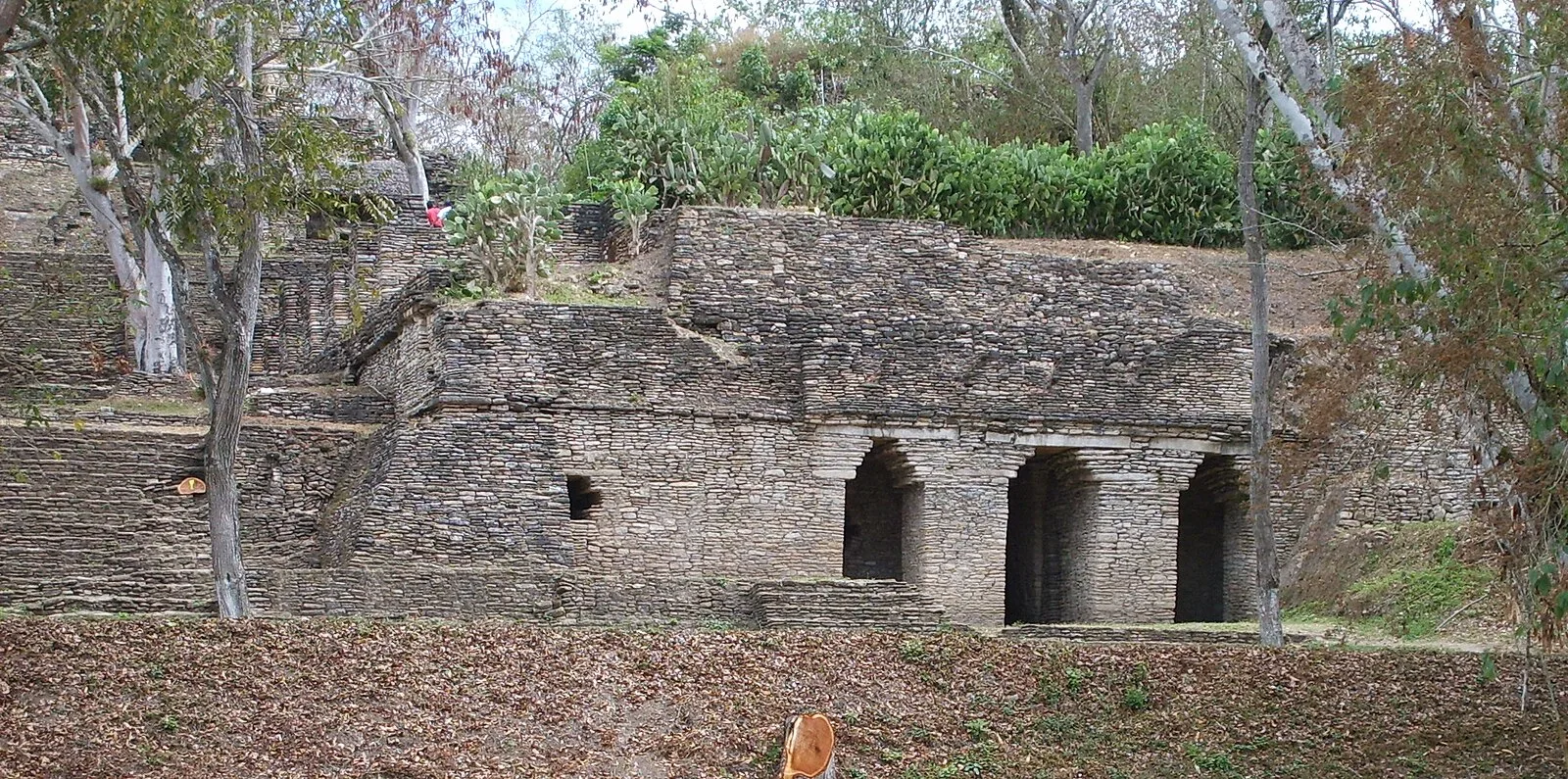
Tonina is a pre-Columbian archaeological site and ruined city of the Maya civilization located in what is now the Mexican state of Chiapas, some 13 km east of the town of Ocosingo [1]. The site is medium to large, with groups of temple-pyramids set on terraces rising some 71 metres above a plaza, a large court for playing the Mesoamerican ballgame, and over 100 carved monuments, most dating from the 6th century through the 9th centuries AD, during the Classic period [1]. Toniná is distinguished by its well preserved stucco sculptures and particularly by its in-the-round carved monuments, produced to an extent not seen in Mesoamerica since the end of the much earlier Olmec civilization [1]. The city is notable for having the last known Long Count date on any Maya monument, marking the end of the Classic Maya period in AD 909 [1]. A 16 by 4 metres stucco sculpture rising from the fourth to fifth terraces depicts a skeletal death god carrying the severed head of a lord of Palenque in one hand [1]. The dated monuments at Toniná span the period from AD 495 to 909, covering most of the Classic Period [1].
Text: Wikipedia – 'Toniná' (revision of 2026-07-20), CC BY-SA 4.0 · sentences selected and shortened by an AI system · source →Tonina
Also known as: Тонина, Тоніна, ტონინა, טונינה, ടോനിന, โตนินา, トニナ, トニナー, 托尼那
| Type | City/town/settlement |
|---|---|
| Period | 1500 - 500 BC |
| Country | Mexico |
| Coordinates | 16.9015° N, 92.0099° W |