
 Mexico
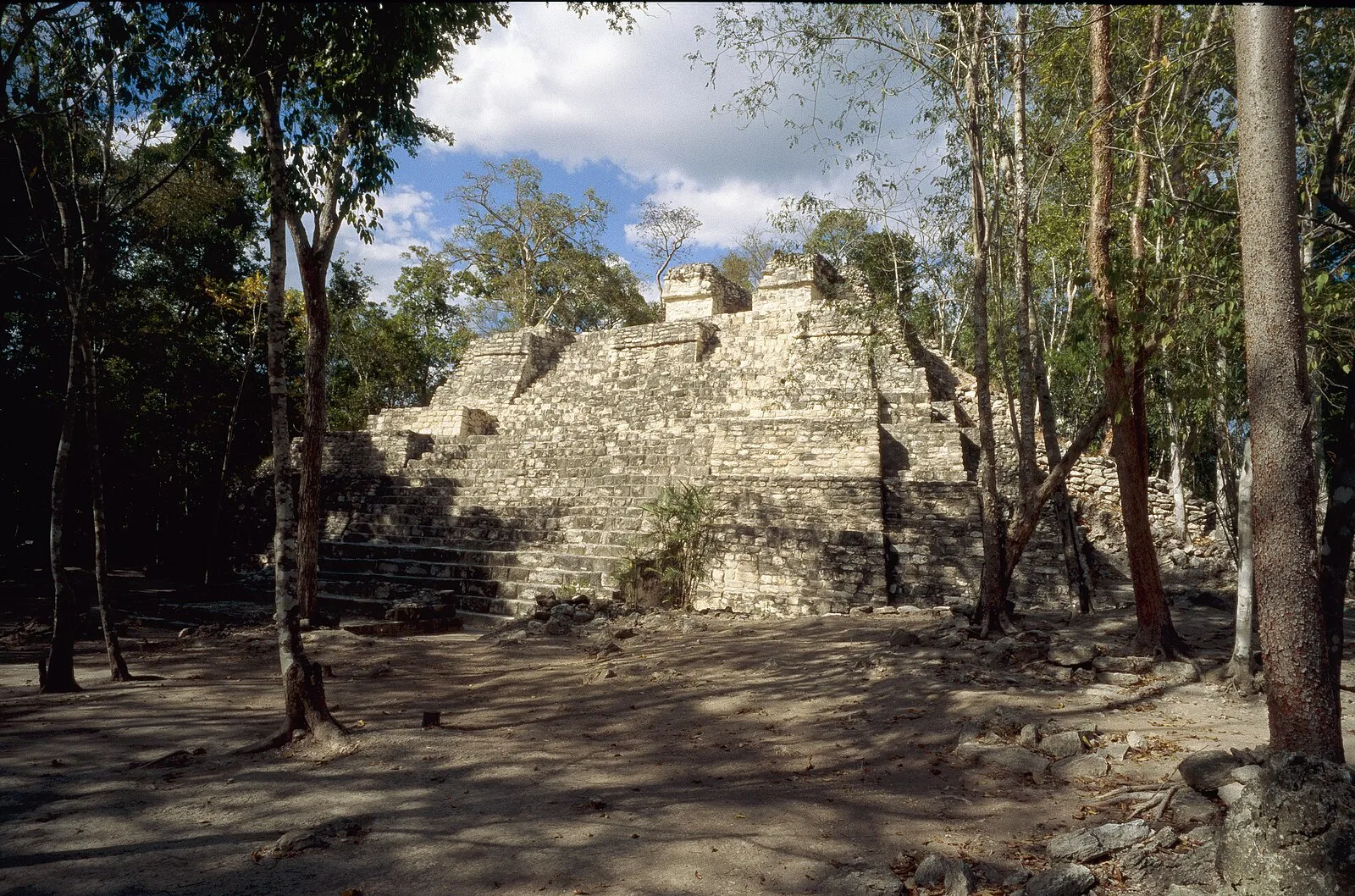
Balamku is a small Maya archaeological site located in the Mexican state of Campeche [1]. It features elaborate plaster facades dating to the Early Classic period [1]. It has one of the largest surviving stucco friezes in the Maya world [1]. Balamku was occupied from about 300 BC, in the Late Preclassic, through to the Terminal Classic period, between 800 and 1000 AD [1]. The ruins were discovered in 1990 by Mexican archaeologist Florentino García Cruz in the company of INAH custodians, when they investigated a report of archaeological looting; they found a looters' trench that had partly uncovered a painted stucco frieze that had originally formed part of the upper facade of an Early Classic building [1]. The ruins of Balamku cover an area of approximately 25 hectares [1]. The complete frieze measured 16.8 metres long when excavated and stood 1.75 metres high [1]. The frieze combines imagery of rulers with that of a sacred mountain [1].
Text: Wikipedia – 'Balamku' (revision of 2025-02-01), CC BY-SA 4.0 · sentences selected and shortened by an AI system · source →Balamkú
Also known as: Баламку, ბალამკუ, 巴兰库
| Type | City/town/settlement |
|---|---|
| Period | 500 BC - 1 AD |
| Country | Mexico |
| Coordinates | 18.5572° N, 89.9453° W |