
 Lebanon
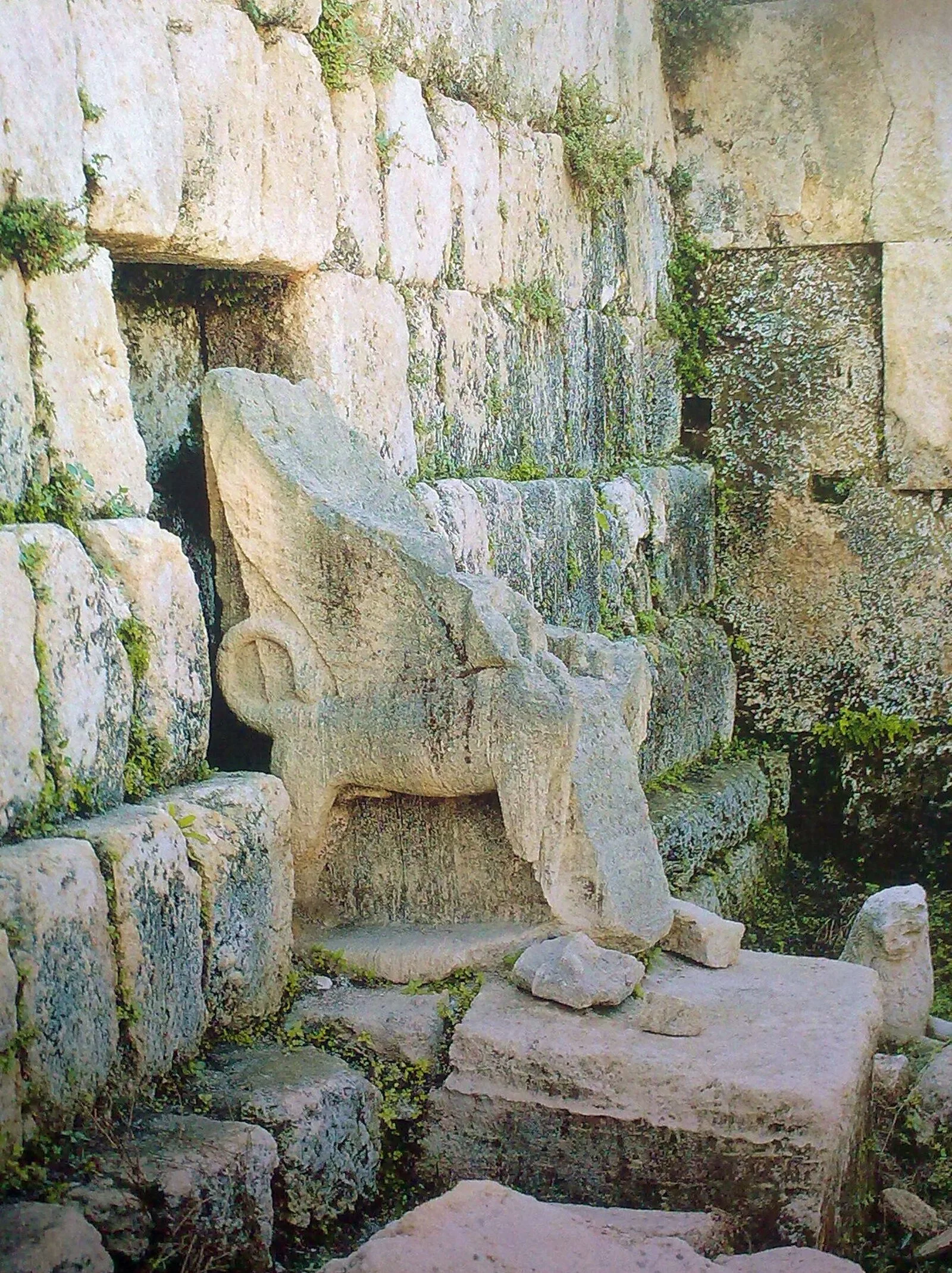
The Temple of Eshmun is an ancient place of worship dedicated to Eshmun, the Phoenician god of healing [1]. It is located near the Awali river, 2 kilometres northeast of Sidon in southwestern Lebanon [1]. The site was occupied from the 7th century BC to the 8th century AD, suggesting an integrated relationship with the nearby city of Sidon [1]. The sanctuary consists of an esplanade and a grand court limited by a huge limestone terrace wall that supports a monumental podium which was once topped by Eshmun's Greco-Persian style marble temple [1]. The sanctuary features a series of ritual ablution basins fed by canals channeling water from the Asclepius river (modern Awali) and from the sacred "YDLL" spring; these installations were used for therapeutic and purificatory purposes that characterize the cult of Eshmun [1]. The sanctuary site has yielded many artifacts of value, especially those inscribed with Phoenician texts, such as the Bodashtart inscriptions and the Eshmun inscription [1]. The podium stands 22 metres high, runs 50 metres into the hillside, and boasts a 70-metre wide façade [1].
Text: Wikipedia – 'Temple of Eshmun' (revision of 2026-08-20), CC BY-SA 4.0 · sentences selected and shortened by an AI system · source →Temple of Eshmun
Also known as: 에슈문 신전, De tempel van Echmoun, Eschmun-Tempel, Eshmuns tempel, Eşmun məbədi, Ešmunov tempelj, Kuil Asymun, Kuil Eshmun, Kuil Esymun, Tempel van Esjmoen, Tempio di Eshmun, temple d'Echmoun
| Type | Temple complex |
|---|---|
| Period | 1500 - 500 BC |
| Country | Lebanon |
| Coordinates | 33.5859° N, 35.3970° E |