
 Greece
Monastiraki is the archaeological site of an ancient Minoan town on the island of Crete [1]. The site is on the plain of Amari, west of the Ida massif, 38 kilometres from Rethymnon [1]. Monastiraki likely dates to the Middle Minoan Old Palace period and was destroyed at the same time as the old palaces [1]. Its importance for archaeology lies in the fact that it was not subsequently built on and remains one of the best examples of Middle Minoan archaeology on the island [1]. The site may have been a Minoan palace, and has thus far yielded a complex of buildings, including storehouses, two archive rooms of earthenware stamps and sanctuaries [1]. Monastiraki was first excavated during World War II by the German Archaeological Institute [1].
Text: Wikipedia – 'Monastiraki, Crete' (revision of 2024-10-27), CC BY-SA 4.0 · sentences selected and shortened by an AI system · source →Monastiraki, Crete
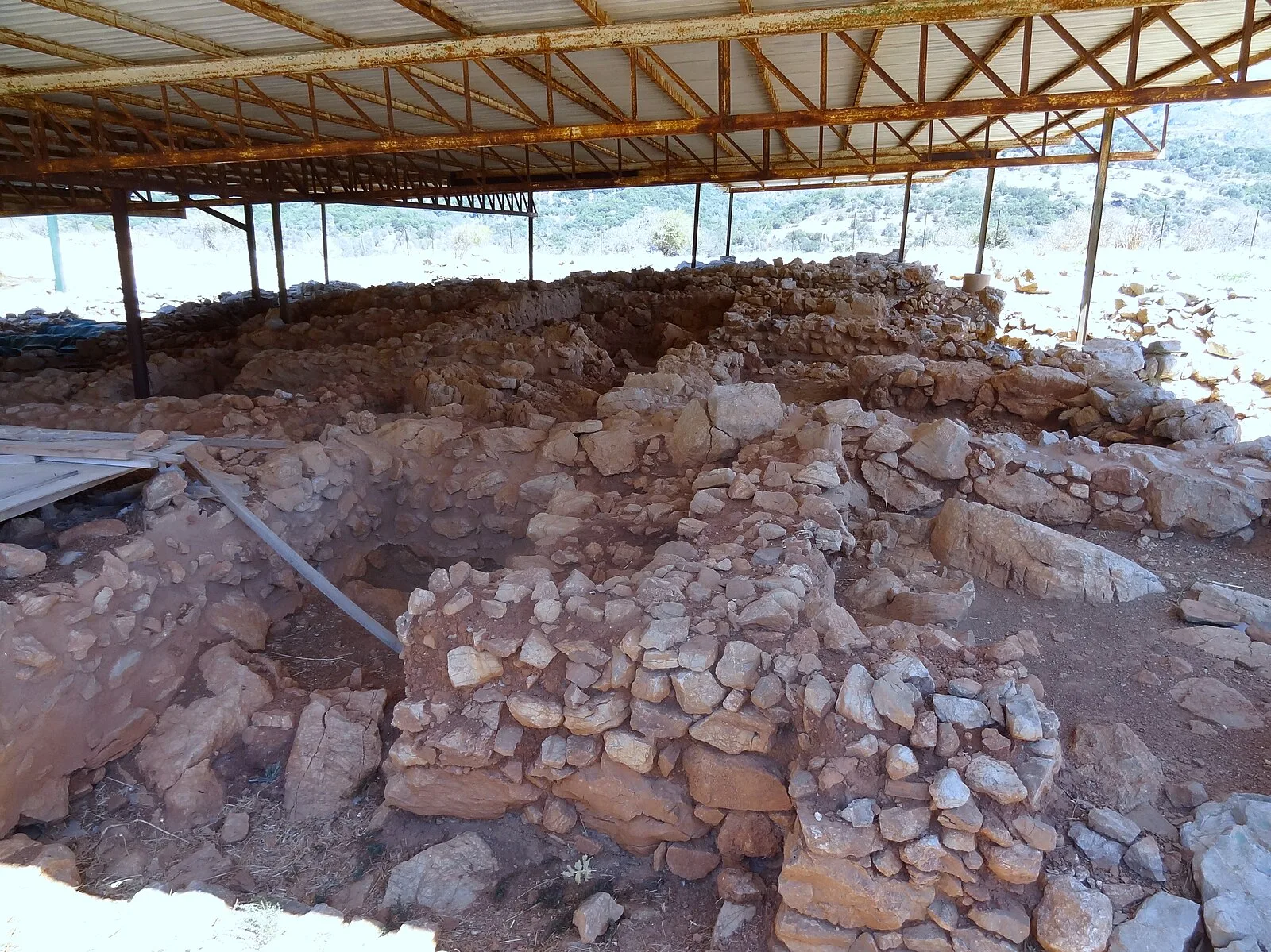
Also known as: Category:Archaeological site of Monastiraki (Amari), Monasteracium, Monasteracium (urbs Minoa), Monastirací (sítio arqueológico), Monastiraki, Monastiráki (Réthymno), Monastiraki (Rétino), Palastartiger Komplex von Monastiraki, Μινωικό ανάκτορο Μοναστηρακίου
| Type | City/town/settlement |
|---|---|
| Period | 3000 - 1500 BC |
| Country | Greece |
| Coordinates | 35.2305° N, 24.6712° E |