
 Greece
Olympia lies in the valley of the Alfeiós River in the western part of the Peloponnese, today around 18 km from the Gulf of Kyparissia in the Ionian Sea, but in antiquity perhaps half that distance [1]. According to Pausanias, there were over 70 temples in total, as well as treasuries, altars, statues, and other structures dedicated to many deities [1]. The first Olympic festival was organized on the site by the authorities of Elis in the 8th century BC – with tradition dating the first games at 776 BC [1]. The earliest evidence of building activity on the site dates from around 600 BC [1]. The Temple of Zeus was built mid 5th century BC [1]. The exact site was re-discovered in 1766 by the English antiquarian Richard Chandler [1]. The first major excavation of Olympia began in 1875 [1]. Important finds included sculptures from the Temple of Zeus, the Nike of Paeonius, the Hermes of Praxiteles and many bronzes [1].
Text: Wikipedia – 'Olympia, Greece' (revision of 2026-09-20), CC BY-SA 4.0 · sentences selected and shortened by an AI system · source →Olympia, Greece
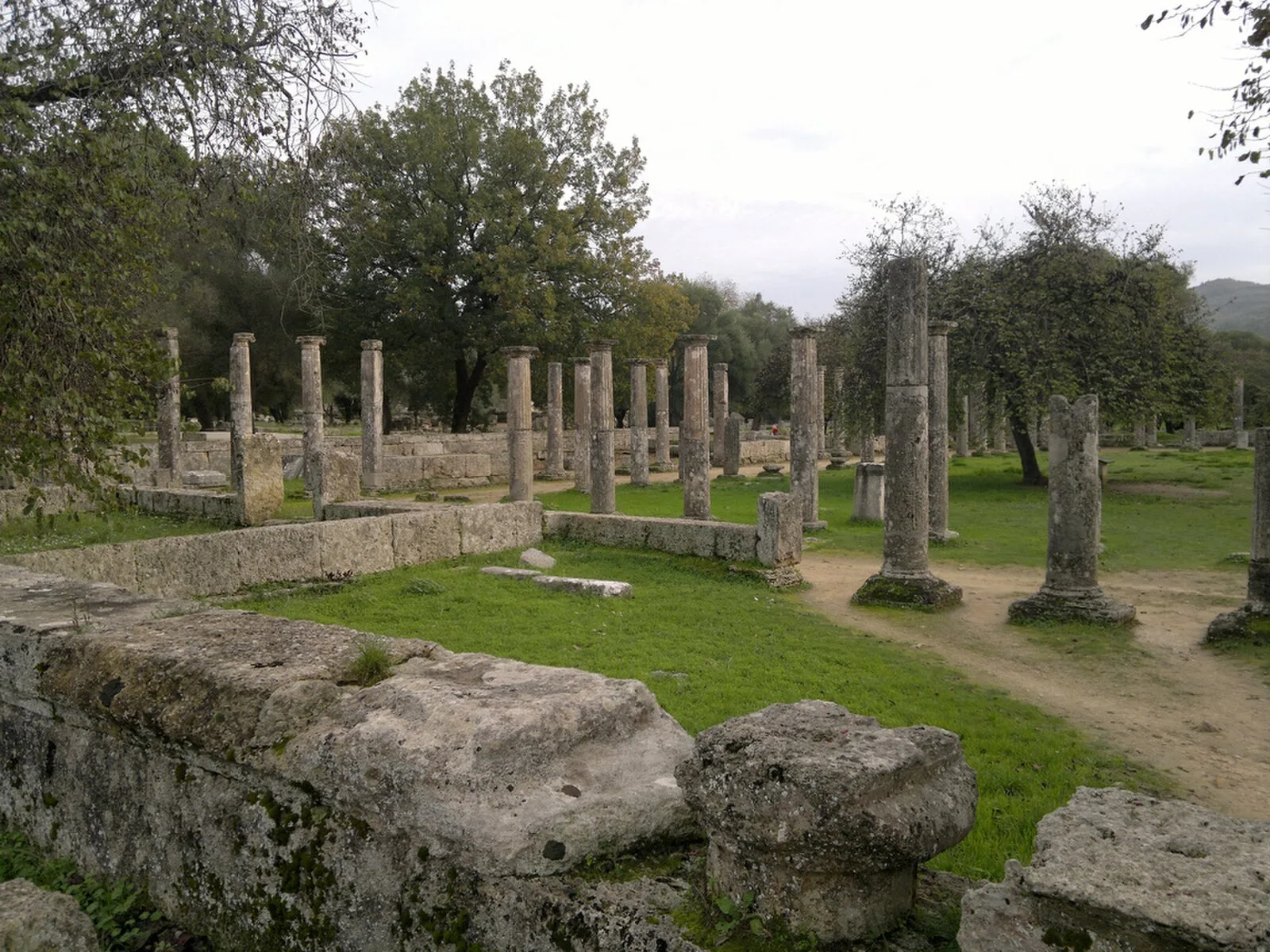
Also known as: 올륌피아, 올림피아, 올림피아 (그리스), Ancient Olympia (fornlämning i Grekland), Archaía Olympía, Lagganico Sauro, Longanico, Longavico, Oilimpia, Olimpia, Olimpia (antik kent), Olimpija
| Type | City/town/settlement |
|---|---|
| Period | 3000 - 1500 BC |
| Country | Greece |
| Coordinates | 37.6385° N, 21.6299° E |