
 Greece
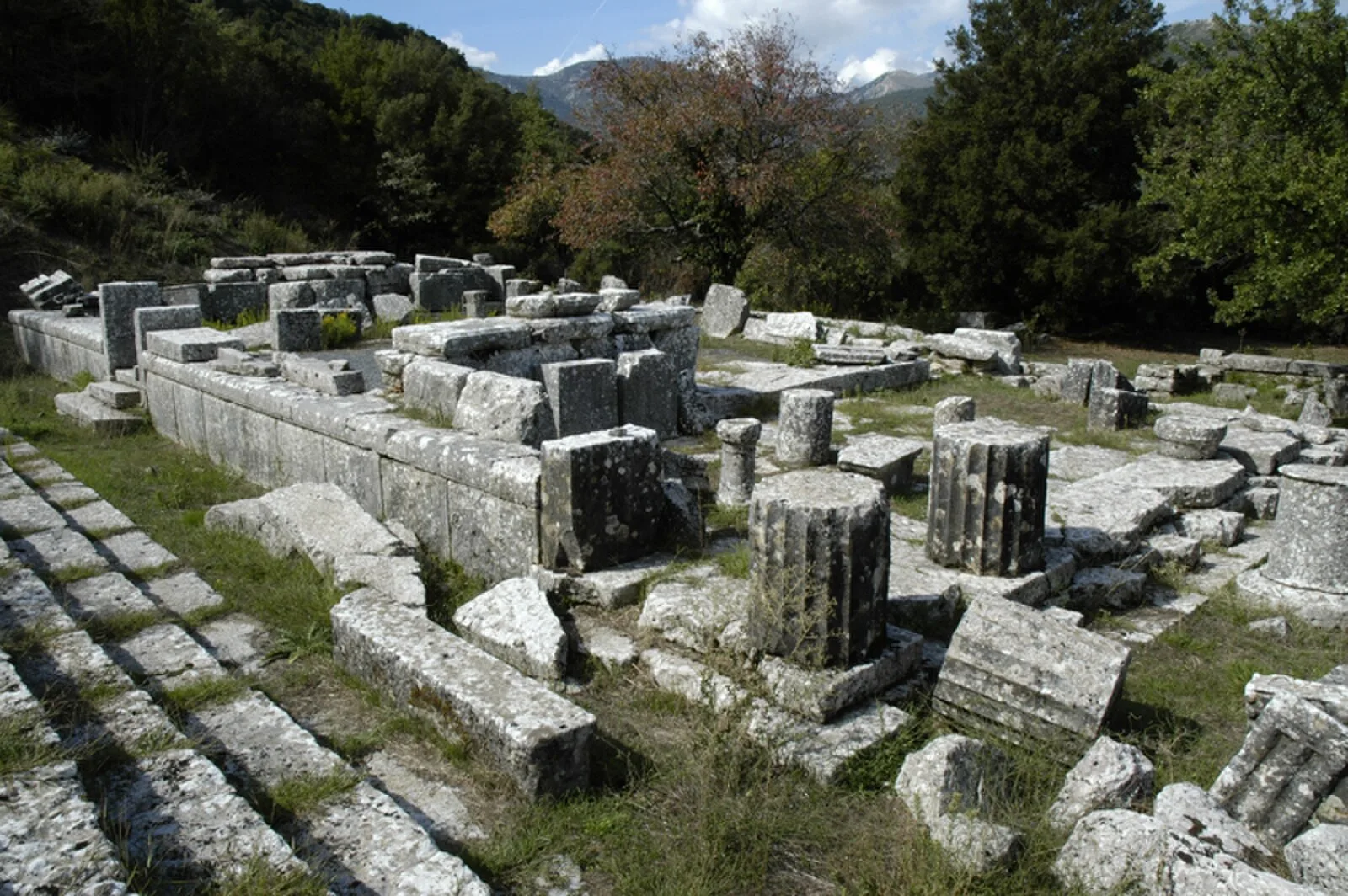
Lycosura was a city in the ancient Parrhasia region of south Arcadia said by Pausanias to be the oldest city in the world, although there is no evidence for its existence before the fourth century BC [1]. Its current significance is chiefly associated with the sanctuary of the goddess Despoina, which contained a colossal sculptural group that has been found and that Pausanias (perhaps inaccurately) wrote was made by Damophon of Messene [1]. In 368 or 367 BC, when many cities in the region were unified into the city of Megalopolis through persuasion or force, the citizens of Lycosura, Trapezus, Lycaea, and Tricoloni refused to relocate [1]. While the site of the city remains largely unexcavated, the sanctuary of Despoina has been uncovered thoroughly and consists of a temple, a stoa, an area of theater-like seats, three altars, and an enigmatic structure conventionally called the Megaron [1].
Text: Wikipedia – 'Lycosura' (revision of 2026-09-24), CC BY-SA 4.0 · sentences selected and shortened by an AI system · source →Lycosura
Also known as: Licosura, Lycosoura, Lykosoura, Lykosura, Λυκόσουρα, Ликосура, Лйкосоура, リュコシュラ, リュコスラ, 吕科苏拉, 呂諾蘇剌
| Type | City/town/settlement |
|---|---|
| Period | 500 BC - 1 AD |
| Country | Greece |
| Coordinates | 37.3899° N, 22.0311° E |