
 Greece
The Alepotrypa Cave is a Neolithic-period archaeological site on the Mani Peninsula of the Peloponnese in southern Greece [1]. Used for burial and cult purposes, it is one of the largest burial sites ever found in Europe [1]. Two adult human skeletons dubbed "the Embracing Skeletons of Alepotrypa" were found at the site, from a burial dating to the 4th millennium BC; remains from at least 170 separate persons have also been uncovered [1]. The Alepotrypa Cave was also inhabited by early farmers [1]. The site was excavated between 1978 and 2005, after which the project was largely put on hold due to lack of funding [1]. The cave is a natural limestone cavity in a dry, rocky landscape, about 20 meters above sea level and 50 meters from the current Mediterranean shoreline [1]. This karstic formation stretches roughly 300 meters in length and 50 meters in width, running east to west [1]. Finds from the excavation include Late Neolithic stone, pottery and clay vessels, jewelry and weapons [1].
Text: Wikipedia – 'Alepotrypa Cave' (revision of 2026-08-09), CC BY-SA 4.0 · sentences selected and shortened by an AI system · source →Alepotrypa Cave
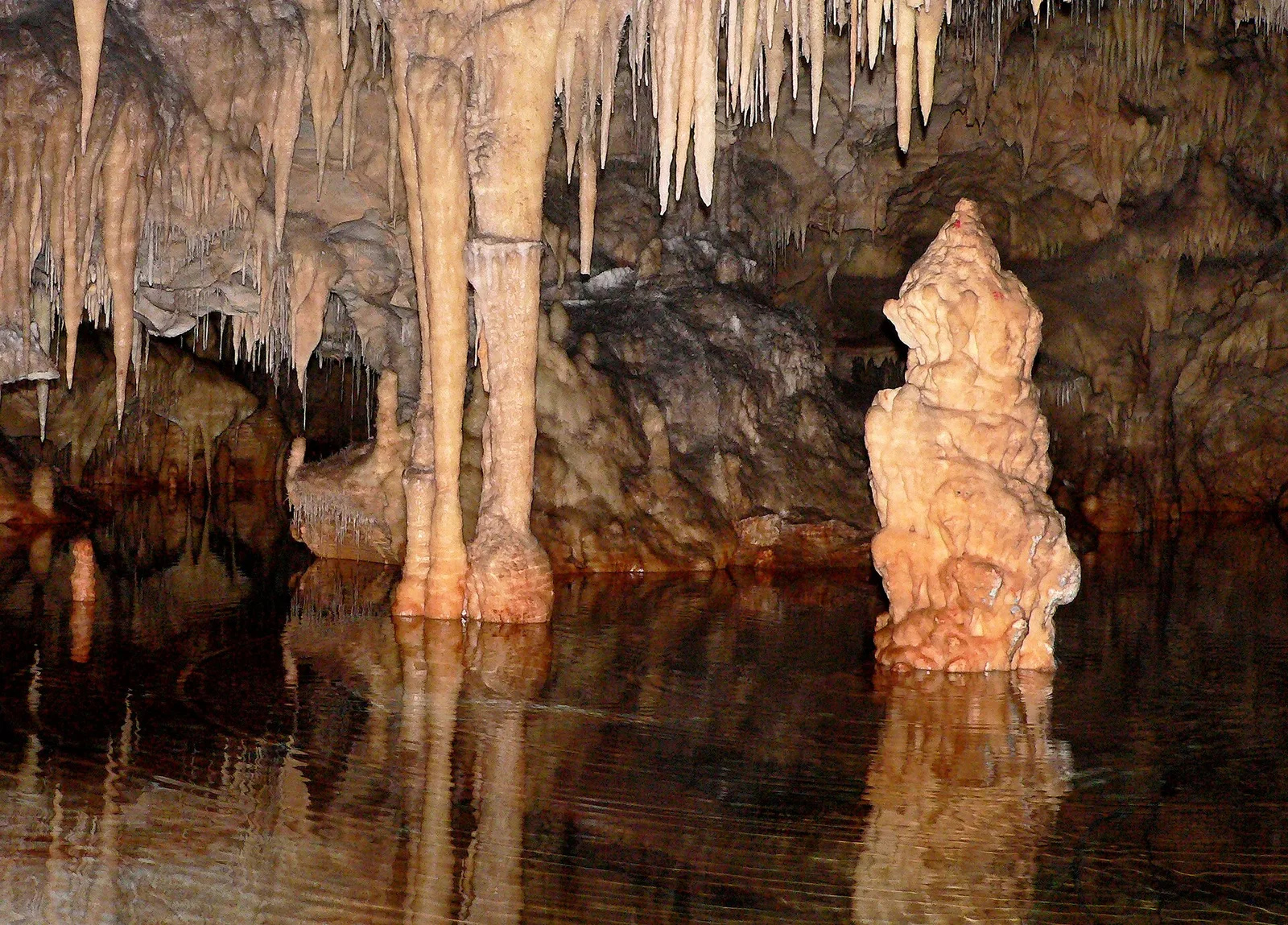
Also known as: Alepotrypa-Höhle, Alepotrypa mağarası, Cave of Alepotrypa, cova d'Alepótripa, Cueva de Alepotrypa, Gaura Vulpii, Höhle von Alepotrypa, Jama Alepotrypa, Peștera Alepotrypa, Αλεπότρυπα, Σπήλαιο Αλεπότρυπα, Алепотрипа
| Type | Cave Structures |
|---|---|
| Period | < 4500 BC |
| Country | Greece |
| Coordinates | 36.6382° N, 22.3807° E |