
 Greece
The archaeological site of ancient Aigeira is located approximately 6 km from the modern town [1]. It is an important site for the Mycenaean and later periods, with particularly extensive remains from the Hellenistic period [1]. Settlement at Aigeira is known from the Middle Neolithic and Final Neolithic, beginning around 5500 BCE [1]. The first settlement was situated on the acropolis, and has furnished evidence of pottery, including vessels likely used in the production of cheese [1]. Some evidence of Neolithic settlement has been found on a lower plateau, approximately 150m to the east of the acropolis [1]. Like many Aegean sites, Aigeira was abandoned at the end of the Bronze Age, following the destruction of the site at the end of LH IIIC Middle [1]. Occupation began again in the second half of the 8th century BCE, likely associated with the sanctuary at the site [1]. Some partial fortifications are known from the Archaic period, covering an area of around 3.5 hectares [1].
Text: Wikipedia – 'Aigeira' (revision of 2026-09-20), CC BY-SA 4.0 · sentences selected and shortened by an AI system · source →Aigeira
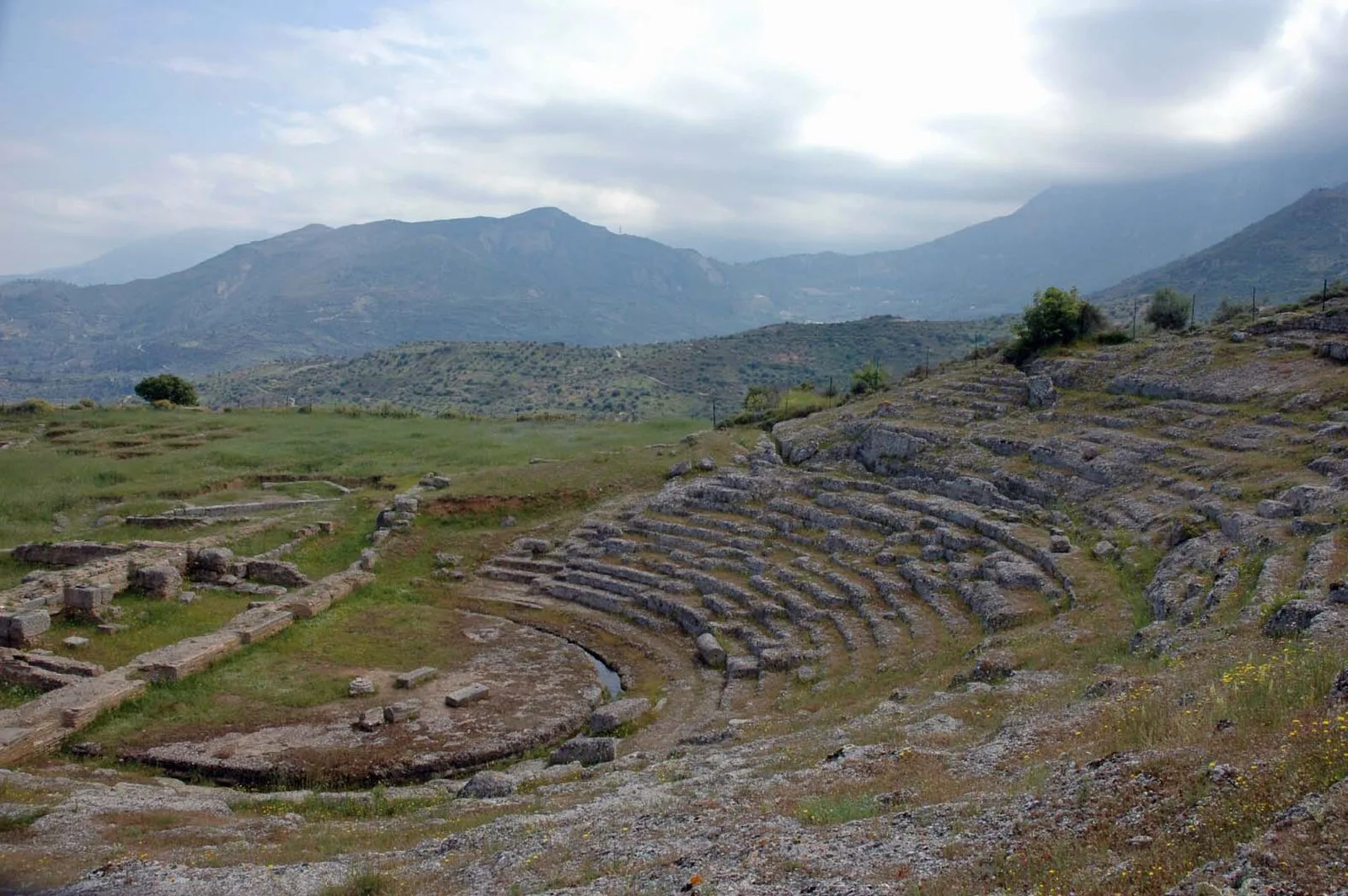
Also known as: Aegeira, AEgira, Aigira, Aíyira, Egira, Egira (Grecia), Égire, Ejíra, Hyperesia, Iperesia, Αιγείρα, Αιγείρα Αχαΐας
| Type | City/town/settlement |
|---|---|
| Period | < 4500 BC |
| Country | Greece |
| Coordinates | 38.1502° N, 22.3500° E |