
 England
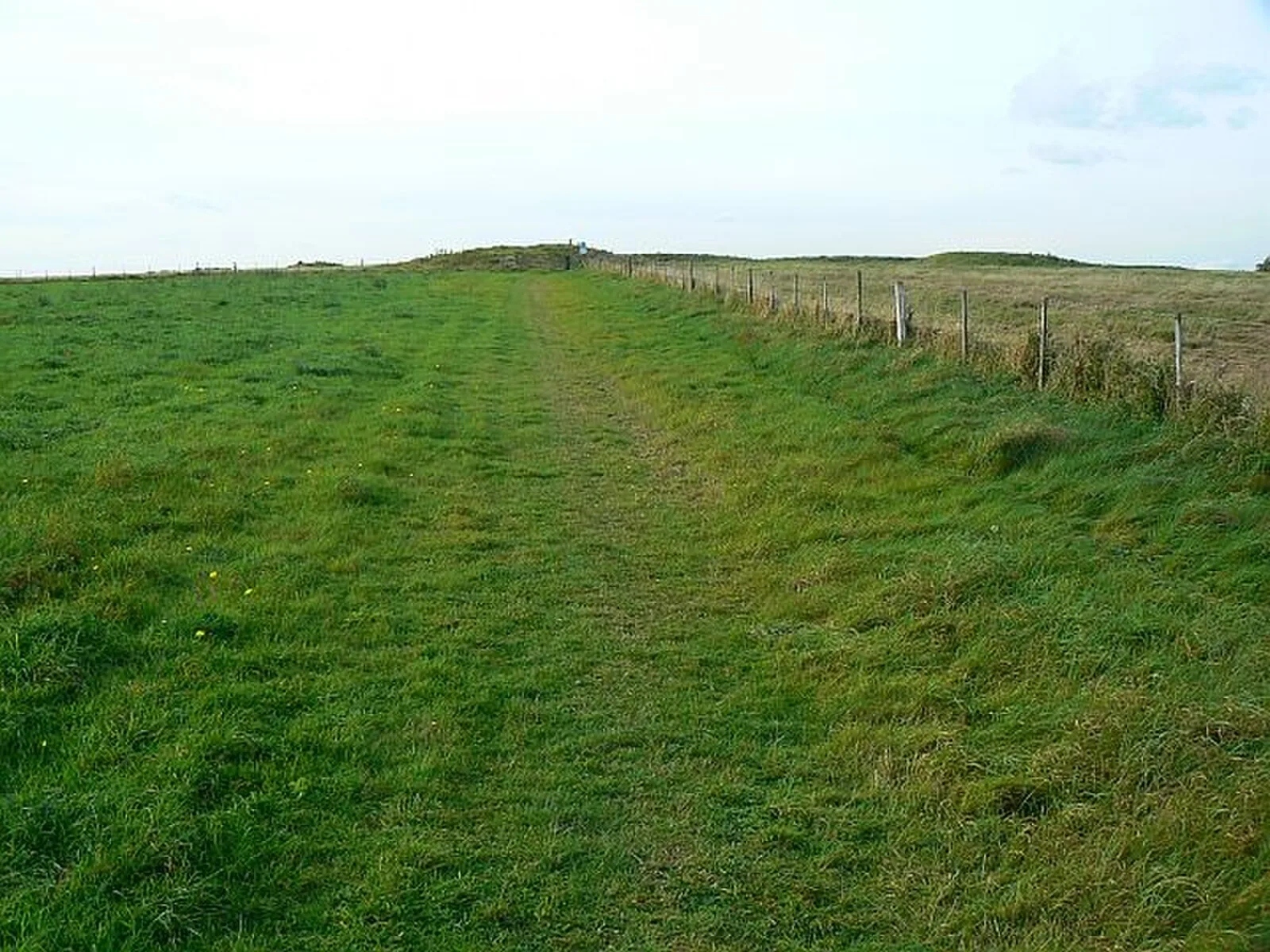
Windmill Hill is a Neolithic causewayed enclosure in the English county of Wiltshire, part of the Avebury World Heritage Site, about 1 mile northwest of Avebury [1]. Enclosing an area of 21 acres, it is the largest known causewayed enclosure in Britain [1]. The site was first occupied around 3800 BC, although the only evidence is a series of pits apparently dug by an agrarian society using Hembury pottery [1]. During a later phase, c. 3700 BC, three concentric segmented ditches were placed around the hilltop site, the outermost with a diameter of 365 metres [1]. The causeways interrupting the ditches vary in width from a few centimetres to 7 m [1]. The site was bought by Alexander Keiller in 1924 and excavated over several seasons from 1925 to 1929 by Keiller and Harold St George Gray, whose work established it as the type site for causewayed camps [1]. Pottery from the bottom of the ditches was the type style for the Windmill Hill culture [1]. The camp remained in use throughout the rest of the Neolithic with Grooved ware and Beaker potsherds having been found in later deposits [1].
Text: Wikipedia – 'Windmill Hill, Avebury' (revision of 2026-07-24), CC BY-SA 4.0 · sentences selected and shortened by an AI system · source →Windmill Hill, Avebury
Also known as: Colina de Windmill, Windmill Hill, Windmill Hill (bungtod sa Hiniusang Gingharian), ウィンドミル・ヒル, 風車山
| Type | Earthwork |
|---|---|
| Period | 4500 - 3000 BC |
| Country | England |
| Coordinates | 51.4418° N, 1.8761° W |